
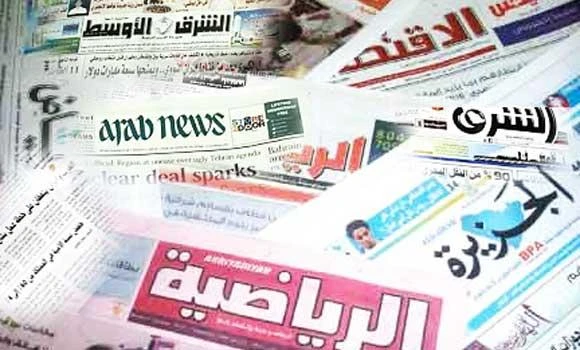
Achieving GCC’s goals
In his address to the 36th session of the Gulf Cooperation Council’s Supreme Council, Custodian of the Two Holy Mosques King Salman laid emphasis on three important issues: Security, development and cooperation.
Security will always remain a major concern for the GCC leaders. Our forefathers took every possible measure to ensure a secure environment for us and left no stone unturned to strengthen our economic situation. Keeping in view, the challenges of today we all know that we are facing grave dangers and need concrete measures to contain those threats.
While building our countries, our forefathers followed few principles like trust in Allah, firmness in decisions and courage to take on all challenges.
King Salman called on all the GCC leaders and governments to make all-out efforts to help their people realize their dreams and this needs assessment of the current situation.
Beyond any shadow of doubt, the GCC experience has proved to be a huge success particularly in terms of security cooperation. The GCC’s strength could be gauged through its role during the Iraq-Iran war, Saddam’s Kuwait invasion and during the so-called Arab Spring, which saw the ouster of many strong leaders and regimes. Most recent example of GCC’s effective collaboration is the joint action against Houthi rebels in Yemen.
In addition to cooperation in the security and military fields, unified customs between the GCC countries is also something we can boast about. However, we are still far from realizing our true potential as one geopolitical entity. There are successful experiences for a number of companies in the GCC countries, but they are still limited while our financial markets are working separately.
We should work together to realize our mutual goals. Our people are fully capable of achieving their objectives in a smart manner.
Kingdom’s important position
AMID delicate political and security situation in the region, Riyadh recently hosted the 36th session of the GCC’s Supreme Council and the meeting of Syrian opposition factions.
This relentless political movement and these successive initiatives undertaken by the government of Custodian of the Two Holy Mosques King Salman represent one of the most important policies of the Kingdom, which it has adopted since its unification.
These efforts and stances voiced by the Kingdom toward a series of crises were embodied in many steps, initiatives and forums, which resulted in solving many problems or narrowing differences of various Arab and regional parties. This time around, it was our Syrian brothers who met in Riyadh to discuss the future of their country. Earlier, Yemeni factions had converged on Riyadh to end the political impasse in their country. During the past few years, we saw Palestinians, Afghans and Lebanese leaders meeting in Riyadh to iron out their political differences.
Riyadh was also a venue for Muslim, Arab, regional and GCC meetings that had political and security concern, which resulted in the unification of words and factions.
Saudi Arabia fully acknowledges that Almighty Allah has blessed it with an important and prestigious position in the Arab and Muslim world.
The Saudi government never hesitates in playing the roles of a mediator between various Muslim countries or parties to a conflict. The Kingdom has always been at the forefront to resolve issues plaguing the Arab and Muslim world. Saudi Arabia has always offered assistance to its Muslim brothers in their times of crises. These meetings in Riyadh are a testament to the respect the Kingdom commands across the region, particularly the Muslim world.
— By Abdulrahman bin Abdulaziz Al Ashaikh
The last hope
WHATEVER attempts are made to underestimate its role or distort its image by some Arab and western media outlets, Riyadh remains the only capital, which is working sincerely for the protection of Arab interests and for the preservation of the Arab history.
As an extension to its diplomacy, Riyadh recently hosted two major events, which caught attention of the entire world —the meeting of Syrian opposition factions and the GCC summit.
The Syrian people have eventually found those who are devotedly working for their cause. It was only Riyadh, which opened its doors to the Syrians and offered to genuinely help them find a political solution. Though the situation has become very complication but good intentions and proper actions will eventually pay off.
On the other hand, the GCC will remain the sole coherent entity despite all undue foreign criticism. However, the GCC should reassess the gravity of the current regional situation and devise a comprehensive policy to deal with it effectively.
— By Hamoud Abu Talib
Unemployment and layoffs
ACCORDING to media reports, Bin Laden group recently announced retrenchment of around 15,000 workers while another company based in Makkah fired 3,000 employees. Meanwhile, employees of a private hospital in the Eastern Province organized a protest demonstration against delayed salaries.
However, no comment was make on Bin Laden’s laying off its employees while the Labor Office in Makkah promised to look into the case of the fired employees in the second case. In the Eastern Province, the Labor Ministry ordered the private hospital to settle the delayed salaries within one week.
Definitely, layoffs are not a new phenomenon. “Anglo American,” a mega US mining firm, has announced plans to lay off 85,000 of its workers due to the decreasing prices of mining products.
But there are differences between the United States and Saudi Arabia. In the US, the rate of migrant (expat) workers does not exceed 13 percent of the total workforce compared to more than 32 percent in Saudi Arabia.
Moreover, poor educational outputs and hesitation of Saudis to work in certain crafts and reluctance of mega companies to employ workers due to dependence on sub-contracting system have put the Ministry of Labor in a critical situation.
Though the boom in the Saudi economy during the last 12 years compensated for some of these shortcomings but the downward trend of the economy will make what we see and hear just the tip of the iceberg.
There is a great need to tackle the situation before it is too late. We need labor reforms to so as to strengthen our local market.
— By Abdullah bin Rabian
Not a big deal
WE do admit that during the electioneering, women did face some problems but those issues should not be exaggerated. Such issues are not unique to Saudi Arabia. It happens all across the world.
Ironically, a reporter working for an international news agency asked me a question: How can a Saudi woman arrive at the polling center since she does not drive her car?
I simply told him that that issue is not an obstacle. Saudi women commute easily in the cities. They go to markets and to work. Those who don’t have a private driver, use taxi or company’s car.
Few days later, I learned that a Saudi women organization entered into a contract with a limousine company to transport female voters from their houses to polling centers and vice versa. The organization took the initiative to encourage women to participate in the elections.
Though citizens faced some difficulties in the vote registration process, as there were no incentives to encourage them to do so. For instance, no discounts were offered in transportation, etc.
— By Fahad bin Jilaid
The balancing act
DROP in oil prices and revenues have necessitated implementation of strict economic measures to strike a balance between spending and revenues.
No doubt, every ministry prepares its budget and projects in light of the new situation, which may call for the postponement or rescheduling of less important projects with huge budgets.
But, is it possible to apply a unified model for such measures on all government sectors? The answer is: No. Every sector has different requirement and special position. We have to keep in mind these factors while planning. A one-size-fits-all policy cannot be applied across the board.
For instance, the government cannot shrink spending of the Ministry of Defense at a time when the country is fighting a war against the Houthis on the pretext of shrinking oil revenues.
Similarly, teams at the Ministry of Health should have a future outlook and should distinguish between spending rationalization, on the one hand, and keeping the quality of health services provided to citizens, on the other.
Unfortunately, newspapers reported that the Ministry of Health has decided to withdraw an earlier decision given authorizing regional health affairs offices to refer patients in critical conditions to private sector hospitals. It justified the decision in the name of “rationalizing spending and preventing waste of money.”
On the other hand, there are reports that Ministry of Health plans to cut certain health services seen unnecessary such as dental services for rationalization purposes.
This trend, we believe, confuses the concept of rationalization and the concept of primary health care, for which the ministry was established. Reducing the scope of health services will adversely affect the stability and growth of the society. But if the ministry is keen on rationalizing spending, there are so many means to do that without affecting the quality of services such as reconsideration of construction contracts, provision of pre-paid services to patients covered by insurance companies and increase of fees paid by private colleges against training services at government-owned medical facilities.
— By Firas Alim


