
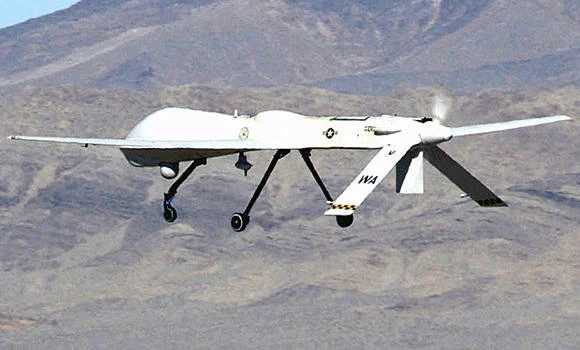
In recent weeks, the international negotiations surrounding the development of Iran’s nuclear program have underscored the dangers of “dual-use” technologies (those that can be used for both peaceful and military purposes). In the case of Iran’s ongoing attempts to develop nuclear energy, there are, of course, real concerns about this sort of technology: The peaceful employment of certain devices in the private sector can quickly be used to belligerent ends.
Jay Carney, former White House press secretary and Time magazine Washington Bureau Chief, once said at a White House press conference that the use of drones in the government’s targeted killing program was “legal,” “ethical,” and “wise.” Carney is now head of global corporate communications for Amazon. He reports directly to Amazon’s CEO, Jeff Bezos, and, according to International Business Times, considers the “drone issue” to be a top initial priority. For Amazon, there is perhaps no issue more important than the domestic use of drones. It is likely, then, that Bezos judged Carney’s command of the domestic debate on drones from the White House podium since 2011 to be worth the price of recruiting him to do the same at Amazon.
Amazon has been out front among its competitors in the US when it comes to speaking about the benefits of unmanned aircraft for commercial markets. For the last two years, Amazon’s public-relations strategy, a key component of any successful marketing plan, has focused primarily on persuading Americans that the convenience drones are likely to afford in delivering goods directly to their doorstep will surely outweigh privacy fears.
This tactic has been largely unsuccessful, and Americans remain much more concerned about the domestic use of drones, in any capacity, than their use in US counterterrorism operations abroad.
Speaking at the National Defense University in 2013, US President Barack Obama laid out the main tenets of his administration’s comprehensive counterterrorism strategy, arguing that using drones prevents civilian casualties and allows a lighter footprint for US armed forces. The thrust of the Obama administration’s marketing strategy was to sell the American public on the notion that if they bought into the use of drones for counterterrorism they could remain secure at home and reduce unintended consequences abroad. Unfortunately, the record in Yemen and Somalia since 2013 has done little to support Obama and Carney’s assertions that drones are an effective solution to the threat of terrorism. Carney’s new employer is well aware of how the dual-use marketing game is played in the US. When it comes to the commercialization of technologies also used by and for the military, Amazon’s relationships with the military-intelligence-industrial complex in Washington are well known. In 2013, for instance, Amazon reportedly inked a deal with the Central Intelligence Agency worth $600 million to build a private cloud infrastructure.
Understanding the manner in which Americans respond to the politics of threat inflation, we expect Carney to craft a new Amazon public-relations strategy for drones that convinces the American public that not allowing companies like Amazon to use drones as a means to drive economic innovation is a more salient threat than domestic surveillance or drone accidents. The fear that Amazon may decide to invest its drone resources abroad could be enough to tip the scales in Washington. After all, as former president George W. Bush reminded Americans soon after the tragedy of 9/11, the only thing that could possibly be worse than a terrorist attack on the US is a bad economy.
—
In partnership with The Mark News.


