

Last Monday, Iraqi security forces celebrated with abandon. After days of heavy fighting, reportedly house by house, street by street, all the while backed by American airstrikes, they captured central Ramadi, a predominantly Sunni city 65 miles west of Baghdad that had been under Daesh control since July 2014. Ramadi, built by the Ottomans in 1879, that occupies a highly strategic location on the Euphrates and the road west into Syria and Jordan, is not new to military conflict. It had seen plenty of that, and many times over, during two World Wars.
Daesh, after it was on a roll in 2014, capturing large swaths of territory in Iraq and Syria, almost blitzkrieg-style, now appears to be losing momentum. Ramadi’s return to government control, coupled with the recent defeats it had suffered in places like Tikrit, Sinjar and Beij, would continue a string of successes that Iraqi troops have scored recently. Certainly, relentless coalition airstrikes, along with the fact that the aircraft carrier USS Harry S. Truman, which entered the Arabian Gulf last week and is poised to conduct airstrikes of its own, will bolster the fight against Daesh.
This fight, however, is far, very far, from over. Lest we forget, the group still holds sway in both Fallujah and Mosul, both of which are tough nuts to crack. Fallujah, a town that dates back to Babylonian times, with a population of 400,000, is known as “the city of mosques” for the roughly 200 Muslim houses of worship found there. It is also a “rough and tumble” place known for its pugnacious posture against those who besiege or assault it.
And who, among American troops who served in the military in Iraq would forget “the battle of Fallujah” in November 2004, when, in epic confrontations aimed at retaking the city from insurgents, 1,350 Iraqis were left dead, and 95 Americans soldiers were killed and 560 injured?
And Mosul, or Mawsil, the Linking Point, in Arabic, the second largest city in Iraq, with a population of 2.5 million — and home to the University of Mosul and its famous adjunct, the Medical College, both together considered as one of the largest educational and research institutions in the Middle East — is a different kettle of fish altogether.
To start with, Daesh has concentrated thousands of its fighters there, and retaking the city could prove a challenge, as opposed to Ramadi, where the terrorist group had put there a relatively small number of its militants. According to Ben Connable, a senior international policy analyst at the Washington-based RAND Corporation, the further Iraq’s military extends its reach, the more its grip is likely to weaken on areas it already held.
“It’s the jewel in the crown of Daesh terrain in Iraq. It’s hugely symbolic, but it’s also strategic,” he said. “So Mosul matters a lot, but if the plan is to move there, you would assume that the Iraqi government forces would be shifted out of Ramadi. And who is going to stabilize the city? Who is going to prevent Daesh from moving back in?”
But, truth be told, at the end of the day, the liberation of Mosul, or even the total decimation of Daesh in both Syria and Iraq, is not the ultimate test here.
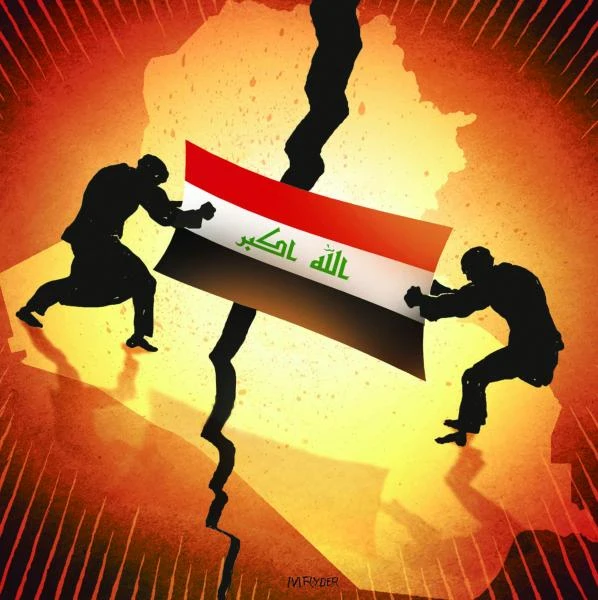
The problems that Daesh has caused, along with the problems that Daesh had fed on to foster its emergence, will not be solved until there is a strong central government in Syria that, instead of dropping barrel bombs and poison gas on its citizens, it offers them a better life, and an equally stable central government in Iraq that offers the Sunni community — a community whose members have historically shared with their Shiite compatriots a common Arab heritage, language, social values, cultural mores and manners of ceremonial exchange in everyday life — an equitable share in the country’s political, social and economic resources. It’s really as simple as that.
In other words, until a brokered peace is forged between, on the one hand, the Shiite government and Iranian-backed militias and, on the other, the millions of disaffected, not to mention disenfranchised, Sunnis, military victories against Daesh, in the end, count for naught.


