

Almost everything that needs to be said on the latest Gaza crisis has already been said. If a person does not express an opinion on the latest events, they are likely to be regarded as someone who has no opinion to be formulated on this major crisis.
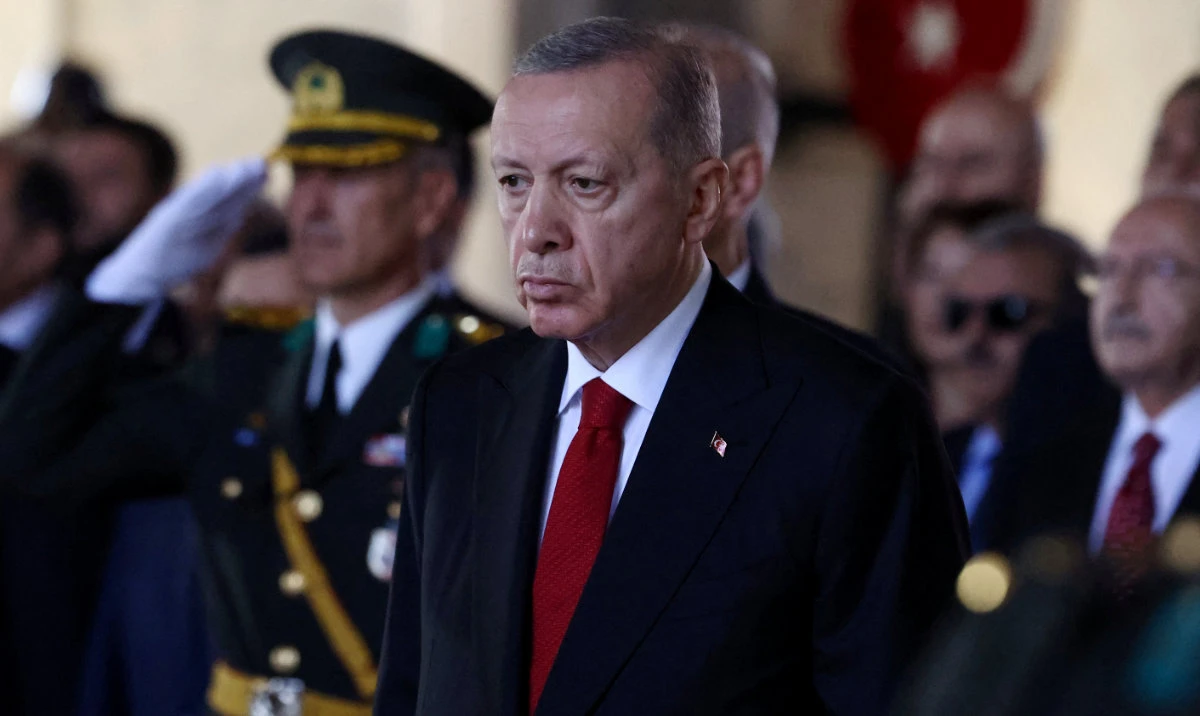
Turkish President Recep Tayyip Erdogan continues to lend unrelenting support to Hamas. At one stage, he volunteered to play a role in the exchange of prisoners. It is unclear whether the US would agree to let Turkiye play such a prominent role.
At the level of rhetoric, Turkiye is among the countries to extend full support to Hamas, but few nations seem to be ready to join it in taking the hot potatoes out of the fire. It genuinely supports the Palestinian cause and, even more so, the Hamas cause. The Turkish government announced three days of mourning throughout the country in response to the bombing of Gaza, but some quarters of domestic public opinion believe it has done so to blur the importance of the 100th anniversary of the proclamation of the republic, which coincided with these events. It is believed that officials do not want to publicize Mustafa Kemal Ataturk’s achievements.
A short look at the history of Jews in Palestine reveals a lot of interesting details. Before the Islamic conquest of the seventh century, Palestine was ruled by the Byzantine feudal administration. Omar bin Khattab, the second caliph, annexed Palestine to the Islamic world.
When Egypt — and, by implication, Palestine — became Ottoman territory in the early 16th century, Sultan Selim I did not make any significant modifications to the land tenure system, but simply adjusted it to the Ottoman Empire’s administrative rules. This system lasted until the Ottoman Land Ownership Law was promulgated in the 19th century.
After the collapse of Al-Andalus in 1492, Jews were allowed to settle in the Ottoman territories of North Africa, the Balkans and western Anatolia, but not in Palestine. In the Ottoman land registry books of 1562, there was no record of land in Jerusalem belonging to Jews.
Leaving this short history of Palestine aside, let us turn to the future. It cannot be presumed that a resolute people like the Palestinians could be easy to eliminate entirely. Therefore, a form of the two-state solution may become a way out.
The Turkish government announced three days of mourning in response to the bombing of Gaza.
Yasar Yakis
The prospects for a positive outcome of the present crisis look uncertain. The outcome could go either way. Washington, with its massive firepower, may cause tremendous damage to Gazans. However, many in the international community have demonstrated a negative attitude to what Israel has been doing in retaliation to the Hamas attack on Oct. 7.
The attack on the Al-Ahli Arab Hospital in the north of Gaza two weeks ago added insult to injury and went beyond all rules of international law regarding the targeting of hospitals in a military confrontation. The deaths of about 500 people in that attack shows that Israel does not recognize any limit with its atrocities. It has tried to put the blame on the Palestinians, but such a claim is not convincing.
Israel seems to be aiming for the expulsion of the entire indigenous population of Gaza, or possibly only letting in the Palestinians that it deems to be eligible. Some inside Israel believe that Hamas has to be eliminated one way or another, but who will replace it? This is a question that has not yet been answered. Such a practice must be rare in human history.
We have to admit that there are no checks and balances in Israeli domestic politics that would allow the government to make sound decisions. The Netanyahu government survives only thanks to the extreme-right splinter parties. Many Israelis are still displaying vindictive and emotional feelings.
The world seems to be divided on what attitude is appropriate to take on the Israeli-Palestinian issue. The present tension may produce a crisis as well as peace.
Turkiye seems to have made up its mind. It is taking the side of the Palestinians. Erdogan questioned the presence of an American aircraft carrier in the Eastern Mediterranean. He believes that it might engage in actions that could destabilize the region. Turkiye is already experiencing severe economic difficulties, which is why it wants to avoid getting involved in a military confrontation.
It cannot be presumed that a resolute people like the Palestinians could be easy to eliminate entirely.
Yasar Yakis
Expelling more than 2 million Gazans from their homeland will not be an easy task. Many members of the international community will probably oppose it. Israel may be coveting the oil and gas reserves off Gaza’s shores, but usurping their land for such a purpose would be an unethical attitude. The international community may oppose such a course of action.
This crisis will align countries on one side or the other. China’s foreign minister has reiterated that Beijing favors a two-state solution. Iran has warned that any Israeli ground offensive in the Gaza Strip could expand the scope of the conflict elsewhere in the Middle East. If Iran gets directly involved in the conflict and blocks passage through the Strait of Hormuz, oil prices will go up, causing turbulence in the global economy.
Josep Borrell, the EU high representative for foreign affairs and security policy, turned out to be the most straightforward critic of Israel’s policy in Gaza.
Russia has deployed supersonic missiles over the Black Sea in preparation for any new situation, but it may also be preparing for a new attack on Ukraine. It will probably try to avoid any direct involvement in the Gaza affair.
Egypt rightly rejected the expulsion of Gazans into its territory, saying there were plenty of desert areas in Israel that could accommodate them instead.
It may be wishful thinking to hope that the crisis will die away slowly.
• Yasar Yakis is a former foreign minister of Turkiye and founding member of the ruling AK Party.
X: @yakis_yasar


