

Our universe is thought to be about 14 billion years old, a span of time that is all but unintelligible to us humans. Except for some rare trees, micro-organisms, and coral or fungal colonies, Earth-bound species reach a few hundred years at best, with humans only rarely reaching 100.
We know that our lives are transient, that they do not even register as a blip in the universe, yet we act as though we are immortal, and our environment indestructible. Everywhere we look around us, life is about survival; every species finds its own niche and strategies. We humans are the only species knowingly signing our own death sentence despite being faced with a clear choice. The path humans are currently on leads to the destruction of the very environment that makes our lives possible, yet we blithely continue down this path of self-destruction. There is no other way to put it than to say that we are essentially already dead.
In death, there are no more choices, it is all over. We humans never imagined that we would ever have to make any life-or-death decisions for our entire species, the advent of mutually assured nuclear destruction excepted. But that is the choice we face today if we are to evade an otherwise certain collective death sentence. We the people are being put in front of the most singular decision: To be or not to be. Only since the current pandemic have we begun to realise how fragile our common existence is and how a future deadlier virus could rip through all our defenses. Just as we have had to get organized to confront the virus, if we do not stand together and fight to prevent an environmental disaster then we are all dead men and women walking.
The story of humanity has been one of great discoveries, great ideas, and tremendous evolution. Never did we imagine that all the advances we were making could also signal our end. So joyful in the discoveries we were making, we failed to realize the devastating impact they would have on the very environment that sustains us. In hindsight, unfortunately, the enthusiasm with which we greeted some of these advances looks more like arrogance, like blindness and greed. In the natural world, there are equilibria that create sustainable outcomes. But while a lion or a bear marks its territory with its scent, we mark it with columns of lethal weapons and, ultimately, threats of nuclear destruction. What we are practicing is not just game theory, but really endgame theory. We humans do not know where to stop, where to draw the natural line. As we prove unable to handle the situation, Mother Nature is taking control.
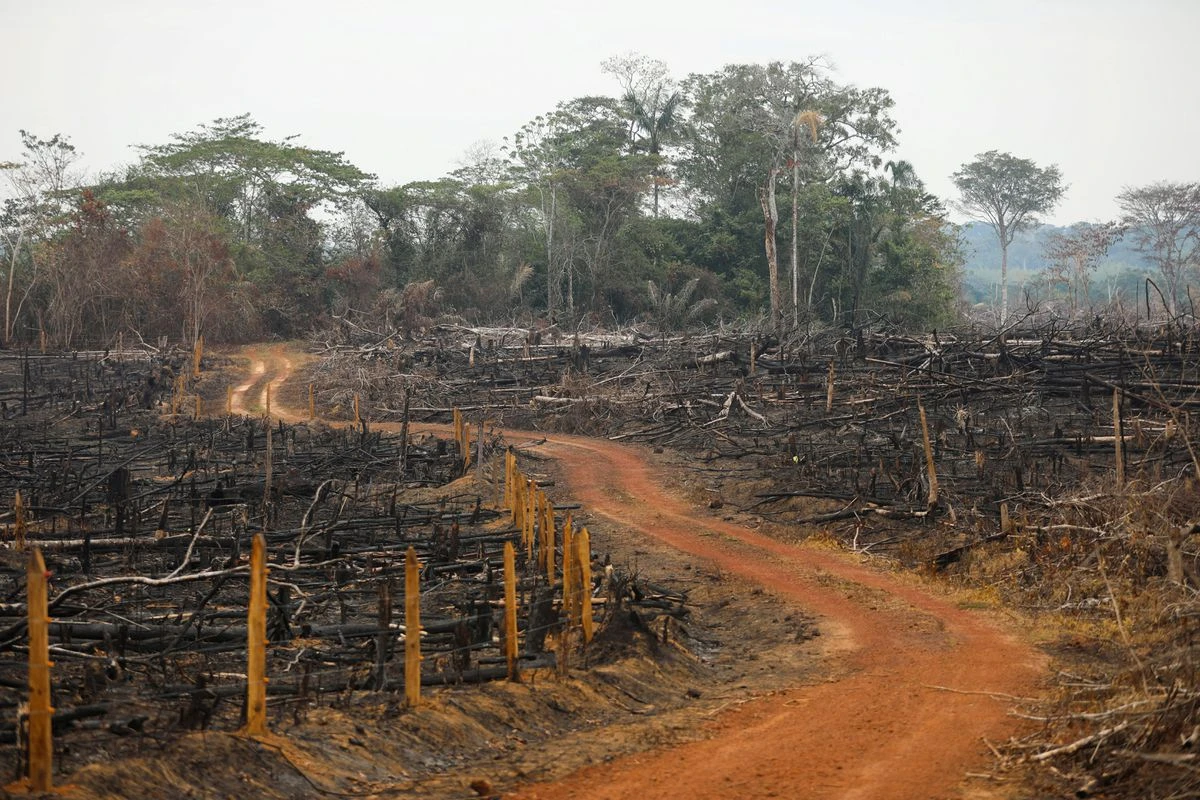
Nature does not need atomic weapons. Nature’s cycles already respond proportionately to the destabilization imposed upon them. When a resource is overexploited or an ecosystem polluted, it does not take long for nature to respond. Fish stocks are depleted, once-rich land goes arid, rivers stop flowing. As we continue to release gases that trap us in a heating bubble, the ocean warms, sending floods and hurricanes our way, as natural habitats are destroyed and wildfires rage. The trouble with nature’s cycles is that many of them are runaway cycles whose effects intensify if we do not do anything to address their root cause. We have been deceived by our own intelligence, continually pushing toward the unknown and blind to any consequences, arrogantly believing that we can control nature, even as a modest invisible virus continues to evade us. As we have seen, nature is quick to respond, and the only way to live sustainably within nature is to know and to respect her equilibria. If we can lastingly make that choice of sustainability, we will see that nature’s generosity has no end.
We face a real and urgent choice to stop deceiving ourselves and to recognize that through our rapid destruction of the environment we are choosing ultimately not to be.
Hassan bin Youssef Yassin
To be or not to be. Being alive must be a conscious choice, for without a choice we are already dead. We may have managed to set foot on the moon, to see faraway stars and to communicate instantly with billions of people around the planet, but when it comes to managing humanity’s relationship with the environment that sustains us we lose all our smarts. As we argue about the petty politics of left or right, authoritarian or laissez-faire, we are simply deceiving ourselves about choices, all of which still mark us as the walking dead. The real concern of humanity today lies elsewhere, in the realization that we face a real and urgent choice to stop deceiving ourselves and to recognize that through our rapid destruction of the environment we are choosing ultimately not to be.
We have abused the natural system we were born into and have today been left with few options. If we truly value our existence and that of others, we must finally accept that we are a part of nature and, as such, must respect its limits and its cycles. We are not smarter than Mother Nature. In fact, we have proved the contrary. So as representatives of humanity and as a part of nature, let us simply choose to be.
- Hassan bin Youssef Yassin worked closely with Saudi petroleum ministers Abdullah Tariki and Ahmed Zaki Yamani from 1959 to 1967. He headed the Saudi Information Office in Washington from 1972 to 1981, and served with the Arab League observer delegation to the UN from 1981 to 1983.


