US will share tech to let South Korea build a nuclear-powered submarine, Trump says

US will share tech to let South Korea build a nuclear-powered submarine, Trump says
1 / 2
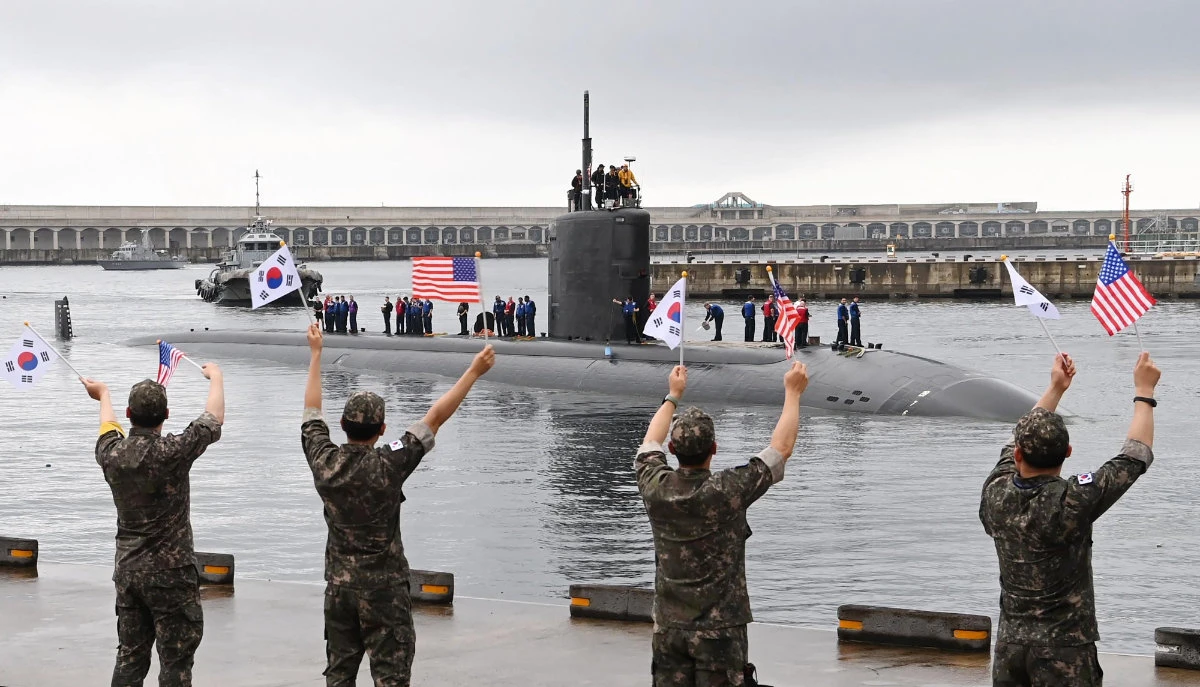
This handout photo taken on July 24, 2023 and provided by the South Korean Defense Ministry shows the USS Annapolis, a US nuclear-powered submarine, arriving as South Korean soldiers wave flags at a naval base in South Korea's southern island of Jeju. (AFP)
US will share tech to let South Korea build a nuclear-powered submarine, Trump says
2 / 2
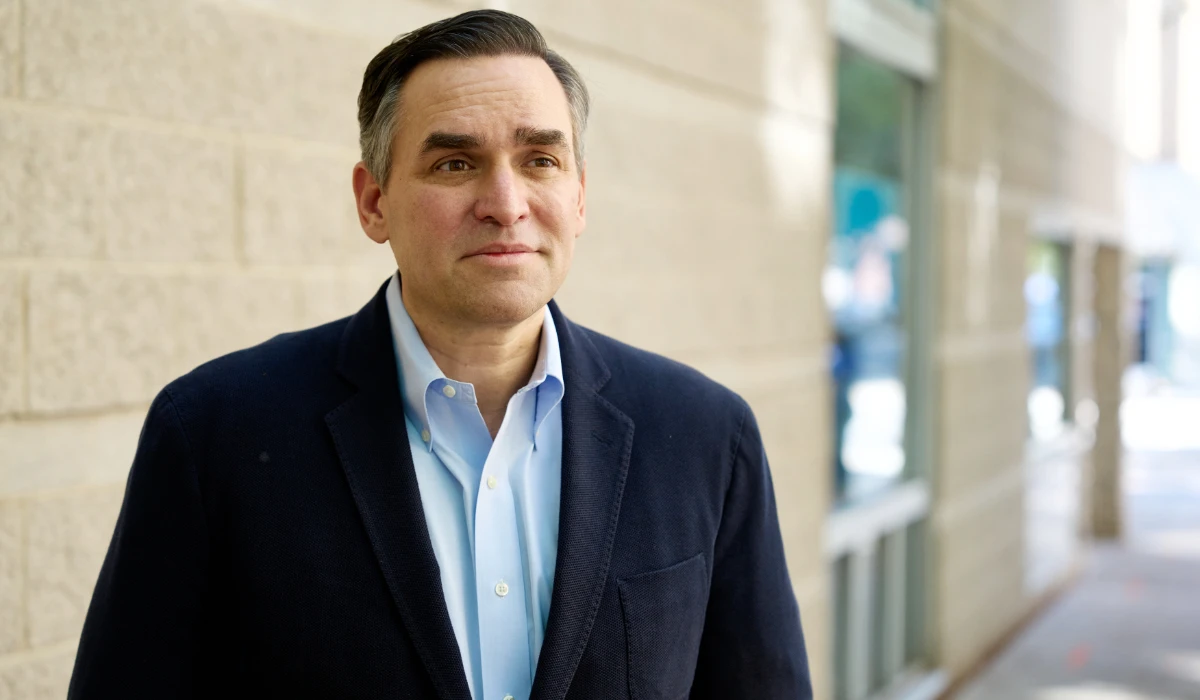
President Donald Trump shakes hands with South Korean President Lee Jae Myung during a dinner event in Gyeongju, South Korea, on Oct. 29, 2025. (AP Photo)
Short Url
Updated 30 October 2025
Follow

US will share tech to let South Korea build a nuclear-powered submarine, Trump says

US will share tech to let South Korea build a nuclear-powered submarine, Trump says
  • President Lee Jae Myung clarified to Trump that his country was not seeking nuclear weapons but submarines that run on nuclear fuel

GYEONGJU, South Korea: The United States will share closely held technology to allow South Korea to build a nuclear-powered submarine, President Donald Trump said on social media Thursday after meeting with the country’s president.
President Lee Jae Myung stressed to Trump in their Wednesday meeting that the goal was to modernize the alliance with the US, noting plans to increase military spending to reduce the financial burden on America.
The South Korean leader said there might have been a misunderstanding when they last spoke in August about nuclear-powered submarines, saying that his government was looking for nuclear fuel rather than weapons.
Lee said that South Korea’s current diesel-powered submarines have limits in tracking other countries’ submarine activities. If South Korea was equipped with nuclear-powered submarines, he said, it could help US activities in the region.
Diesel-powered submarines have to surface regularly to recharge their batteries. But nuclear-powered submarines have superior endurance and can stay submerged for a significantly longer period.
Trump said in a separate post that the country would build its nuclear-powered submarine in the Philly Shipyard, which was bought last year by South Korea’s Hanwha Group.
It was unclear what the size or cost of the sub project would be, but South Korea had said as part of talks with Trump that it had committed $150 billion to invest in America’s shipbuilding capacity.
US nuclear submarine technology is widely regarded as some of the most sensitive and highly guarded technology the military possesses. The US has been incredibly protective of that knowledge, and even a recently announced deal with close allies the United Kingdom and Australia to help the latter acquire nuclear submarine technology doesn’t feature the US directly transferring its knowledge.
Trump’s post on social media comes ahead of his meeting with Chinese President Xi Jinping, whose country possesses nuclear submarines, and after North Korea in March unveiled for the first time a nuclear-powered submarine under construction. It is a weapons system that can pose a major security threat to South Korea and the US
As Trump visited South Korea, North Korea said Wednesday that it conducted successful cruise missile tests, the latest display of its growing military capabilities.
Pentagon officials didn’t immediately respond to questions about Trump’s announcement on sharing the nuclear sub technology with South Korea.


EU in last-minute talks to set new climate goal for COP30

EU in last-minute talks to set new climate goal for COP30
Updated 25 min 49 sec ago
Follow

EU in last-minute talks to set new climate goal for COP30

EU in last-minute talks to set new climate goal for COP30
  • EU ministers meet to try to pass new climate target
  • Bloc’s credibility at risk ahead of COP30 climate talks

BRUSSELS: EU climate ministers will make a last-ditch attempt to pass a new climate change target on Tuesday, in an effort to avoid going to the UN COP30 summit in Brazil empty-handed.
Failure to agree could undermine the European Union’s claims to leadership at the COP30 talks, which will test the will of major economies to keep fighting climate change despite opposition from US President Donald Trump.
Countries including China, Britain and Australia have already submitted new climate targets ahead of COP30.
But the EU, which has some of the world’s most ambitious CO2-cutting policies, has struggled to contain a backlash from industries and governments skeptical that it can afford the measures alongside defense and industrial priorities. EU members failed to agree a 2040 climate target in September, leaving them scrambling for a deal days before European Commission President Ursula von der Leyen meets other world leaders at COP30 in Belem, Brazil, on November 6.
“The geopolitical landscape has rarely been more complex,” EU climate policy chief Wopke Hoekstra told a gathering of climate ministers in Canada on Saturday, adding that he was confident the bloc would approve its new goal.
“The European Union will continue to do its utmost, even under these circumstances, in Belem to uphold its commitment to multilateralism and to the Paris Agreement,” he said.
The starting point for talks is a European Commission proposal to cut net EU greenhouse gas emissions by 90 percent from 1990 levels by 2040, to keep countries on track for net-zero by 2050.
Italy, Poland and the Czech Republic are among those warning this is too restrictive for domestic industries struggling with high energy costs, cheaper Chinese imports and US tariffs.
Others, including the Netherlands, Spain and Sweden, cite worsening extreme weather and the need to catch up with China in manufacturing green technologies as reasons for ambitious goals. The draft compromise ministers will discuss, seen by Reuters, includes a clause demanded by France allowing a weakening of the 2040 goal in future, if it becomes clear EU forests are not absorbing enough CO2 to meet it. Brussels has also vowed to change other measures to attempt to win buy-in for the climate goal. These include controlling prices in an upcoming carbon market and considering weakening its 2035 combustion engine ban as requested by Germany.
A deal on Tuesday will require ministers to agree on the share of the 90 percent emissions cut countries can cover by buying foreign carbon credits — effectively softening efforts required by domestic industries.
France has said credits should cover 5 percent, more than the 3 percent share originally proposed by the Commission. Other governments argue money would be better spent on supporting European industries than buying foreign CO2 credits.
Support from at least 15 of the 27 EU members is needed to pass the goal. EU diplomats said on Monday the vote would be tight and could depend on one or two flipping positions.
Ministers will try first to agree the 2040 goal, and from that derive an emissions pledge for 2035 — which is what the UN asked countries to submit ahead of COP30.