
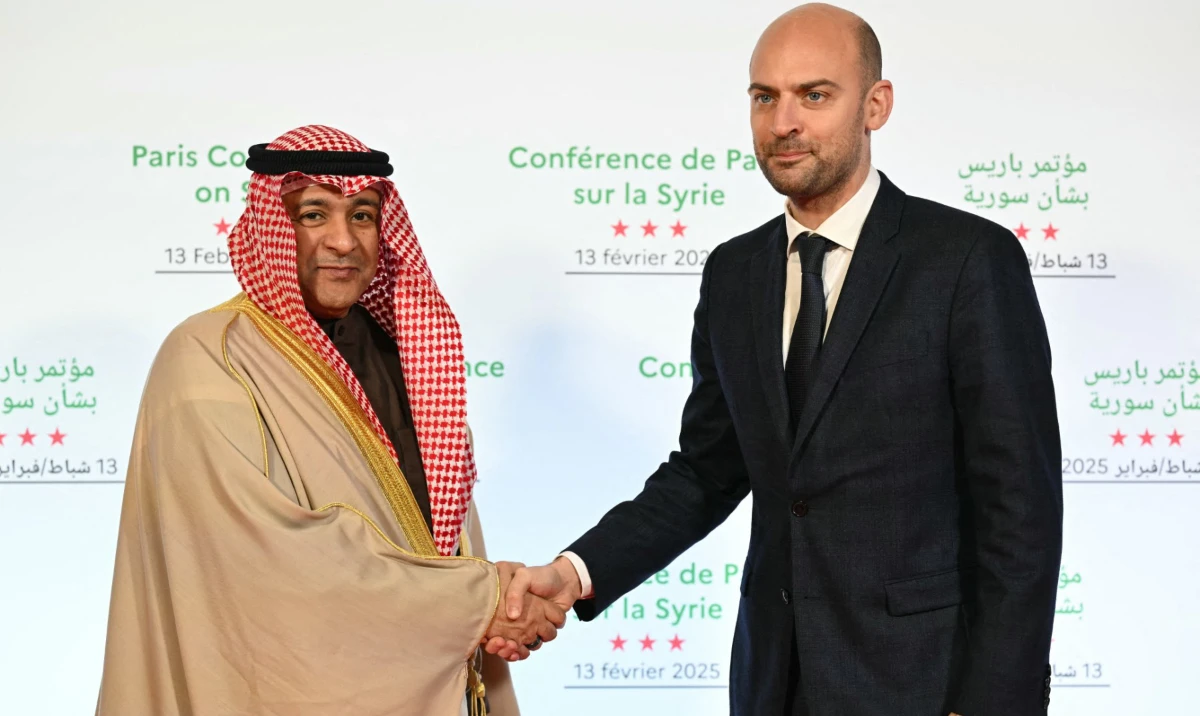

The next Gulf Cooperation Council-EU summit, expected later this year in Saudi Arabia, comes at a critical moment for both blocs. It should serve as an opportunity to reset their partnership in light of the Iran conflict. The high-level regional security meeting scheduled for this month in Brussels could kick off discussions on this new direction.
As the US and Iran negotiate a final deal, the GCC and the EU need to consider redefining their relationship as a result of the war and its uncertain aftermath. They need to ensure that their core interests are protected during the US-Iran negotiations and beyond.
The Iran conflict has seriously affected GCC and EU countries alike, albeit in different ways. For the GCC, the war has made clear the need to put to work the partnerships they have cultivated over the decades to protect their economic model, their citizens’ livelihoods, regional peace and energy security. They need to deploy those partnerships to support their diplomatic efforts, restore their economic capacity, defend against Iranian missiles and drones, and shield their critical infrastructure, energy assets, ports, cities and investment hubs from attacks by Iran and its proxies.
The closure of the Strait of Hormuz has unified the world like never before in opposition to this new development, which has wreaked havoc with the global economy. Curiously, Iran’s sworn enemies the US and Israel are among the least affected by this act, which the rest of the world sees as a form of collective punishment Iran has inflicted on them for no reason. It thus requires united action to restore freedom of navigation in the waterway.
With the Iran war, Europe suffered its second energy shock in four years. Attacks on GCC oil installations and the closure of the Strait of Hormuz exacerbated Europe’s energy insecurity and disrupted trade routes. Already struggling with low growth rates, some EU countries’ economic prospects are more in doubt now.
Europe’s estrangement from the US and lack of leverage with Iran made it helpless to influence developments in the Gulf, but it could become more effective when partnering with the GCC.
The 1988 GCC-EU Cooperation Agreement was largely about technical and economic cooperation, which was important at the time, but it no longer suffices. The two blocs reset their relationship in February 2022 with an announcement of a “strategic partnership” and they agreed on a new and more ambitious “joint action program,” followed shortly after by the adoption of the EU-Gulf Strategy. These developments were followed by the GCC-EU summit in Brussels in October 2024, with even greater ambitions to transform their relationship into something stronger and more comprehensive.
When the war and Iran’s attacks on the Gulf started on Feb. 28, EU leaders were among the first to express genuine solidarity. The foreign ministers of both blocs met on March 5, just five days after the start of the war, followed by a summit of leaders from the two sides and countless other gatherings since. There is enough goodwill to build on that strategic partnership.
The two blocs need to ensure that their core interests are protected during the US-Iran negotiations and beyond.
Dr. Abdel Aziz Aluwaisheg
The GCC and the EU need now to translate their solidarity, shared pain and common interests into practical cooperation to address the damage done by the war. More than ever, they need to act as the two belligerents negotiate a final deal. In particular, the parameters and spirit of their relationship must be redefined to reflect the new realities. Those parameters could include the following.
First, through coordinated political action, they should be part of the ongoing negotiations on the final deal in the Iran war and not wait until afterward. The EU should support GCC action at the UN Security Council to secure a resolution guaranteeing freedom of navigation in the Strait of Hormuz. Their partnership on other regional issues, such as Gaza, the two-state solution, Syria, Yemen and Lebanon, should be deepened and sustained.
Second, their regional security cooperation should place more emphasis on maritime security, especially in the Strait of Hormuz and the Red Sea, military industry and integrated air, missile and drone defense, especially drone technology and interceptors.
Third, connectivity cooperation should accelerate, starting with Saudi Arabia’s proposals for maritime and land routes, railroads and digital connectivity. The EU could be part of the regional discussion to establish alternatives to routes through the Strait of Hormuz, to be used when the safety and security of regional passageways are challenged.
Fourth, energy cooperation should include the export of hydrogen through pipelines and tankers. Electricity grid integration, in particular, provides a reliable common market in energy, of any type, which is immune to the closure of any waterway.
Fifth, drawing lessons from the current war, interregional economic cooperation should eschew the transactional, zero-sum bean counting that has dominated trade discussions for decades. Instead, GCC-EU trade and investment negotiations should be based on the strategic and security needs of the two blocs, not merely the immediate financial benefits. Investment and sectoral interim agreements should be considered as stopgap measures while more comprehensive frameworks are pursued.
Sixth, people-to-people engagement should be given a higher priority, whether through tourism, education, scientific research or cultural exchanges. Visa-free mobility, which has been on the table for some time, should be fast-tracked.
These parameters should be used to reset the GCC-EU partnership in light of the Iran war. They give greater priority to strategic resilience — coordinated political and diplomatic action, security, energy, investment, trade, connectivity and safe supply chains.
Business as usual is no longer an option. The reset could be one of the key outcomes of the next summit and could take the form of a new agreement or memorandum of understanding to supplement the outdated 1988 deal.
• Dr. Abdel Aziz Aluwaisheg is the GCC assistant secretary-general for political affairs and negotiation. The views expressed here are personal and do not necessarily represent those of the GCC. X: @abuhamad1


