
- Climate change, rising costs and labor shortages are challenging the industry’s green credentials
DUBAI: “Sustainably sourced.” “Ethically produced.” “Farmer friendly.”
These are among the claims increasingly appearing on coffee bags around the world, reassuring consumers that the drink in their cup is helping protect the environment while supporting the people who grow it. But behind those labels lies a far more complicated reality.
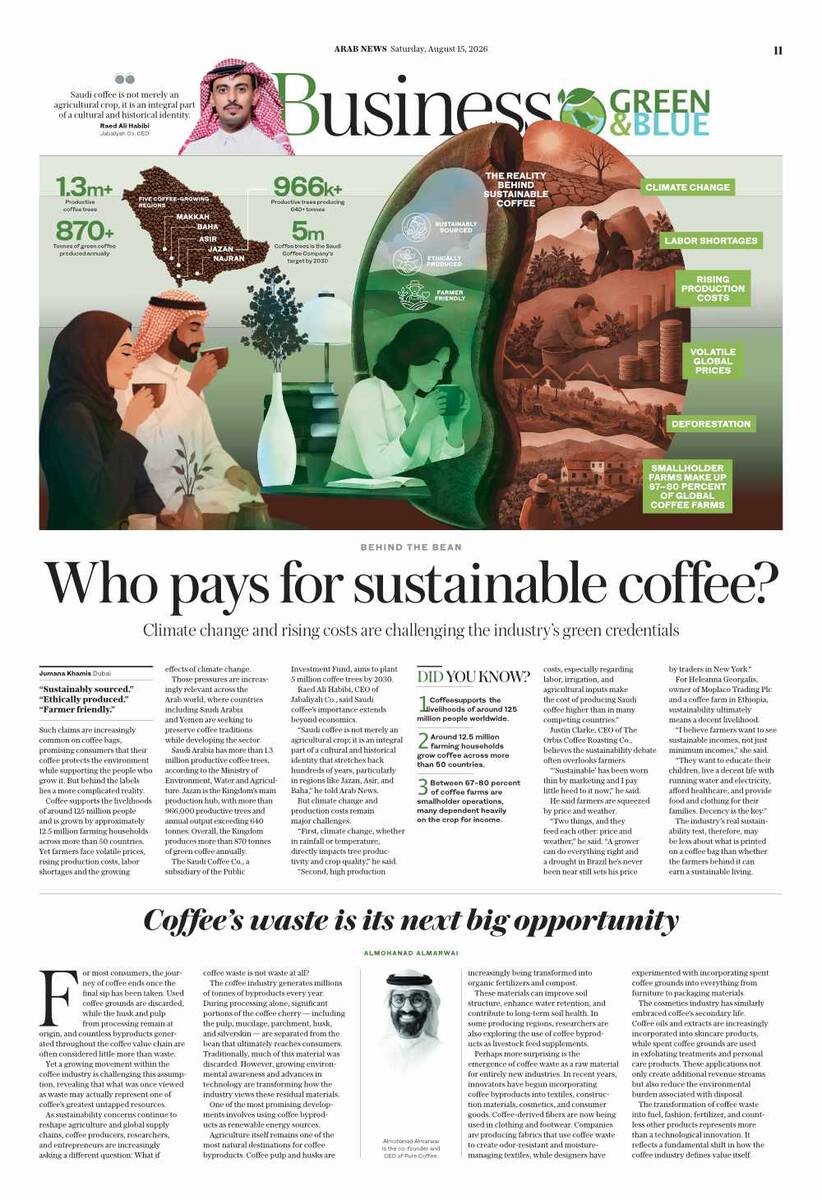
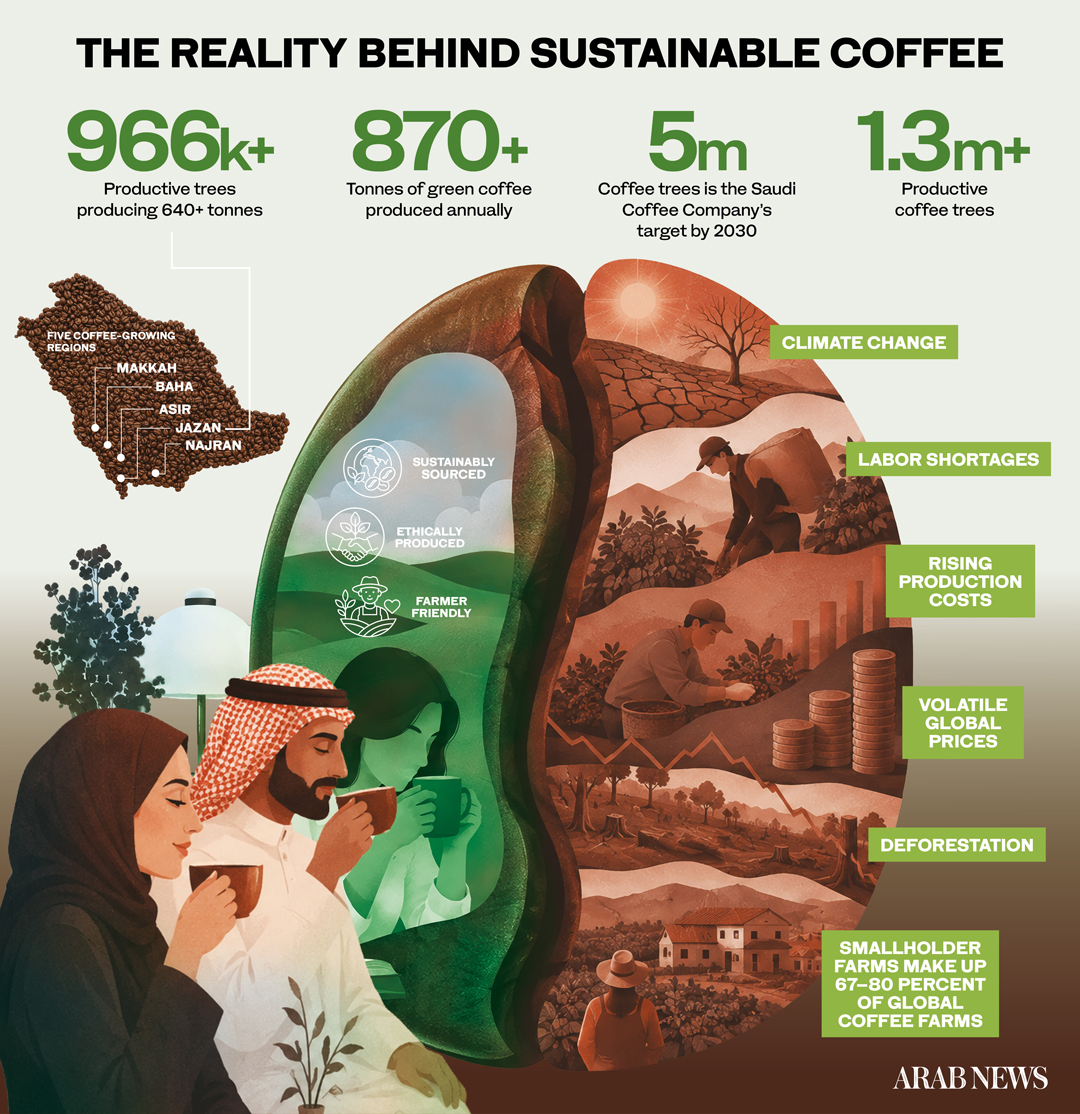
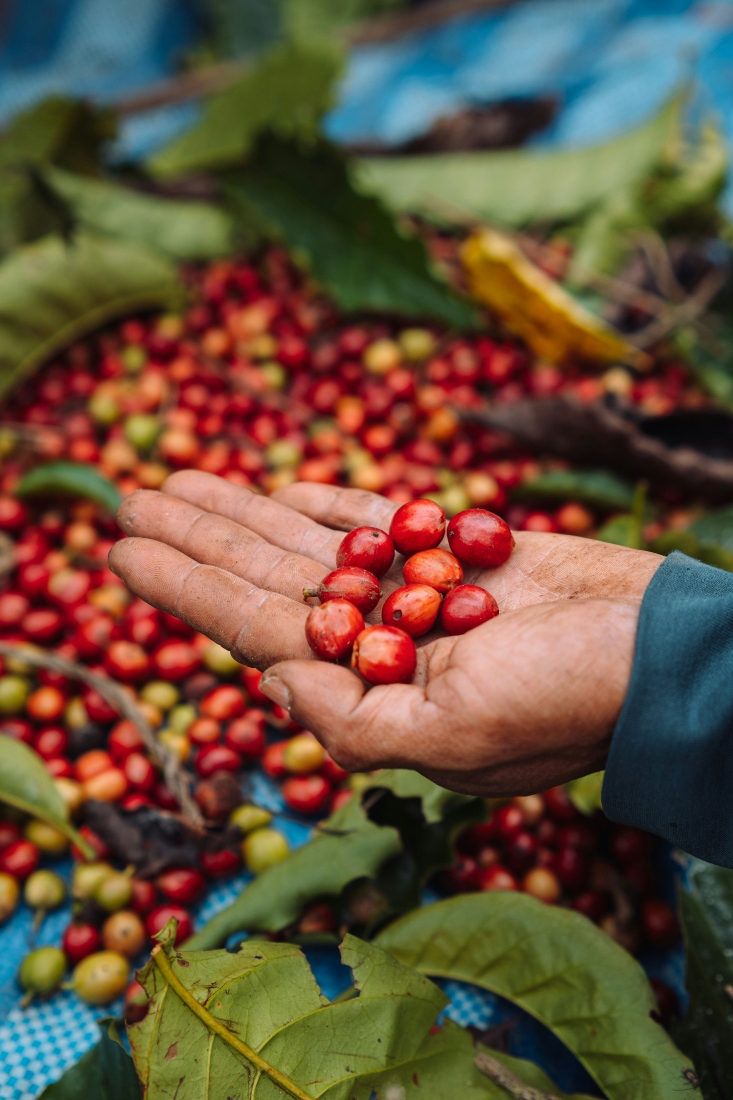
Coffee is one of the world’s most valuable agricultural products, supporting the livelihoods of around 125 million people and grown by approximately 12.5 million farming households across more than 50 countries. Around 67 to 80 percent of those farms are smallholder operations, many run by families that depend almost entirely on coffee for their income.
Yet farmers continue to face volatile prices, rising production costs, labor shortages and the growing effects of climate change. The pressures raise a fundamental question: Is sustainable coffee truly sustainable, or has the term become little more than a marketing tool?
As specialty coffee shops proliferate across the Arab world and consumers pay closer attention to where their coffee comes from, the question is becoming increasingly relevant across the region.
Saudi Arabia is among the countries seeking to revive centuries-old coffee traditions while building a globally competitive industry.
According to figures from the Ministry of Environment, Water and Agriculture, the Kingdom is now home to more than 1.3 million productive coffee trees.
Jazan remains the center of Saudi coffee production, with more than 966,000 productive trees and annual output of more than 640 tonnes. Coffee is also cultivated in Asir, Baha, Makkah and Najran, where mountainous terrain provides suitable growing conditions.
Overall, Saudi Arabia produces more than 870 tonnes of green coffee annually. The Saudi Coffee Co., a subsidiary of the Public Investment Fund, has set a target of planting 5 million coffee trees by 2030 as it seeks to expand domestic production and strengthen the Kingdom’s position in the premium coffee market.
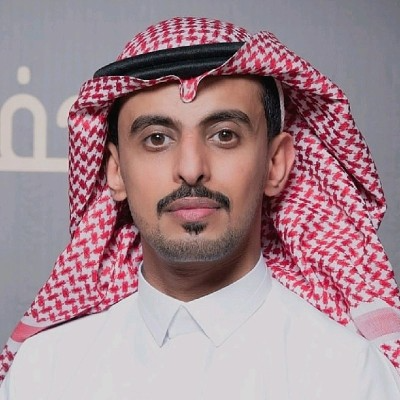
Raed Ali Habibi, CEO of Jabaliyah Co., a Saudi coffee company specializing in Saudi-grown Khawlani coffee, believes the crop’s significance extends well beyond economics.
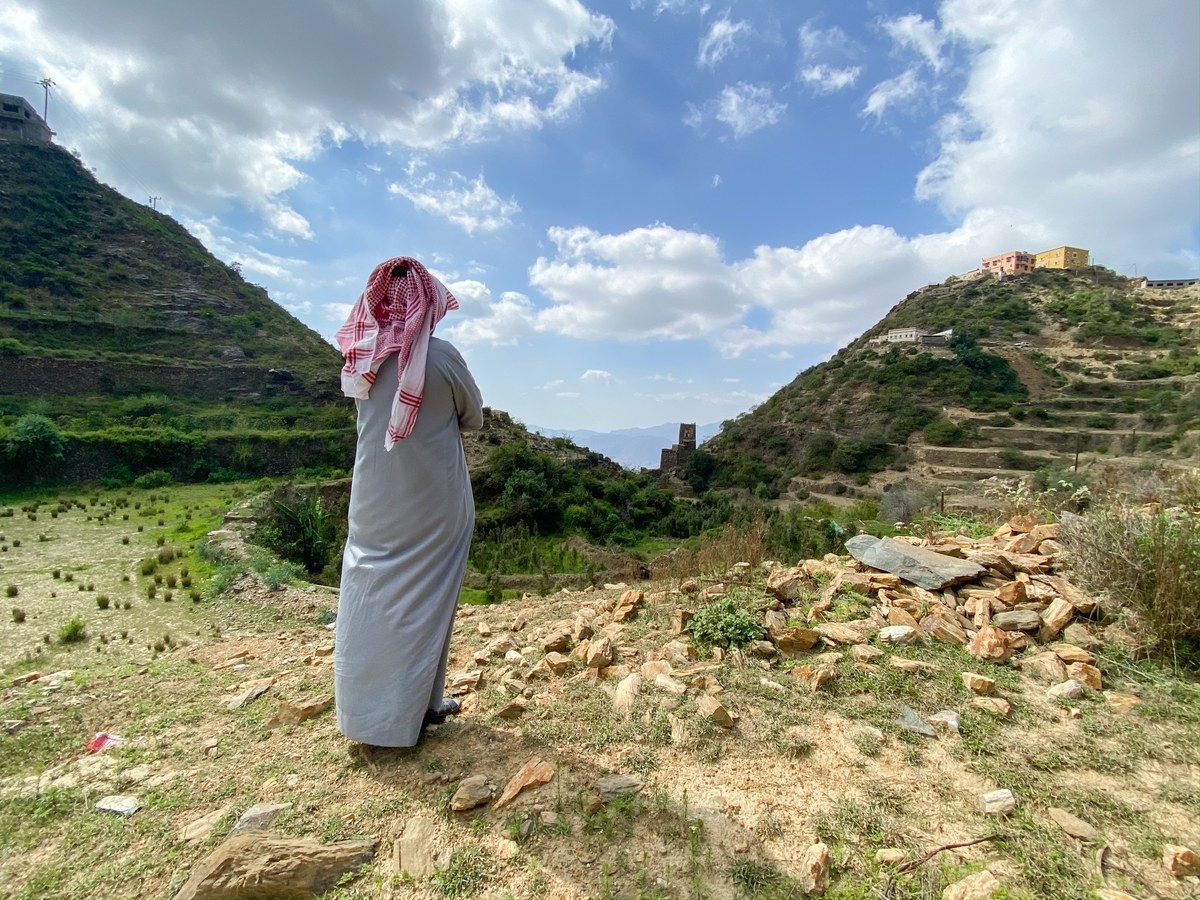
“Saudi coffee is not merely an agricultural crop, it is an integral part of a cultural and historical identity that stretches back hundreds of years, particularly in regions like Jazan, Asir, and Baha,” he told Arab News.
Habibi said Saudi coffee’s mountainous growing conditions and traditional farming methods have helped create a premium product capable of competing internationally.
“Today, interest in Saudi coffee is no longer limited to the local market, it has gained recognition from experts worldwide,” he said.
Despite the sector’s growing momentum, Habibi said it faces three significant hurdles.
“First, climate change, whether in rainfall or temperature, directly impacts tree productivity and crop quality,” he said.
“Second, high production costs, especially regarding labor, irrigation, and agricultural inputs make the cost of producing Saudi coffee higher than in many competing countries.”
He said the post-harvest stage — from drying and processing to packaging and marketing — is now as important as cultivation because it ultimately determines the value of Saudi coffee in local and international markets.
“Sustainability in Saudi coffee farming means producing today without negatively impacting the ability of future generations to produce,” he said.
Government and private sector initiatives are increasingly focused on improving cultivation, processing and quality. But the challenges facing coffee producers extend well beyond Saudi Arabia.
In neighboring Yemen — whose historic port of Mocha gave the world one of coffee’s most recognizable names — farmers continue to cultivate prized Arabica beans despite years of conflict and economic hardship.
According to a 2025 assessment by the Food and Agriculture Organization, coffee occupies almost 35,000 hectares of cultivable land in Yemen and has produced more than 20,800 tonnes in recent years. The crop contributes around 6 percent of the country’s agricultural export revenues, with approximately 60 percent of production destined for international markets.
The average coffee farmer owns just 0.3 hectares, with around 394 coffee trees, highlighting the fragmented nature of production and the crop’s importance to rural livelihoods.
Globally, demand for coffee continues to rise. Brazil and Vietnam together account for more than half of world production, while Ethiopia remains among the top five producers, according to USDA Foreign Agricultural Service data. Despite differences in scale and geography, farmers across these markets face many of the same pressures.
Justin Clarke, CEO of The Orbis Coffee Roasting Co., believes sustainability discussions often overlook the people at the center of the industry.
“Real sustainability partnerships with Orbis Coffee is the farmer making enough to keep going and wanting the next generation to take it on. The rest follows,” he told Arab News.
Clarke argued that long-term relationships between buyers and producers ultimately matter more than sustainability labels.
“‘Sustainable’ has been worn thin by marketing and I pay little heed to it now,” he said.
According to Clarke, farmers are being squeezed by two interconnected forces.
“Two things, and they feed each other: price and weather,” he said. “A grower can do everything right and a drought in Brazil he's never been near still sets his price by traders in New York.”
He believes those pressures are equally evident across the Middle East.
“Yemen is where coffee began, the port of Mocha, and now grows almost nothing, between the war and farmers switching to qat, which sells faster on less water,” he said.
“Saudi is going the other way with Khawlani coffee in Jazan. It usually comes down to water supply in the region.”
For Heleanna Georgalis, owner and general manager of Moplaco Trading Plc and owner of a coffee farm in Ethiopia, farming is both deeply rewarding and financially demanding.
“My farm is my little paradise, to be honest. It is not romantic, nor is it easy, but it is so beautiful that I forget all the pains,” she said.
“Farming is something that sucks your cash dry, but it is the only way you can truly breathe life into your product.”
After years of searching for land, Georgalis established her own farm to gain greater control over production. The experience has reinforced her appreciation for growers.
“We should pay an ode to all the farmers on this earth for the hard work they do and remember that they are not remunerated enough,” she told Arab News.
Georgalis said coffee traditions across Saudi Arabia, Yemen and Ethiopia remain closely connected.
While Saudi coffee is lightly roasted and traditionally prepared with spices and cardamom, Ethiopian coffee is typically roasted darker with a heavier profile. Yemeni coffee, she added, shares similarities with coffee grown in Ethiopia’s Harar highlands, where both are cultivated on steep mountain terraces and produce sweet, nutty, full-bodied coffees.
But Georgalis believes labor shortages have become one of the greatest threats to Ethiopian coffee production.
“Ethiopian coffee is labor-intensive, in a market where labor is no longer readily available,” she said, adding that those who remain available are becoming increasingly expensive.
Deforestation has also emerged as a major threat, with forests increasingly cleared for other crops and eucalyptus plantations.
“Sidamo, which every September used to smell of coffee, now smells of dry land and eucalyptus,” she said.
The loss of forests is stripping coffee-growing areas of biodiversity and natural protection while degrading soils and reducing the organic matter needed to keep plants healthy and productive.
Many farmers, she added, have also shifted to qat cultivation because it offers quicker and more reliable financial returns.
Although her own farm has so far experienced relatively limited effects from climate change, Georgalis said rapid deforestation has begun to alter local weather patterns.
“We are seeing erratic rainfall, stronger sunlight, and weather patterns arriving at unexpected times,” she said. “We remain fortunate for now, but we do not know for how much longer.”
For Georgalis, the industry’s definition of sustainability also needs to change.
“I believe farmers want to see sustainable incomes, not just minimum incomes,” she said.
“They want to educate their children, live a decent life with running water and electricity, afford healthcare, and provide food and clothing for their families. Decency is the key.”
Her comments echo Clarke’s concerns that sustainability initiatives do not always deliver meaningful benefits to producers.
Clarke said many certification schemes fail to provide significant financial gains for farmers.
“The big Western certifications are mostly there to make the shopper feel good,” he said. “The premium that reaches him is small... He often covers the cost of certifying himself on top.”
He argued that responsibility for improving farmer livelihoods extends across the coffee supply chain.
“Money’s always ended up at the drinking end while the grower carries the risk, and that has to change,” he said.
For consumers, he believes even small changes could have a significant impact.
“Drinkers in Dubai and Riyadh will happily pay more for a flat white than a bottle of water. Send a little more of that back to the grower and most of this fixes itself.”
Ultimately, as interest in sustainably produced coffee continues to grow, the industry’s future may depend less on the labels printed on a bag than on whether the farmers who grow the coffee can earn a sustainable living.