

How many civilians must be killed before the world stops treating the Houthi militia as a political actor that can be managed through statements and diplomatic gestures? How many airports must come under attack, how many lives must be shattered and how much more blood must be spilled before the international community confronts the reality that this terrorist militia has become a direct threat to regional security and civilian life?
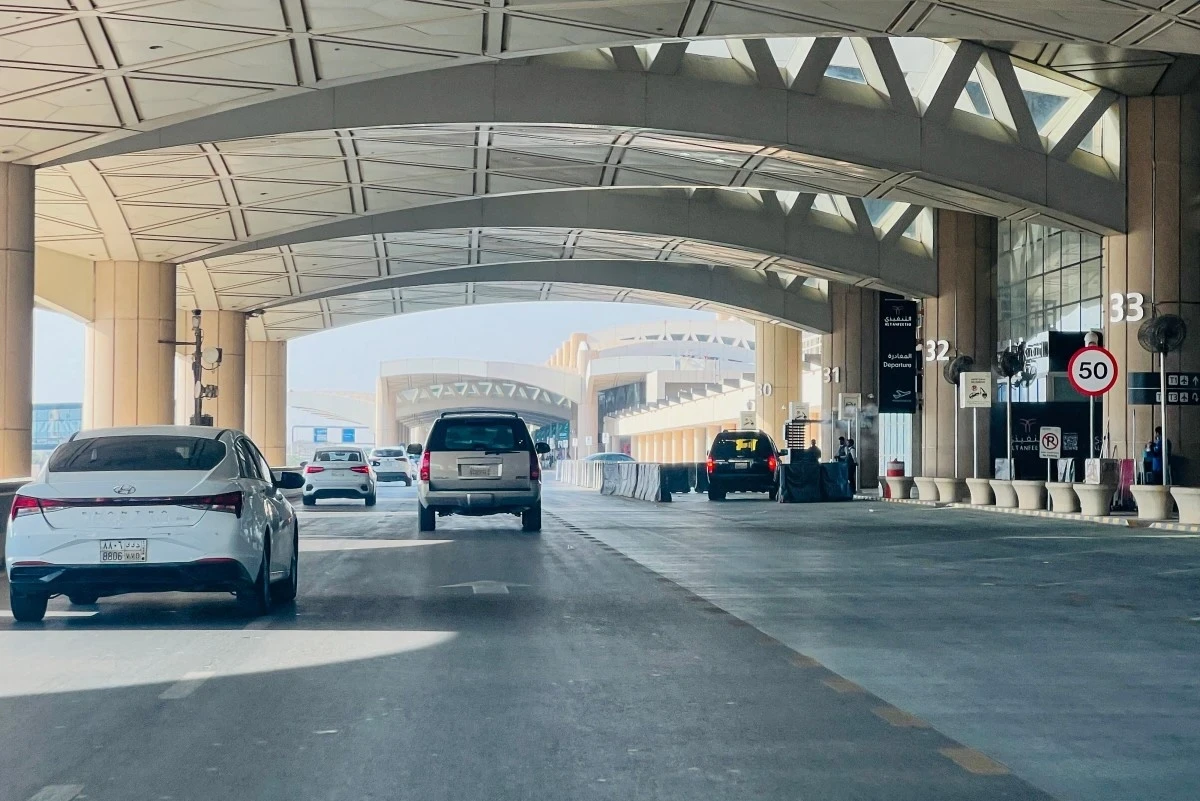
Saturday’s attack on King Khalid International Airport in Riyadh should silence any remaining argument that Houthi aggression can be dismissed as another episode in Yemen’s protracted conflict. Saudi Arabia’s General Authority of Civil Aviation reported 12 deaths and 309 injuries. These are not incidental figures in a military briefing. They represent an appalling human cost inflicted on civilians who had every right to expect safety at an international airport.
There should be no ambiguity about the moral responsibility for attacks that deliberately target civilian facilities or recklessly endanger innocent lives. No political slogan, ideological grievance or claim of resistance can justify turning airports into targets and ordinary travelers into victims. The Houthi militia’s conduct deserves the strongest possible condemnation. It is reckless, criminal and fundamentally incompatible with the most basic principles of humanity.
The world must stop sanitizing this militia’s actions with the language of political complexity. Whatever its claims or ambitions, an armed group that threatens civilian infrastructure and puts the lives of thousands at risk must be judged by what it does, not by the excuses it offers. The deliberate endangerment of civilians cannot be repackaged as resistance and terrorism does not become legitimate simply because its perpetrators wrap it in political rhetoric.
The Houthi militia is reckless, criminal and fundamentally incompatible with the most basic principles of humanity
Hani Hazaimeh
Saudi Arabia has every right to defend its citizens, residents, territory and critical infrastructure. No sovereign state can be expected to watch passively as missiles threaten its airports and endanger its people. The Kingdom is not obliged to accept repeated attacks as the inevitable cost of regional instability, nor should it be pressured into treating restraint as an unlimited concession to an armed militia that interprets inaction as weakness.
Following an attack of this magnitude, Saudi Arabia is entitled to take necessary and proportionate measures, consistent with international law, to prevent further assaults and restore security. This is in recognition of a fundamental principle: a government has a duty to protect its people.
Those who call on Saudi Arabia to exercise restraint must answer a basic question: What meaningful protection are they offering the civilians under threat? It is easy to urge calm from a distance, far from the airports, homes and communities exposed to missile attacks. It is far harder to explain to grieving families why the international response remains trapped in a cycle of condemnation followed by inaction.
The Houthis have exploited that cycle for far too long. An attack occurs, officials issue statements, diplomats express concern and the international community moves on until the next assault. Such a response does not deter terrorism. It teaches perpetrators that the consequences of their actions will be temporary, that outrage will fade and that they can continue testing the limits of international tolerance.
Airports serve families, workers, pilgrims, business travelers and international visitors. They are vital civilian infrastructure, not instruments of military intimidation. Attacks that deliberately target civilians or are indiscriminate in ways that endanger them violate fundamental principles of international humanitarian law. No militia should be permitted to threaten an entire population and then hide behind political justifications when innocent people pay the price.
The international response remains dangerously inadequate. Condemnation without consequences is not a strategy
Hani Hazaimeh
The international community must also confront the broader regional consequences of Houthi aggression. The militia’s military relationship with Iran, its access to weapons and its capacity to threaten neighboring countries and international shipping have made its actions a concern far beyond Yemen. The precise degree of external involvement in individual decisions may vary, but that uncertainty cannot be used to evade the urgent task of confronting the threat itself.
The security of Saudi Arabia is inseparable from the security of the wider region. Threats against the Kingdom’s airports and infrastructure undermine regional stability, disrupt international travel and deepen the climate of insecurity across the Arabian Peninsula and the Red Sea. The implications extend to international commerce and the freedom of navigation through vital maritime routes, including Bab Al-Mandab. A militia willing to endanger civilian aviation must not be allowed to expand its capacity to intimidate the region by threatening global shipping as well.
Yet the international response remains dangerously inadequate. Condemnation without consequences is not a strategy. Declarations of solidarity without practical action are little more than diplomatic theater. Governments must work together to strengthen air and missile defenses, improve intelligence sharing, disrupt illicit weapons transfers and ensure that those responsible for attacks face credible accountability. The objective must be to prevent the next strike, not merely to document its aftermath.
At the same time, the world must not confuse the Houthi militia with the Yemeni people. Yemenis have endured years of conflict, deprivation, displacement and economic collapse. They have suffered enormously under the burden of war and the domination of armed actors. The militia’s decision to threaten its neighbors does not represent a path to Yemen’s dignity or recovery. It deepens the country’s isolation, risks inviting further devastation and obstructs the political settlement Yemen urgently needs.
A durable settlement requires more than appeals for dialogue. It requires an end to cross-border attacks, respect for civilian life and a credible process to restore legitimate institutions and prevent armed groups from holding an entire country — and its neighbors — hostage to their ambitions. Diplomacy cannot succeed when it becomes a shield behind which aggression continues unchecked.
Nor can negotiations be meaningful if the perpetrators believe that every attack will be followed by another opportunity to regroup and strike again. Peace cannot be built on the assumption that the victims must indefinitely absorb the violence while the aggressors face no meaningful deterrent.
The civilian casualties of Houthi aggression must never become statistics that briefly dominate headlines before being forgotten. Every death is a human tragedy; every injury brings suffering to individuals and families. The nationality of the victims does not diminish the value of their lives and the location of an attack does not reduce the obligation to protect civilians.
The Houthis have crossed a line that should never have been crossed. Their attacks on civilian facilities demand more than ritual denunciations and carefully worded expressions of concern. They demand a serious, coordinated response that makes clear that terrorism and the deliberate endangerment of civilians will not be tolerated.
Saudi Arabia must be able to protect its people without being subjected to a double standard in which its restraint is demanded while the militia’s aggression is met with little more than words. The Kingdom has the right to take lawful measures to defend its territory, protect its citizens and deter further attacks. The international community should support that right.
The real test is whether governments are prepared to act before the next tragedy, rather than express regret after it. If the world continues to reward Houthi aggression with indecision, it will bear part of the responsibility for allowing the threat to grow.
Enough of the excuses. Enough of the empty condemnations. Enough of pretending that a terrorist militia can repeatedly threaten civilian lives without consequences.
The protection of civilians must be the priority and the security of Saudi Arabia cannot be treated as negotiable. The Houthis must be confronted with credible deterrence, meaningful accountability and a clear understanding that their campaign of terror will not be allowed to dictate the future of the region. The time for diplomatic theater is over. The time for effective action is now.
Hani Hazaimeh is a senior editor based in Amman.
X: @hanihazaimeh


