In December l967 the British government decided to quit Aden, capital of what was called Federation of South Arabia, which became a so-called democratic republic ruled by a Marxist-oriented regime closely linked to the Soviet Union.
The departure of the British rulers meant closure of the largest British military base outside the United Kingdom after 130 years during which Aden became the most flourishing city along the Red Sea and the Arabian Sea. It attracted in due course over 300,000 expatriates from other British empire countries — India, Pakistan, Somalia, and other states including the independent monarchy of Yemen. Yemen claimed that Aden and the surrounding protectorates belonged to it before those were occupied by the British. Yemen had a point but it could not enforce its will and reoccupy Aden.
The British had wanted a seaport in the area and tried islands like Socotra, Perim and Kamaran but Aden was the place they had fixed their sight on because it was poorly defended, with practically no native population and a fine harbor which was quickly converted into a free port that soon became one of the busiest harbors in the world.
From the mid 19th century it was declared a free port and practically anybody could settle there. The surrounding areas as well as Yemen were backward making Aden under British rule a true bride of the Red Sea and the Arabian Sea as the people and the British called it. Within a few years the small colony had schools, newspapers, cinema houses and all the trappings of modernity.
The British added Aden to their chain of bases including Gibraltar, Cyprus, Malta, Suez, Mumbai, Sri Lanka, Singapore and Hong Kong and they did so because there was none to oppose them in the 19th and part of the 20th centuries. Such was the sweeping power the British empire wielded during the period until the World War II which heralded the beginning of the end of the largest imperial power in the world.
The occupation failed thanks to the opposition of the Soviet Union, the United States and the world in general. The Americans were ashamed of the conduct of their closest allies and put immense pressure on them to quit Egypt after they had landed in Suez. The British people were furious that their government should engage in such conduct that reminded them and the world of the colonial period when Britain and France occupied and annexed any land or country on flimsy grounds.
Aden had been occupied on the pretext that the Bedouins and fishermen of the seaport had attacked and looted a British India ship in 1839. The invaders remained there until 1967.
Gradually, Aden flourished as its strategic importance was established partly as a base and partly as a first line of defense for India, the jewel of the British empire, just as Indonesia had been for 350 years a milch cow for the Dutch government and its people. When the Japanese army approached it the Dutch garrison like the British one in Singapore surrendered without any resistance.
The turning point for Aden and to some extent for the south Arabian hinterland and Yemen came soon after the British exit from Suez and London's decision to build a huge military base in Aden. Within a few years thousands of troops and their families flocked to Aden and the economy boomed. English language newspaper published in Aden sold several thousand copies in addition to several English language publications which used to arrive in Aden the same day of its publication in London.
It was boom time and hundreds of thousands of people flocked to Aden to build the huge refinery and work in the military bases. Indians gripped control over the economy and many of them also worked in the government secretariat.
However, the prosperity did not last long as the Yemen revolution next door drew several thousand Egyptian troops opposing the royalist forces of the ousted imam who was secretly supported by the British in Aden. President Nasser of Egypt decided to support a revolution against the British presence in Aden at the same time as he supported the republican regime in Yemen.
With Egypt's defeat by Israel in l967 and British withdrawal from southern Arabia, the revolutionaries of Aden supported by the Soviet Union soon after independence seized the opportunity and established a Marxist-oriented regime that lasted through more than one coup till l994. But that period was marked by miseries and poverty forcing nearly half of the population of Aden and its surrounding areas to seek refuge abroad including Yemen proper, Saudi Arabia, the Gulf and as far away as Canada and Britain.
Some of them are even in Scandinavia and Australia. But, the majority landed in the Kingdom. Almost all the Indians living in Aden left the country for back home where they opened shops including jewelry showrooms in which they had excelled back in Aden.
Incidentally, the British had attached Aden to their Indian domain and ruled it from Bombay. But the approaching Indian independence at the beginning of the World War II persuaded the British to detach it and declare it a crown colony, which it remained until independence in 1967.
Because of internal disputes in the then Peoples Democratic Republic of Yemen, the economy sank further, unemployment became rife and poverty became pervasive forcing the government of the day to seek merger with Yemen. Finally, the Republic of Yemen came into being, which only existed for four years from 1990 before a full-scale war erupted between the two sides. The south was defeated, but the republic remained intact after its leaders escaped.
Although the south is still a part of the republic and its economy did much better under the united regime, troubles cropped up because of perceived northern domination.
At present there is a current national dialogue under way seeking to find a permanent solution short of partition or separation. The majority of north and south are discussing a federal system of government if they can agree on the fate of the oil reserves which are mainly situated in the south — that is in Hadhramaut.
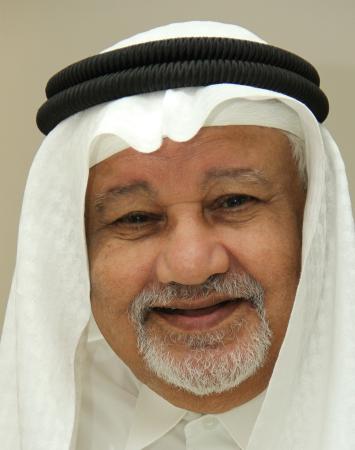
• Farouk Luqman is an eminent journalist based in Jeddah.
Email: [email protected]