- Pillay says report shows direct and public incitement by senior Israeli officials — evidence of intent behind genocidal acts
- Underscores the Genocide Convention requires states to take tangible action, not just issue statements of concern
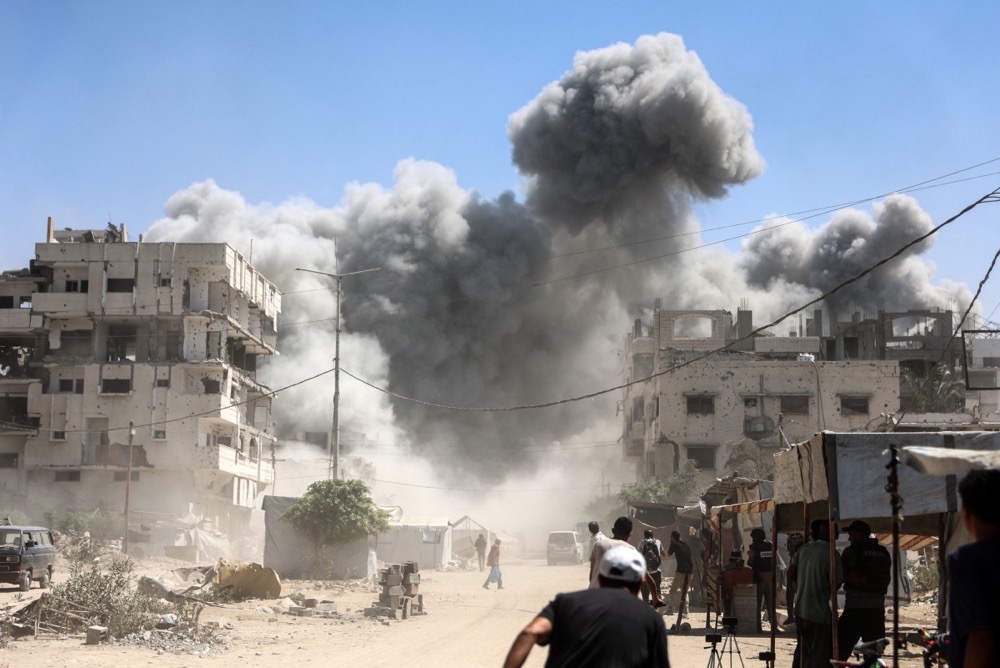
NEW YORK CITY: Two years into the war in Gaza, a landmark report from the UN Commission of Inquiry has shaken the international community. For the first time, a UN body has formally concluded that Israel is committing genocide against the Palestinian people.
As diplomatic activity intensifies ahead of the 80th session of the UN General Assembly, the report is dominating closed-door briefings, drawing attention from ambassadors, journalists and diplomats alike. Many are calling it a watershed moment in the decades-old conflict.
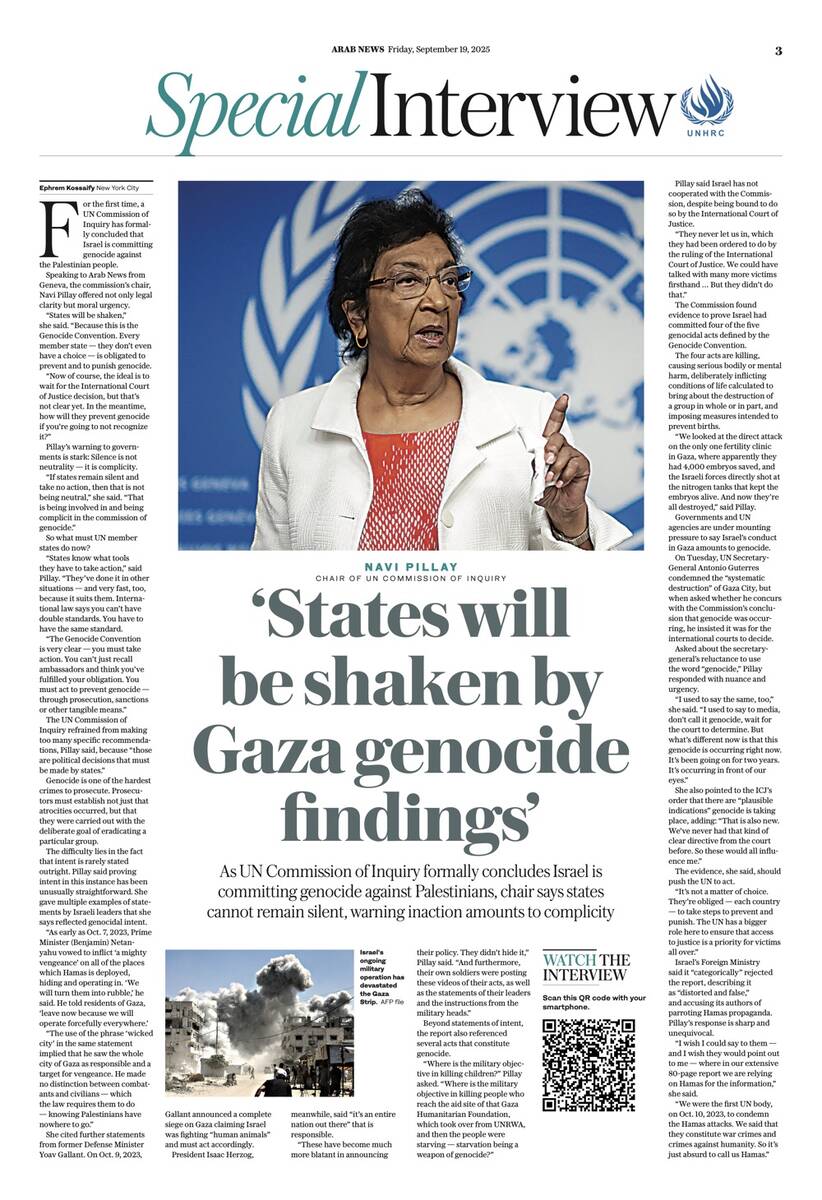
Speaking to Arab News from Geneva, the commission’s chair, Navi Pillay — a former UN high commissioner for human rights and former president of the International Criminal Tribunal for Rwanda — offered not only legal clarity but moral urgency.
Commenting just two days after the report’s release, she reflected on its reception, the obligations of states and why the world can no longer afford to remain silent.
“There has been a huge response to this report,” Pillay said. “We expected that, because this is the first UN voice identifying what’s happening — what happened and what’s happening — as genocide.
“I’m here in Geneva, and all the waiters seem to have seen the media. It just warms my heart that ordinary people were waiting for some clarity … they were waiting for the voice of the UN on this.”
The report is the product of two years of painstaking investigation. “We worked so hard to get this done — but we had to be thorough on this,” said Pillay.
But for many, the report’s conclusions come as little surprise, merely confirming what they already knew. “Many people said to me, ‘If we can see it for ourselves on television — why are you only calling it genocide now?’ People are owed explanations for this,” she added.
The report lands amid a shift in global consciousness. From street protests to parliaments, calls for an end to the war are growing louder. In Washington, 21 members of Congress have now publicly stated that Israel is committing genocide against Palestinians.
Asked whether this signals a turning point in global perceptions, Pillay did not mince her words. “States will be shaken,” she said. “Because this is the Genocide Convention. Every member state — they don’t even have a choice — is obligated to prevent and to punish genocide.
“Now of course, the ideal is to wait for the International Court of Justice decision, but that’s not clear yet. In the meantime, how will they prevent genocide if you’re going to not recognize it?”
Pillay’s warning to governments is stark: Silence is not neutrality — it is complicity. “If states remain silent and take no action, then that is not being neutral,” she said. “That is being involved in and being complicit in the commission of genocide. So that’s a very serious impact on states.”
So what must UN member states do now, particularly those supplying weapons and diplomatic cover to Israel?
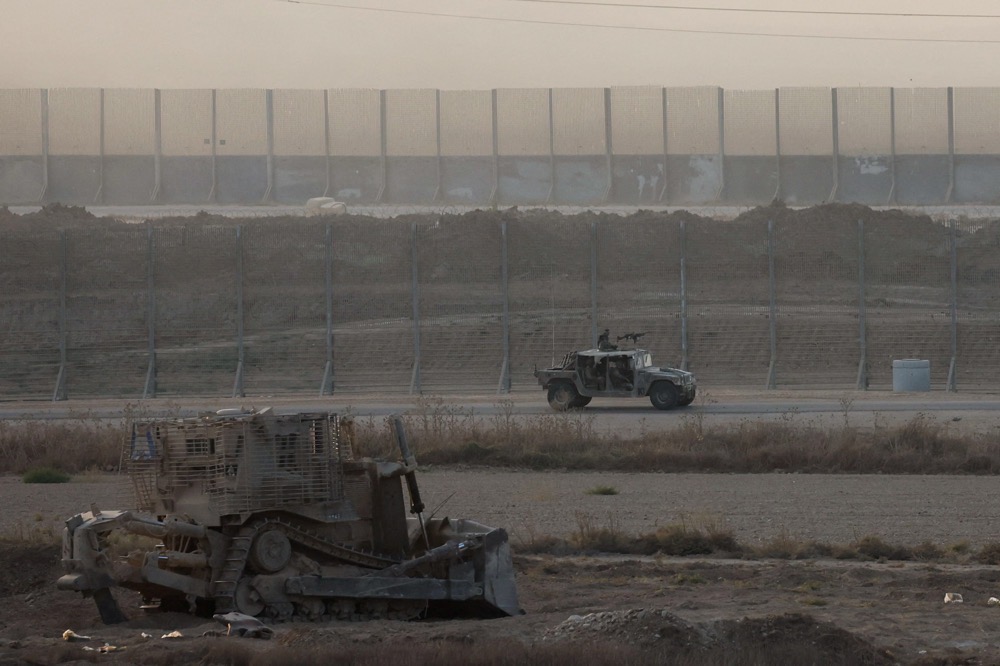
“States know what tools they have to take action,” said Pillay. “They’ve done it in other situations — and very fast, too, because it suits them. International law says you can’t have double standards. You have to have the same standard.
“The Genocide Convention is very clear — you must take action. You can’t just recall ambassadors and think you’ve fulfilled your obligation. You must act to prevent genocide — through prosecution, sanctions or other tangible means.”
She added: “You yourself have to take steps to stop it. I’m hoping that they will get together, discuss this, and come up with strategies.”
The UN Commission of Inquiry refrained from making too many specific recommendations, Pillay said, because “those are political decisions that must be made by states.”
“But, and this is what I am emphasizing, once it’s under the Genocide Convention, you can’t just do little things like withdrawing your ambassador. You have to actively, for instance, prosecute or actually see how you can help prevent genocide continuing in Gaza.”
Under a 1948 international treaty known as the Genocide Convention, genocide is defined not only by the acts committed, such as mass killings, but by the specific intent — dolus specialis — to destroy, in whole or in part, a national, ethnic, racial or religious group.
This definition means genocide is one of the hardest crimes to prosecute. Prosecutors must establish not just that atrocities occurred, but that they were carried out with the deliberate goal of eradicating a particular group.
The difficulty lies in the fact that intent is rarely stated outright. Political and military leaders seldom make explicit declarations of genocidal purpose.
Instead, prosecutors must infer intent from indirect sources — patterns of conduct, official policies, systematic targeting of civilians and the broader context in which the violence occurs.
However, Pillay believes the case with Israel is different. The Commission found that proving intent has been unusually straightforward.
According to Pillay, unlike in most genocide cases, intent here was openly declared by political and military leaders, often in public statements.
These were backed by actions that systematically targeted civilians and destroyed the conditions necessary for Palestinian life in Gaza.
In this instance, the evidence of intent was not hidden — it was overt, repeated and matched by consistent patterns of conduct on the ground.
“Let me first point out that I have experience of judging genocide,” Pillay said. “I was the judge and president of the UN International Criminal Tribunal of Rwanda.
“That was the very first judgment in the world of genocide. And I assure you, it was much harder. We didn’t have the kind of help that we have now.”
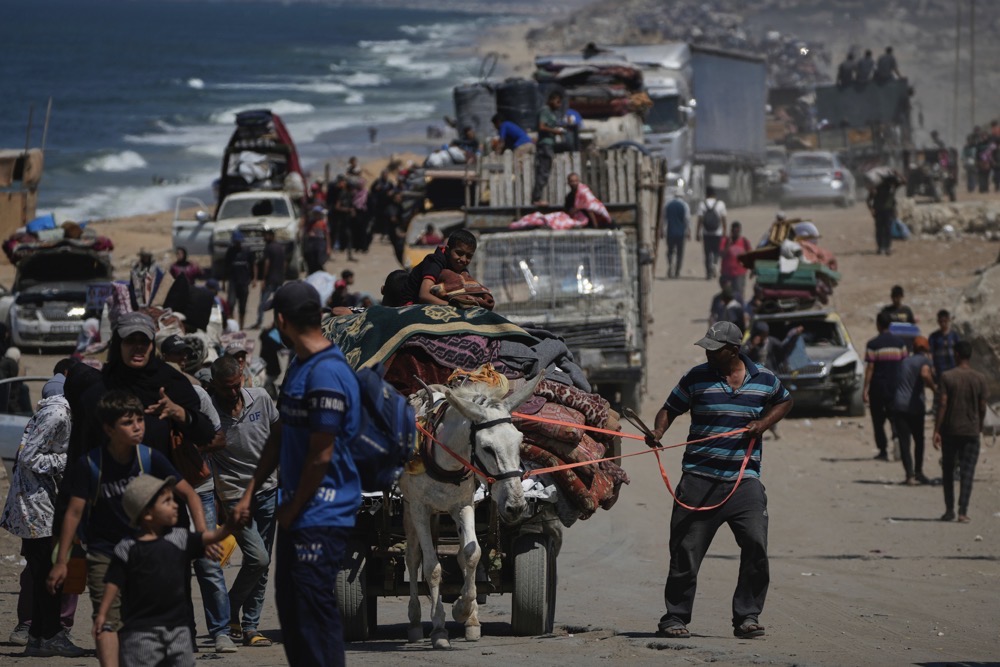
Pillay gave multiple examples of statements by Israeli leaders that she says reflected genocidal intent.
“As early as Oct. 7, 2023, Prime Minister (Benjamin) Netanyahu vowed to inflict ‘a mighty vengeance’ on all of the places which Hamas is deployed, hiding and operating in. ‘We will turn them into rubble,’ he said. He told residents of Gaza, ‘leave now because we will operate forcefully everywhere.’
“The use of the phrase ‘wicked city’ in the same statement implied that he saw the whole city of Gaza as responsible and a target for vengeance. He made no distinction between combatants and civilians — which the law requires them to do — knowing Palestinians have nowhere to go.
“To us, that’s the cruelest part. I have studied very many conflicts, and the victims or even the perpetrators knew they could go to neighboring countries. Here, Palestinians are locked in. Where are they expected to go?”
She cited further statements from former Defense Minister Yoav Gallant. On Oct. 9, 2023, Gallant announced a complete siege on Gaza claiming Israel was fighting “human animals” and must act accordingly.
In a speech to security forces the next day, he said: “Gaza won’t return to what it was before. There will be no Hamas. We will eliminate everything. If it doesn’t take one day, it will take weeks or even months. We will reach all places.”
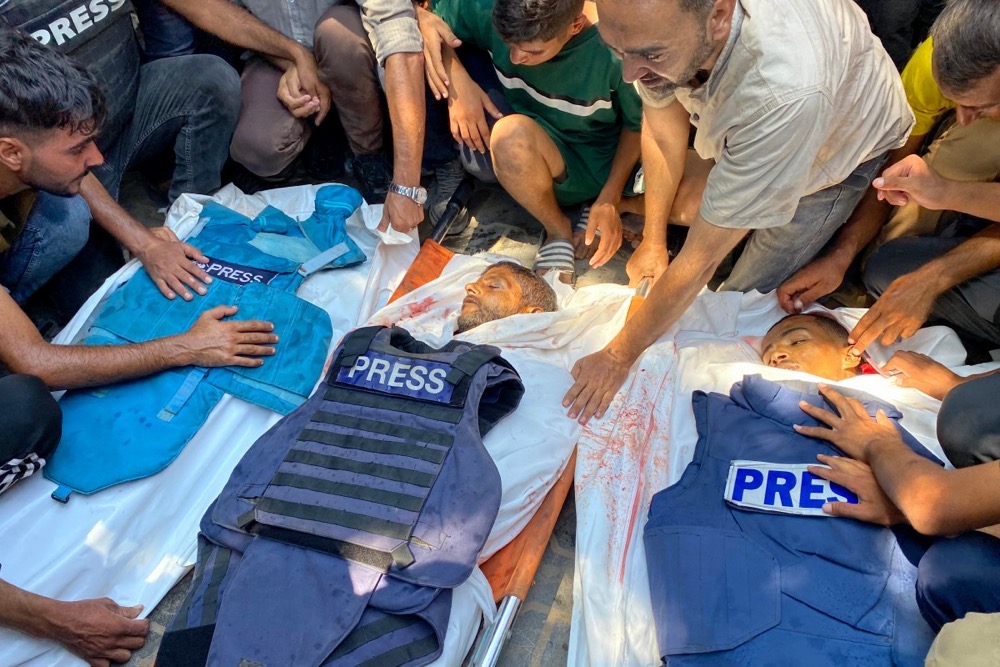
President Isaac Herzog, meanwhile, said “it’s an entire nation out there” that is responsible.
“These have become much more blatant in announcing their policy. They didn’t hide it,” Pillay said. “And furthermore, their own soldiers were posting these videos of their acts, as well as the statements of their leaders and the instructions from the military heads.”
Beyond statements of intent, the report also referenced several acts that constitute genocide.
“Where is the military objective in killing children?” Pillay asked. “Where is the military objective in killing people who reach the aid site of that Gaza Humanitarian Foundation, which took over from UNRWA, and then the people were starving — starvation being a weapon of genocide?”
The Commission posed these questions directly to Israel, which, like all states, has a legal obligation to prevent and punish genocide. It requested details of any investigations Israel may have conducted into the alleged acts.
But, Pillay said, Israel has not cooperated with the Commission, despite being bound to do so by the International Court of Justice.
“They never let us in, which they had been ordered to do by the ruling of the International Court of Justice. We could have talked with many more victims firsthand … But they didn’t do that.”
The Commission found evidence to prove Israel had committed four of the five genocidal acts defined by the Genocide Convention.
The four acts are killing, causing serious bodily or mental harm, deliberately inflicting conditions of life calculated to bring about the destruction of a group in whole or in part, and imposing measures intended to prevent births.
“We looked at the direct attack on the only one fertility clinic in Gaza, where apparently they had 4,000 embryos saved, and the Israeli forces directly shot at the nitrogen tanks that kept the embryos alive. And now they’re all destroyed,” said Pillay.
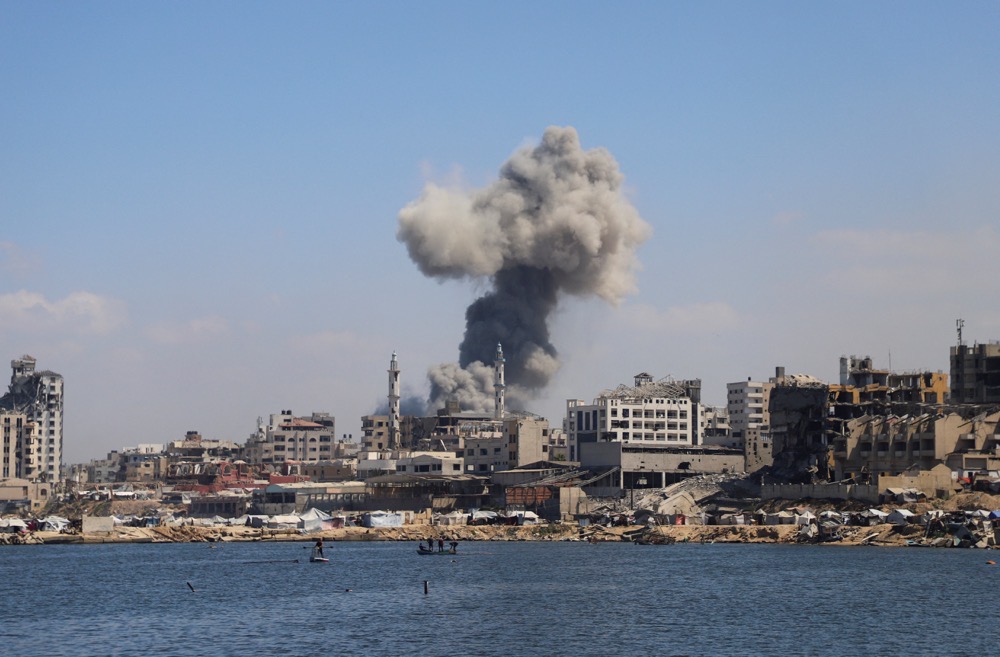
“So that would be an example of measures (not only) to prevent births, (but) also in fact, positively destroying, to ensure the end of the Palestinian population and their right to live.”
Governments and UN agencies are under mounting pressure to say Israel’s conduct in Gaza amounts to genocide.
On Tuesday, UN Secretary-General Antonio Guterres condemned the “systematic destruction” of Gaza City, but when asked whether he concurs with the Commission’s conclusion that genocide was occurring, he insisted it was for the international courts to decide.
“As I’ve said, time and time again, in these and different, similar circumstances, it is not in the attributions that the secretary-general to do the legal determination of genocide,” he told a press briefing at UN headquarters. That belongs to the adequate judicial entities, namely the International Court of Justice.”
Asked about the secretary-general’s reluctance to use the word “genocide,” Pillay responded with nuance and urgency.
“I used to say the same, too,” she said. “I used to say to media, don’t call it genocide, wait for the court to determine. But what’s different now is that this genocide is occurring right now. It’s been going on for two years. It’s occurring in front of our eyes.
“For me, as a judge who used to have the attitude of ‘wait’ — I am asking: How can states act to prevent genocide? How can they punish people who are committing genocide if they have to wait for a genocide determination from the court?”
She also pointed to the ICJ’s order that there are “plausible indications” genocide is taking place, adding: “That is also new. We’ve never had that kind of clear directive from the court before. So these would all influence me.
“And obviously the massive evidence that’s been gathered, which is now available to the UN, should help them to reexamine the positions they adopted, as I did.”
The evidence, she said, should push the UN to act.
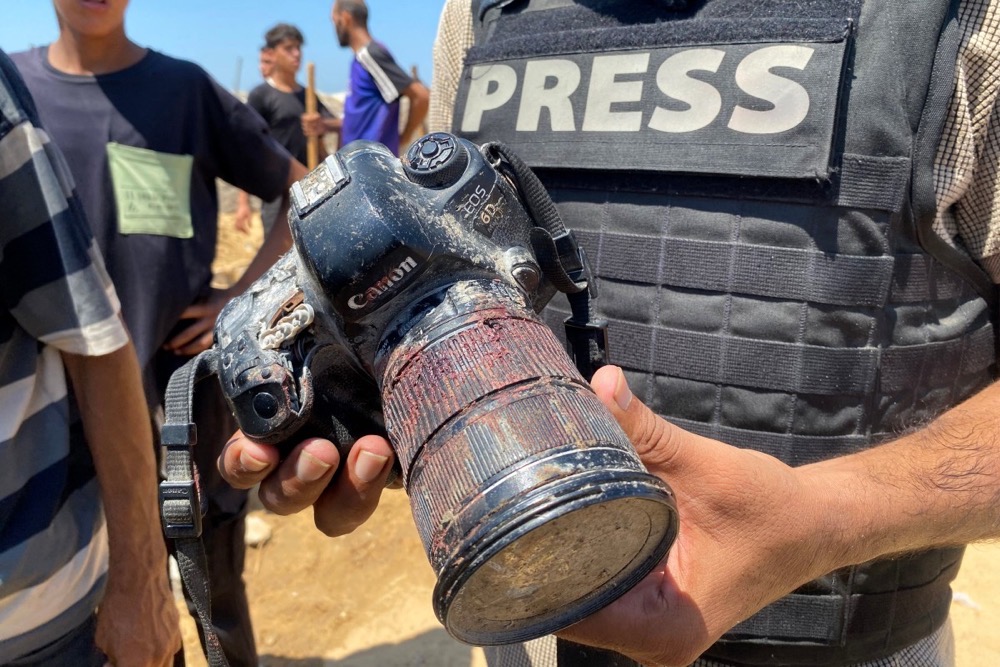
“It’s not a matter of choice. They’re obliged — each country — to take steps to prevent and punish. The UN has a bigger role here to ensure that access to justice is a priority for victims all over.”
Israel’s foreign ministry said it “categorically” rejected the report, describing it as “distorted and false,” and accusing its authors of parroting Hamas propaganda. Pillay’s response is sharp and unequivocal.
“I wish I could say to them — and I wish they would point out to me — where in our extensive 80-page report we are relying on Hamas for the information,” she said.
“We were the first UN body, on Oct. 10, 2023, to condemn the Hamas attacks. We said that they constitute war crimes and crimes against humanity. So it’s just absurd to call us Hamas.”
Asked whether she believes Israel will ever face accountability for its actions in Gaza, Pillay said it was vital to document crimes, even if justice took years to achieve.
“I never thought apartheid in South Africa would end in my lifetime, but it has — mainly through the collective pressure of civil society, not so much governments,” she said. “As we saw in Cambodia, 20 years after the conflict, the UN set up a tribunal.”
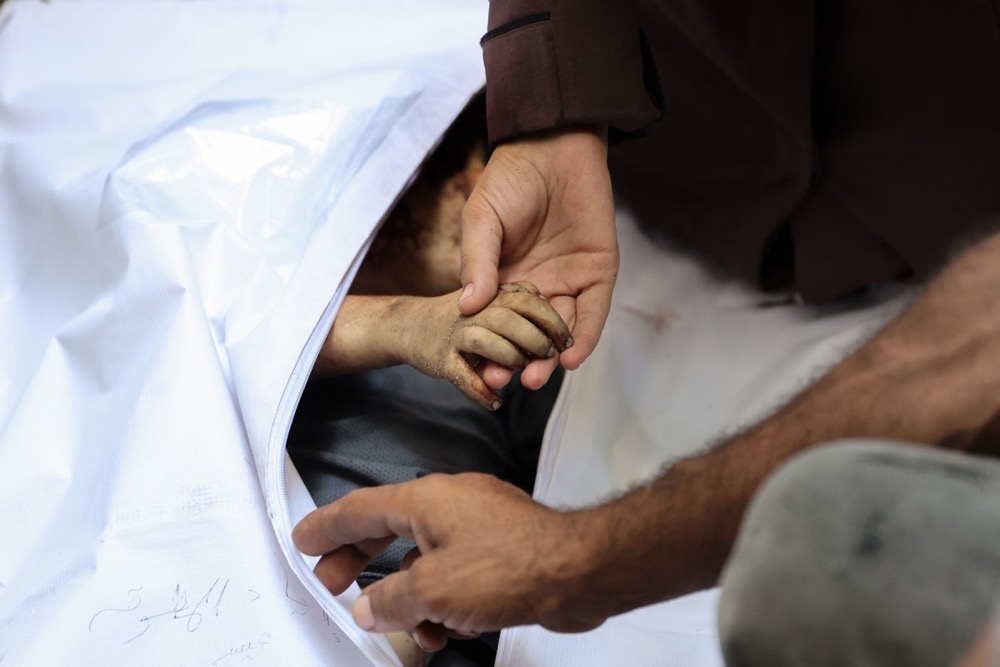
She recognizes the public frustration. “I can understand the public out there. They tell me that too: ‘Are you wasting your time with this?’”
But, she insists, the report matters: “For the Palestinians who have been victims of this, it’s very important to stress to states. And civil society is in a good position to pressure their own governments — not only the entire world, but in particular the region where Palestine is being denied.”