


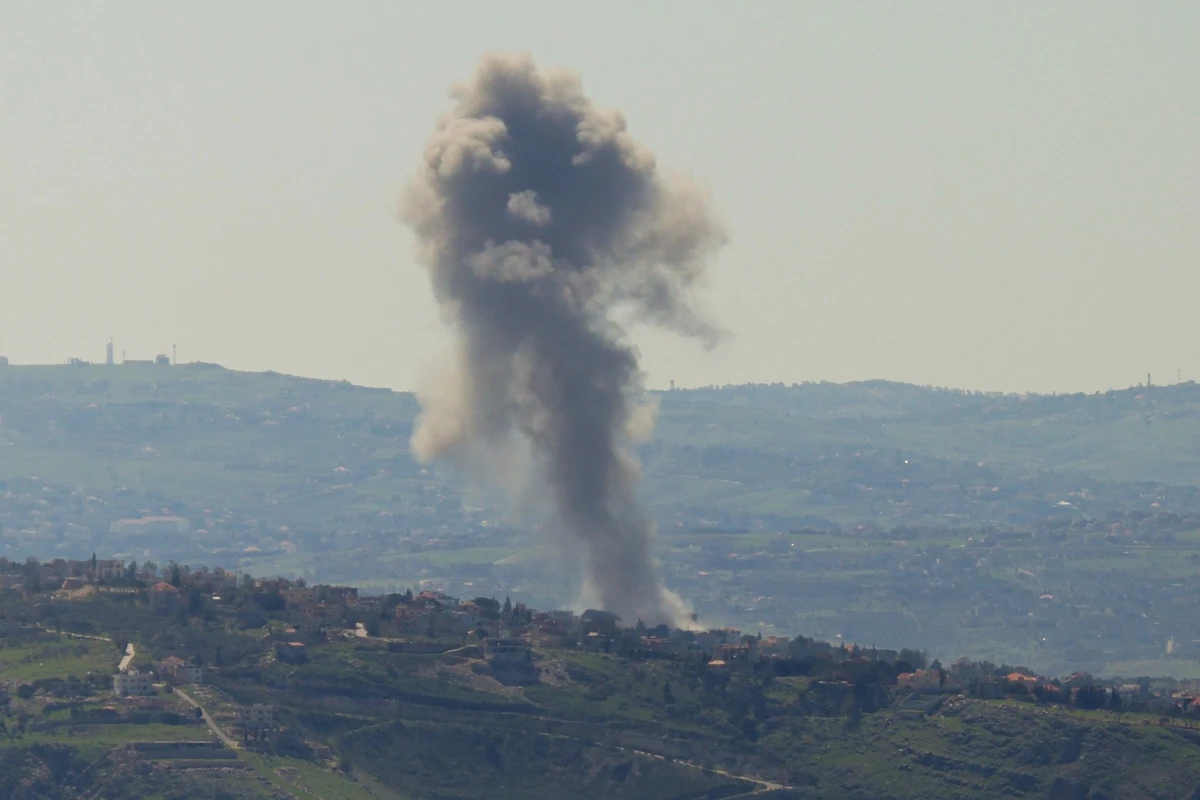

In what has been described as a historic move for Lebanon, the government, led by Prime Minister Nawaf Salam, this week banned all military and security activities by Hezbollah. The move came a day after a rocket attack on Haifa triggered a massive Israeli retaliation against Lebanon.
For the first time since the Taif Agreement in 1989, the executive has said clearly that decisions of war and peace rest exclusively with the state. This goes beyond the disarmament plan north of the Litani River, which was decided last year. The government now clearly demands that Hezbollah confine itself to political activity, hand over its weapons and cease all armed operations from Lebanese territory. Moreover, the army and security forces have been ordered to prevent any rocket or drone launches and to arrest those responsible.
This marks a new chapter for Lebanon and it was crucial to see the government acknowledge it. However, the road ahead is treacherous. Indeed, Hezbollah’s response was as expected. The Iranian proxy criticized the decision and accused the government of “powerlessness.” Hezbollah’s defiance, mockery and continuation of rocket launches are once again dragging Lebanon into a conflict it should not be involved in. And here lies the real issue: Can the Lebanese military prove the group wrong and execute its disarmament?
If the military’s unity is at risk from intervening, this means that it cannot play a stabilizing role, even post-Hezbollah
Khaled Abou Zahr
Despite the group’s illegal military activities, the position of Commander-in-Chief Rodolphe Haykal, who has warned against a confrontation between the army and Hezbollah, is that the military should not intervene. One can assume this has political blessing for now. This refusal to act, which is being criticized by most of the political spectrum, risks encouraging Hezbollah’s impunity, weakening state authority and increasing the Israeli retaliation. This puts the people, who are already exhausted and angry, at risk of more death and chaos.
The Lebanese government must be aware that, at this stage of the conflict, even with this decision, there is no way any mediation from any country in the world will prevent Israel from retaliating to Hezbollah’s attacks. Perhaps the strategy is to let Israel continue the job until there is nothing much to do and that disarmament becomes possible. But ultimately, if the military’s unity is at risk from intervening, this means that it cannot play a stabilizing role, even post-Hezbollah. So, what comes next?
Lebanese President Joseph Aoun condemned Hezbollah’s strikes, which undermined Beirut’s efforts to avoid being drawn into a regional war. But if he does not act, how will he prevent Lebanon from being, as he stated, “once again used as a platform for wars that do not concern it?” Is he waiting for the right moment? Until when? And considering the regional instability, is there not a risk of other transnational nonstate groups stepping in and trying to do the job? And then what?
Regardless, everyone understands that this is the end of an era. For the first time, Hezbollah is also being abandoned by its historical supporters. The powerful Shiite clans of the Bekaa have announced their support for the government decision that labels Hezbollah’s military activities as illegal. This is more than a result of the anger and fatigue among the Shiite community — it is also about reading the big geopolitical shifts. Hezbollah is over, perhaps whether the army intervenes or not. We should think of what comes next and how to bring stability to the country.
The destruction and deaths that can still be inflicted on Lebanon because of Hezbollah’s actions should not go unpunished
Khaled Abou Zahr
For this, I would like to highlight a social media clip that shows a Lebanese man driving his car at night in the north of the country, having fled the south, while playing Hezbollah’s anthems at high volume. A passerby yells at him: “Why is the volume so high? Turn it down. Do you understand? You don’t come to our area and provoke us.” This short clip tells us a lot about the situation in Lebanon, where there is a lot of resentment and even hate toward Hezbollah for its decades of destruction, intimidation and killing that can finally — now that it is weakened — be expressed. But also the term “our area” says that Lebanon will keep on being clan-led.
These decades of frustration and fear are coming to an end. Yet, as this short clip shows, Lebanon is and will stay fragmented under the current political system and all its institutions. Hence, it is important to arm the country with not only a strong and united army that is faithful and loyal to the flag, but also a political system that embodies the nature of the country and its people.
This is why the destruction and deaths that can still be inflicted on Lebanon because of Hezbollah’s actions should not go unpunished. Its leadership needs to be brought to justice, especially as these actions are now considered illegal by the Lebanese state. There is no difference between the political and the military wing; it is a single entity that has to disappear from Lebanon’s future. Its time is up.
The Lebanese government urgently needs to decide which outcome will bring stability. Its answer has, until now, been to let Israel try to finish the job. But it should also understand the cost of remaining passive. There is no doubt that it must take responsibility for its own sovereignty before the consequences of inaction become irreversible.
- Khaled Abou Zahr is the founder of SpaceQuest Ventures, a space-focused investment platform. He is CEO of EurabiaMedia and editor of Al-Watan Al-Arabi.


