
Despite a fraught geopolitical environment and a US-led trade war in 2025, China achieved its growth target of 5 percent, with gross domestic product reaching 140.19 trillion yuan ($20.4 trillion). The contributions to last year’s GDP growth from the three components of aggregate demand — final consumption, capital formation and net exports — were 52 percent, 15.3 percent and 32.7 percent, respectively.
Despite the impressive overall growth performance for 2025, the structure of aggregate demand was problematic. Consumption growth, as measured by total retail sales of consumer goods, stood at only 3.7 percent year on year. Fixed asset investment, a proxy for capital formation, fell by 3.8 percent. Of the three main categories of fixed asset investment, manufacturing investment grew by 0.6 percent, significantly slower than in the year-earlier period, while real estate investment plummeted by 17.2 percent and infrastructure investment fell by 2.2 percent, the first annual decline since statistics became available.
Unexpectedly, net exports in 2025 remained as strong as in 2024, registering a trade surplus of 8.5 trillion yuan. In the absence of official data on the share of net exports in GDP at the beginning of 2025, one can reasonably infer that China’s net exports grew at a double-digit rate.
China’s government has now set its growth target for 2026 at 4.5 percent to 5 percent. This is achievable with China’s GDP deflator still in negative territory and ample policy space for more expansionary fiscal and monetary policy. But it will require accelerating the growth of both consumption and investment.
For starters, the Chinese government must build on the relatively successful policies it introduced in recent years to stimulate consumption. These included issuing 300 billion yuan of ultralong-term treasury bonds for a consumer goods trade-in program, exempting the purchase tax for new-energy vehicles (worth more than 200 billion yuan), and offering hundreds of billions of yuan in subsidies for vehicle and appliance purchases. The government also increased spending on social security benefits, including pensions and livelihood programs.
A more serious challenge is the decline in investment. To be sure, investment in high-tech manufacturing was a bright spot, growing by double digits. But it was not enough to offset the continued decline in real estate investment, which has fallen by more than 10 percent for three consecutive years. The Chinese government has responded with a series of policies, including purchasing unsold housing units and lowering interest rates on existing mortgages. Nevertheless, it will take longer than expected to stabilize the market and return real estate investment to positive territory.
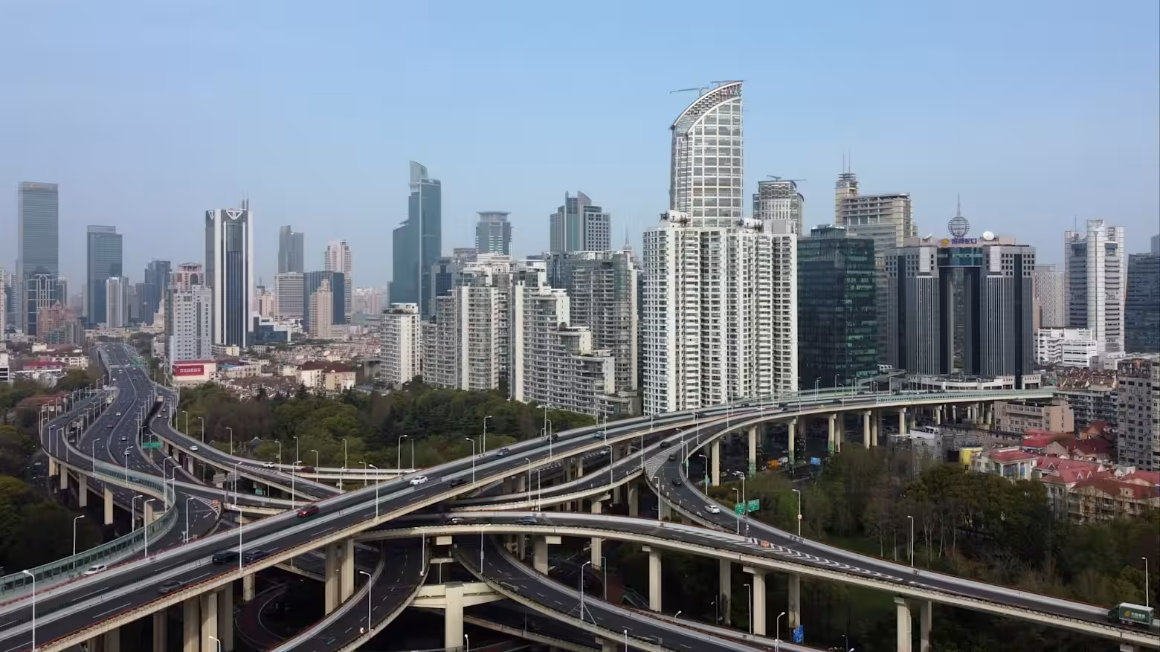
The unprecedented fall in infrastructure investment represents the main challenge. Although China has made remarkable progress on infrastructure development, more must be done, including upgrading transport, energy, water conservation and communication networks and building new frameworks to support an aging society. This will cost an enormous amount of money. For example, over the next five years, China will construct and renovate more than 700,000 km of urban underground pipelines, which alone will require more than 5 trillion yuan.
China still has ample fiscal space, which the government should use to adopt a more expansionary policy.
Yu Yongding
Given this, and because the Chinese government’s “dual circulation” strategy calls for boosting domestic demand while reducing dependence on external demand, policymakers will focus this year on that and rebalancing trade. In terms of short-term macroeconomic management, the more effective solution to both problems is to increase infrastructure investment.
Despite positive results, government efforts to boost consumption were less successful than expected in stimulating GDP growth. This is because household consumption is a function of permanent income. If households are not confident that income gains are permanent and that incomes will continue to rise in the foreseeable future, they are unlikely to increase consumption significantly.
It is a chicken-and-egg problem: higher GDP growth requires stronger consumption but the latter depends on the former. To break this impasse, policymakers must significantly expand infrastructure investment, which is under the government’s discretion and independent of both existing income levels and consumption expenditure. This makes it the most effective way to begin boosting economic growth.
Of course, one could argue that China’s consumption stimulus, including direct subsidies and social security reforms, was not big enough. Last year’s package was indeed much smaller than the post-COVID-19 stimulus that the US introduced in 2021. But one should not forget that US inflation reached a four-decade high of 9.1 percent in June 2022. By contrast, upping investment in infrastructure is less likely to create inflationary pressure because it increases production capacity in the long run.
Fortunately, China is not facing an inflation threat (though this could change due to external shocks) and still has ample fiscal space, which the government should use to adopt a more expansionary policy, supported by accommodative monetary policy. Many other fiscal authorities have already abandoned adherence to rigid targets, such as Europe’s Maastricht criteria; China should do the same. Raising the budget deficit-to-GDP ratio substantially to finance infrastructure investment would help China establish a more sustainable composition of aggregate demand and, crucially, continue to hit its growth targets.
• Yu Yongding, a former president of the China Society of World Economics and director of the Institute of World Economics and Politics at the Chinese Academy of Social Sciences, served on the Monetary Policy Committee of the People’s Bank of China from 2004 to 2006.
©Project Syndicate