
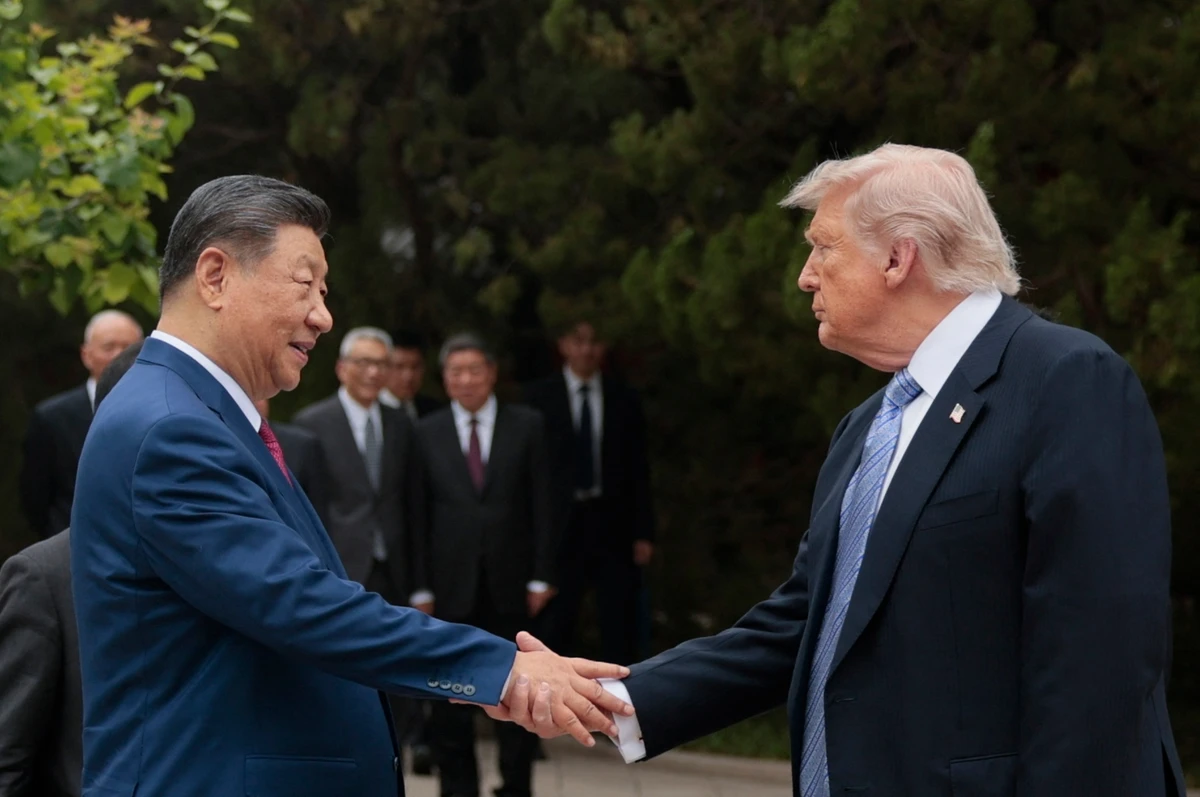

The planet’s two most powerful chiefs locked horns in Beijing last week, with the whole world assessing every syllable and twitch from both. It was part performative theater, part secretive conclave.
Xi Jinping and Donald Trump had a face-to-face summit for the first time in Trump’s second term. Beijing last hosted the American leader for a state visit back in 2017.
It smacked of a pre-boxing fight weigh-in, as both states chase No. 1 spot in the hierarchy of the global power rankings. The two leaders were anxious to project power and confidence in this faceoff. Both teams pushed their own messaging, often at complete odds with the other.
Observers focused on who holds the whip hand in 2026. Given the travails of the US in Iran and the increasingly shaky nature of the US’ historic alliances, many felt Trump was on the back foot.
Few expected this to be a grand reconfiguration of superpower relations. Both leaderships looked to impose the guardrails on a defining rivalry, one that is not going to evaporate but requires management. Rapprochement was always unlikely but stability, especially for China, was key. There were no overt hostilities but the host Xi wanted more predictable ties with the US.
It smacked of a pre-boxing fight weigh-in, as both states chase No. 1 spot in the hierarchy of the global power rankings
Chris Doyle
The first wrinkle to iron out, as ever with Trump and China, was tariffs. Trade has dominated the agenda in recent meetings. A trade truce has lasted a year following the point when Trump imposed tariffs on Chinese goods as high as 145 percent. How long this will continue is far from certain.
The second area Xi pressed was Taiwan. This was where the Chinese leader sought to exploit the weakened position of his American counterpart, knowing Trump needed more from him than the other way round. Xi wanted assurances that the US would abandon its proposed $14 billion arms sale to Taiwan. The language from Xi was to the point: “If mishandled, the two nations could collide or even come into conflict.”
Xi is pushing for American consent to Taiwan being viewed as a Chinese issue, as the US insists the future of Venezuela is an American one. China sees this as a path to undermine the post-Second World War global order that, in its view, has always favored the US. Ultimately, Beijing sees reunification with Taiwan as inevitable but also increasingly imminent.
Trump refused to confirm a position on weapons sales but confirmed pre-summit that the issue would be discussed, violating the long-standing US position never to engage in talks with China on arms sales to the self-governing island. Taiwanese leaders will not have been reassured by Trump saying afterward: “When you look at the odds, China is (a) very, very powerful, big country. That’s a very small island. Think of it, it’s 59 miles away. We’re 9,500 miles away. That’s a little bit of a difficult problem. Taiwan was developed because we had presidents that didn’t know what the hell they were doing. They stole our chip industry.”
The global backdrop has changed. Resource competition has escalated. It is no longer about interdependence
Chris Doyle
Critics slammed Trump for what they saw as another case of abandoning a key US ally. It will not help the nerves in Japan, South Korea or the Philippines.
The third tier-one issue was Iran. This was where Trump was on the back foot, hoping China could moderate Tehran’s more intransigent positions. The instinctive Chinese attitude was that this is a mess of America’s own creation. Why should China help clear it up? But it is also in China’s interests to protect Iran from further onslaught and to get the Strait of Hormuz reopened.
Many have been left wondering whether anything substantive will come out of this summit. Despite the presence of a major American business delegation, few deals were signed. China did promise to buy some Boeing planes but far fewer than expected. The subtext was clear: progress on the three hot-button issues might be unlock Chinese investment in the US.
The global backdrop has changed. Resource competition has escalated. It is no longer about interdependence, as this can be seen as weakness, with major powers seeking control of resources such as energy, rare-earths and ports, alongside dominance in artificial intelligence and financial networks. How this competition is managed is the essence of the future relationship.
The Chinese leadership has been on a journey. It now projects far greater strength and calm. No longer will it allow itself to be seen as the junior in this relationship. Deals will be on terms it can accept, not as a concession to a stronger power.
Xi did not wish to be sycophantic and shower Trump with the sort of exorbitant praise that works for leaders of mid-ranking powers. In fact, if anything, it was the opposite. Time will tell if this is the passing of the baton to China from a US in decline or merely a phase of US downturn.
For the moment at least, diplomatic discipline prevailed. That is not insignificant but it will be tested in the months and years ahead.
- Chris Doyle is director of the Council for Arab-British Understanding in London. X: @Doylech


