
US and UK lawyers representing Rohingya refugees have launched lawsuits totalling $150 billion against Facebook, alleging the company failed to halt the spread of hate speech that led to the genocide in Myanmar. This could be a watershed moment for social media corporate accountability.
In the West, we know Facebook allows and enables the proliferation of misinformation and conspiracy theories, which, in turn, radicalize and polarize our societies and undermine our ability to function as democracies. But perhaps we do not have a sense of just how much worse things could be. After all, for all their admitted failures, Facebook and other social media giants devote considerable resources to keeping a lid on things in markets where they could face regulation, if only for compliance purposes, and to keep politicians off their backs.
That is not the case in most other regions of the world. The English-language parts of Facebook are, believe it or not, the most civilized. Yes, your anti-vaccine, QAnon-filled feeds are the best of Facebook. There is a much scarier Wild West out there.
There are parts of the world where governments are not opposed to the misinformation and radicalization that Facebook produces, but where, instead, these features have become tools of control for authoritarian regimes. In other cases still, Facebook has served as the vehicle through which some state actors have laid the political groundwork for widespread violence. This is most clearly evidenced in the case of Myanmar.
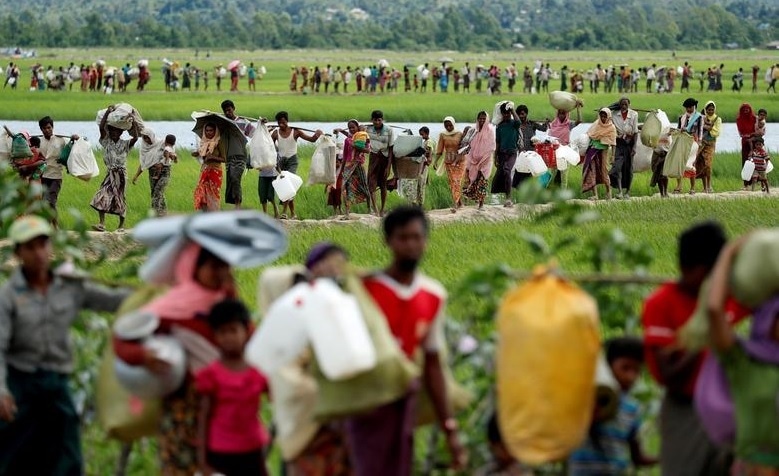
The Rohingya genocide in Myanmar culminated with the expulsion of more than 700,000 people from their homeland to Bangladesh during a few brief months in 2016 and 2017. This constituted the overwhelming majority of Rohingya still living in Myanmar at that point.
The Rohingya had been targets of hostile government propaganda for decades, but things grew worse in the 2010s. The difference? The already suspicious Buddhist population of the country were bombarded by “news items” in their Facebook feeds concerning the Muslim Rohingya’s plans to “take over the country and transform it into an Islamic state.”
For reference, the Rohingya never amounted to more than 2 percent of the population of the country and have always been politically and economically marginalized. News items dealt with alleged rapes of Buddhist women by Rohingya Muslim men and every other kind of hostile and hysterical rumor, speculation and conspiracy theory.
State media in Myanmar would never have been able to broadcast things on this level, no matter how much the old military dictatorships would have wanted them to. Public state media needs to maintain some semblance of balance and decorum.
Indeed, the first assaults against the Rohingya community in Myanmar in the Facebook era occurred in 2012 and 2013. These were “community” efforts driven largely by extremist Buddhist monks and nationalist local politicians and were orchestrated mainly through Facebook.
The initial bursts of violence displaced an estimated 200,000 to 300,000 people. Yet, Facebook did nothing as the propaganda campaigns took root on the platform in the buildup to 2012. Likewise, the company failed to act during the violence and even after 2013, when it was fully aware of the role the platform was playing in these developments.
Taking action against the dissemination of propaganda on the platform would have cost money and might have hampered Facebook’s “growth.” Conspiracy theories and radicalization drive engagement — and Facebook is all about engagement.
Facebook was warned repeatedly by international human rights experts about where all this was heading, but chose to prioritize its business model, with no regard for human life. The whistleblower Frances Haugen’s revelations about Facebook’s priorities in the English-speaking world tell you all you need to know about the company’s amorality everywhere else.
There are parts of the world where the misinformation and radicalization that Facebook produces have become tools of control for authoritarian regimes.
Dr. Azeem Ibrahim
As things stand, there are only two ways to alter Facebook’s incentives in order to minimize the harm it does to society and people around the world: Impose every legal consequence possible wherever possible; and reform Section 230 of the US Communications Decency Act to make clear that the company will have to bear responsibility for the harm it causes and enables.
Efforts to reform Section 230 are continuing in Congress, and that is a hopeful development. But Facebook must still be held accountable for its historical choices. This is a simple matter of justice for victims — and no victims are more in need of justice than the victims of genocide.
- Dr. Azeem Ibrahim is the Director of Special Initiatives at the Newlines Institute for Strategy and Policy in Washington DC and author of ‘The Rohingyas: Inside Myanmar’s Genocide’ (Hurst, 2017). Twitter: @AzeemIbrahim