

Don’t say that you have a solution. You are not a decision-maker and have no right to steal the spotlight or praise. Your fate is to remain in the shadows and for others to take credit for your work. The solution comes from the source. Your participation in devising it does not give you any right to it. Solutions are part of the indisputable skills of Mr. President. No one else is party to them.
Don’t say that you have the winning idea. Salvation is not part of your duties or even your rank. Salvation is the responsibility of the man in power — the man whom the nation chose before the ballot boxes did. Men of landmark moments are not born of ballot boxes. Fate chooses them for major duties; then comes the role of the citizens in voting and applauding.
Don’t say that the situation is difficult. Always say that it is under control and that the fate of livelihoods and people are in safe hands. Always say that the man in charge is skilled at knowing the dreams, feelings and needs of the nation. Say that the people will be held responsible should any misunderstanding arise because they failed to grasp Mr. President’s pioneering ideas.
You are Mr. President’s aide. You are the echo, not the voice. Don’t even dare to speak about concerns over destiny or correcting course. Destiny is the responsibility of the savior alone. The course itself is glittering, no matter how much the enemies or critics say otherwise. Your primary task is to preserve your position and safety and appease the man in charge of your fate. This means paying compliments and issuing praise whenever necessary.
Don’t say that Mr. President is following in his predecessor’s footsteps. Mr. President has his own unique path
Ghassan Charbel
Don’t say that Mr. President is following in his predecessor’s footsteps. Mr. President has his own unique path. His style is out of the ordinary and his own. He doesn’t imitate anyone and no one can imitate him.
I once asked a man who worked with Saddam Hussein if any member of the Baath Party’s central command had ever implied to Mr. President that the decision to invade Kuwait was catastrophic, reckless or costly. The answer was no secret. Tariq Aziz said it pained him to remain seated during the meeting in which it was announced that Kuwait would be annexed and become an Iraqi province. He realized the dangers but, when confronted with the ruthless people surrounding the president, he chose to keep his thoughts to himself.
Saddam once met with Iranian Foreign Minister Sadegh Ghotbzadeh on the sidelines of a Non-Aligned Movement summit in Havana. The minister flattered the president. At the end of the meeting, Iraqi Ambassador to the UN Salah Omar Al-Ali described the talks as positive and that more could be built upon them. Mr. President was quick to reprimand him, saying: “Don’t ever say that again. I will break the Iranians and reclaim every inch of territory they seized.” Al-Ali realized the difficulty of offering advice to the “historic leader.”
During a trip to Damascus, I met with President Bashar Assad and then-Vice President Abdul Halim Khaddam. I asked Khaddam about why Bashar was chosen to succeed his father Hafez. Khaddam knew the walls had many ears, so he replied by saying that he was the natural choice. Bashar was raised around his father and grew up in his environment, so it was normal for the party leadership to name him as successor.
Years later, I again met with Khaddam, who by then was living in Paris after defecting from the regime. I asked him the same question and he replied that, at the time, he had been summoned by Hafez and informed that the decision related to Bashar had been taken. So, Khaddam had no role in Bashar’s rise to power. He said Bashar was not fit to assume such a major post. The party’s policy of having sons inherit their father’s position was wrong because it showed that Hafez had no one but his son to whom he could entrust the running of the country.
Has the world returned to the time of the strongman whom no aide dares to confront with even a fraction of the truth?
Ghassan Charbel
Libyan diplomat Ali Abdussalam Treki once told me that he hid his face in embarrassment when Muammar Qaddafi tore up a copy of the UN Charter while he was addressing the General Assembly. Treki admitted that he did not dare to call on the leader to cut short his speech, even when he had far exceeded his allotted time. Treki most certainly did not criticize the leader after the scandalous incident.
Has the world returned to the time of the strongman who does not recognize any borders or whom no aide or adviser dares to confront with even a fraction of the truth? We don’t have the necessary information as to whether Vladimir Putin consulted Foreign Minister Sergei Lavrov before ordering the Russian army to enter Ukraine. We don’t know the veteran Lavrov’s opinion, even if he were consulted.
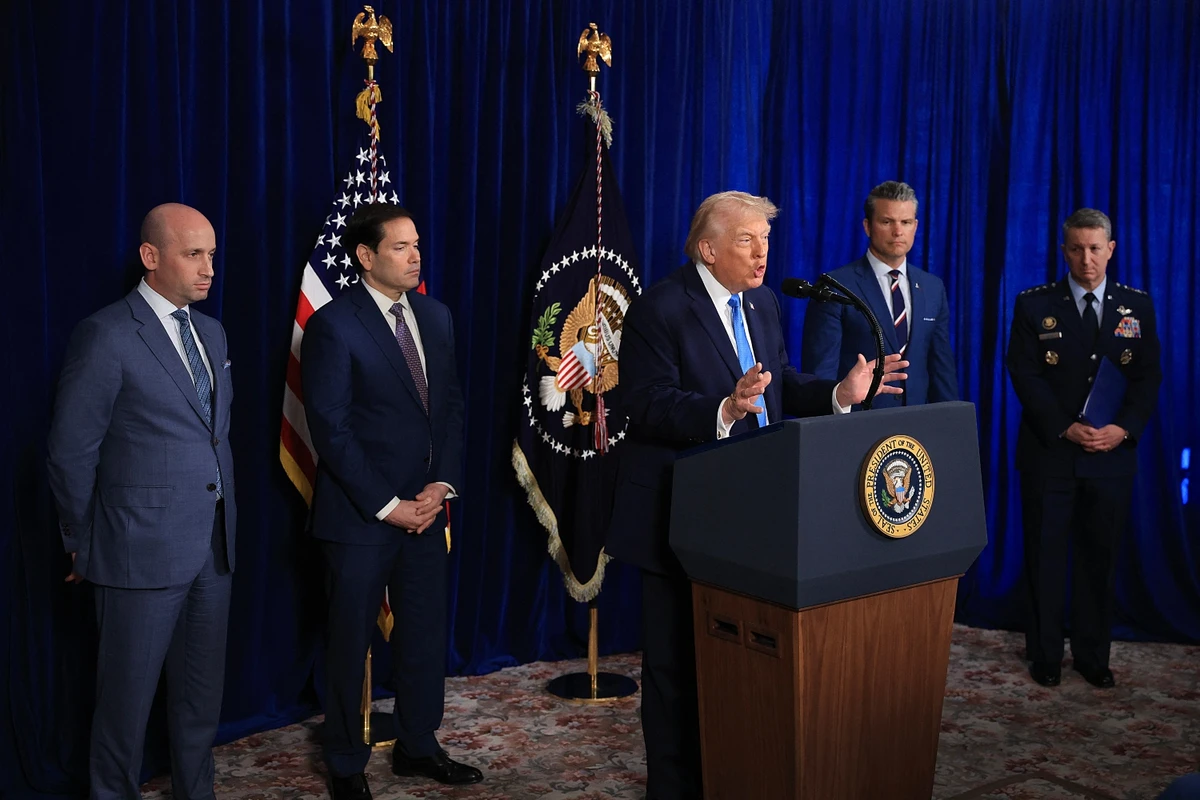
It is difficult to imagine that an aide to Donald Trump would have warned him of the dangerous precedent of kidnapping Venezuela’s Nicolas Maduro. It is difficult to believe that an aide urged him to tone down his statements about NATO. We don’t know if an aide advised him to back off his demands to claim Canada or Greenland, regardless of the criticism leveled against him by the French president.
We don’t know if anyone in his entourage was blunt enough to inform Mr. President that running the White House and maintaining America’s position in the world were more important than him winning the Nobel Peace Prize. One diplomat told me that Trump’s aides lavish him with praise as if they were members of a “central command” running in Mr. President’s orbit.
Xi Jinping long ago ended the principle of collective leadership that emerged in the Chinese Communist Party after Mao Zedong’s death. He has now assumed a similar position to Mao and may even go down in history as having surpassed him. The current purge led to the dismissal of his deputy in the Central Military Commission, which has the final say in decision-making in the country. In all likelihood, no one lifted a finger to object to the dismissal. A member of the commission is expected to be docile and acquiescent and be the affable aide to Mr. President.
- Ghassan Charbel is editor-in-chief of Asharq Al-Awsat newspaper. X: @GhasanCharbel
This article first appeared in Asharq Al-Awsat.


