
Turkish Foreign Minister Hakan Fidan on Wednesday traveled to Riyadh, where Saudi Arabia hosted a meeting of foreign ministers from Arab and Islamic countries to discuss the US-Israeli war against Iran. The gathering was intended as a diplomatic effort to discuss ways to de-escalate the ongoing war.
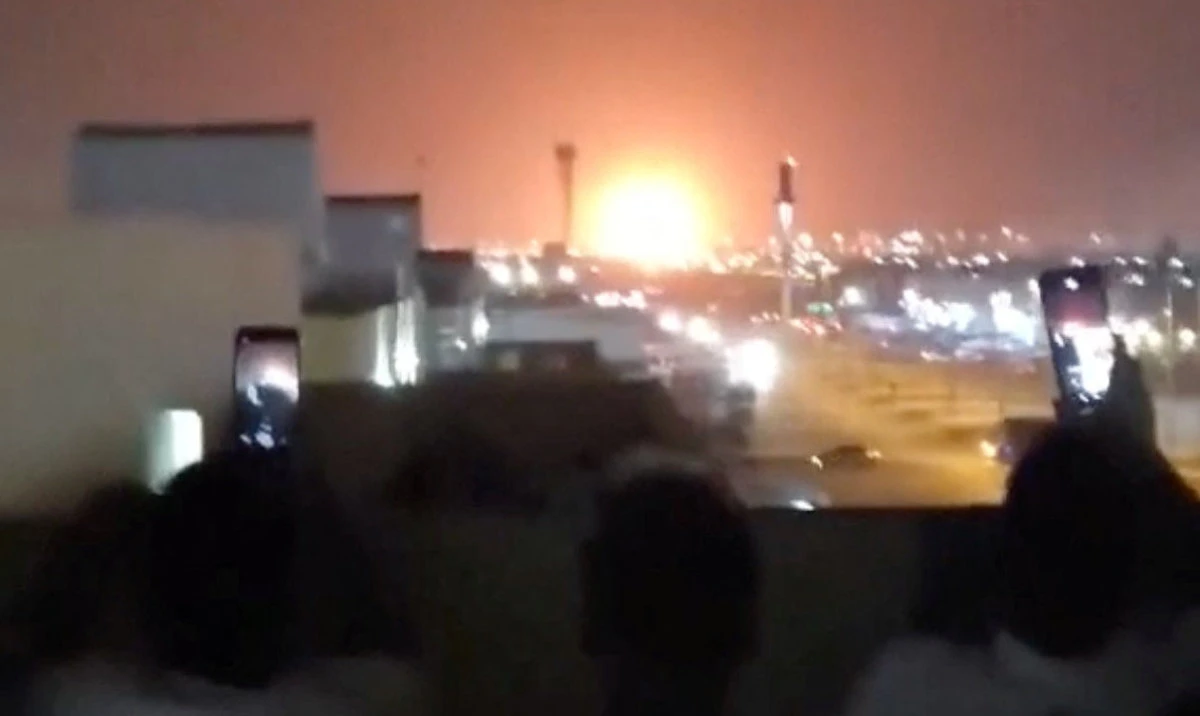
During the meeting, Iran launched ballistic missiles targeting Riyadh and the Eastern Province. The Kingdom’s air defenses intercepted the projectiles. Later, Iran launched a second wave of attacks, including a strike on a major gas facility in Qatar. It is hard to recall any moment in history when leaders convened for diplomacy and one party so effectively undermined it.
Saudi Foreign Minister Prince Faisal bin Farhan stated that the attacks were not coincidental but rather deliberately planned to coincide with the meeting. In his remarks, he argued that the strikes reflected Iran’s approach to diplomacy — one that undermines dialogue through escalation.
The Riyadh meeting was the first face-to-face ministerial gathering since the outbreak of the war. In a collective effort to give diplomacy another chance, the Gulf Cooperation Council states, along with representatives from Egypt, Jordan, Turkiye, Pakistan, Syria, Lebanon and Azerbaijan, gathered to reflect their common concern over the war’s trajectory.
By targeting Riyadh while the meeting was ongoing, Iran bombed the tough path to diplomacy that regional states were striving to build. Any regional initiative aimed at avoiding or de-escalating this war has been disregarded by Iran. Previous attempts to prevent events from reaching their current point — including initiatives led by Turkiye and other regional actors to facilitate talks between the US and Iran in Istanbul — also failed due to Iran’s reluctance to include regional stakeholders in the discussions. At that time, the Iranians were reluctant to discuss tricky topics like its proxies and ballistic missile program with the region.
By striking Riyadh, Iran has also damaged an already-fragile rapprochement with Saudi Arabia, which began with the Beijing Agreement of 2023. Trust, which was limited to begin with, has now been significantly undermined.
The timing of the attacks also adds a layer of symbolic contradiction: While Iranian officials frequently invoke themes of Islamic solidarity, the strikes targeted Muslim countries during the holy month of Ramadan. Thus, Iran is making a grave mistake in eroding its regional support base.
Amid the Riyadh attacks, Fidan — one of the few regional figures able to maintain direct communication with Iranian officials — held a phone call with his counterpart in Tehran, Abbas Araghchi. With the tone of the conversation reported as being tense, the Turkish minister expressed frustration over Iran’s actions. But this demonstrates that channels of communication remain open. The Turkish side reportedly signaled that, even as regional states approach the limits of their patience, they are still committed to pursuing diplomatic solutions.
Fidan’s visit to Riyadh was part of a broader regional tour that included scheduled stops in Qatar and the UAE. The objective was likely to assess the situation in the region and explore the feasibility of an “off-ramp” proposal that could eventually be presented to the US. However, at present, it appears that we are not at the point of a diplomatic breakthrough.
Even as regional states approach the limits of their patience, they are still committed to pursuing diplomatic solutions.
Dr. Sinem Cengiz
Turkish officials believe that the Iranian regime is far from collapse and retains the capacity to sustain the war for months, which is a nightmare scenario that Ankara wants to avoid. The concerns over such a scenario forces Turkiye’s continued push for de-escalation — but Turkiye’s ability to act as an intermediary is constrained by structural challenges within Iran itself. It is increasingly unclear which actors within the Iranian system hold authority, particularly over missile attacks. This uncertainty complicates diplomatic efforts, as regional actors struggle to identify their counterparts in Iran.
Some observers have interpreted the Riyadh meeting as a sign of an emerging regional alliance. Just a few years ago, countries that were against each other, such as Egypt and Turkiye, now find themselves on the same page. While these alignments are unlikely to constitute a formal military alliance, it reflects a strong alignment with political will behind it.
This political alignment is enough to cause concerns in Israel. Israeli officials have declared that Ankara is forming an axis “similar to Iran’s.” Tel Aviv’s concern is that it is increasingly facing isolation in the Middle East, as all regional states are against its hegemonic ambitions. Even so, the structural parameters for a solid defense alliance are not yet in place. For now, cooperation among regional actors is more likely to develop through bilateral ties and improved intelligence sharing.
Beyond security considerations, economic cooperation will be essential in mitigating this war. One critical issue is the disruption of energy flows, particularly through the Strait of Hormuz. Iraq, for example, is exploring alternative export routes to bypass Iranian constraints and restore oil shipments. Proposed options include pipelines and transit corridors through Syria, Jordan and Turkiye. Economic concerns will bring regional states closer and perhaps could ultimately be the driving force to end this war.
In sum, the Riyadh meeting reflected that there is a strong and clear appetite among regional actors to de-escalate the war. However, Iran — through its attacks — undermined this. If it continues to do so, it risks making a grave mistake that erodes its regional support base.
• Dr. Sinem Cengiz is a Turkish political analyst who specializes in Turkiye’s relations with the Middle East.
X: @SinemCngz