


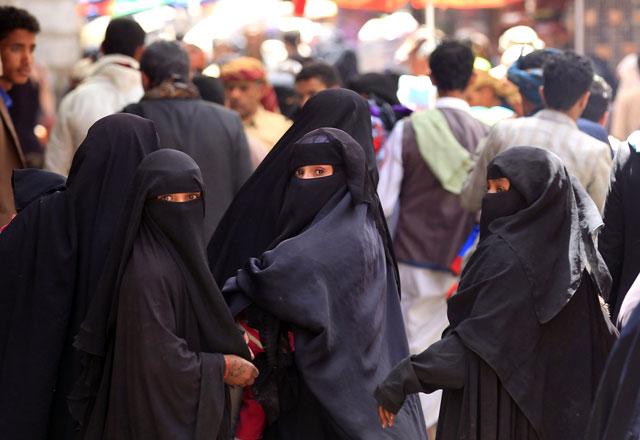
Dr. Hafsa Taher, an academic at Sanaa University, was last week given one day to vacateher home on the orders of armed Houthis, who confiscated her house and its contents. The evacuation took place a day after the Houthis’ Specialized Criminal Court issued an order to execute35 members of parliament, including her husband, Dr. Saleh Al-Sanabani, for attending a parliamentary session in the government-controlled area of Seiyun in the south of the country. Dr. Taher, who lived in the house with her family and elderly disabled mother-in-law, has nowhere to go. What she was subjected to was not just unlawful, but culturally unacceptable.
In a conflict-prone tribal society like Yemen, customary rules have long provided strong checks and balances that shielded women from abuse and protected them, to a certain extent, from conflict and domestic violence. For example, old tribal codes considered it a “black shame” to kill women in conflict or to kill a man in the presence of a woman or a child. At other times, customary laws were a factor that restricted women from reaching their full potential, and their interpretation differed from one area to another, which is why formal state laws are important. They are made to ensure that rights are protected and available to all. But, whether formally or informally, women’s rights in Yemen have always been stifled. Yemen has often been classified at the bottom of the World Economic Forum’s Gender Gap Index. Something needed to change.
Amendments to laws are needed to ensure that basic human rights are accessible to women in all aspects of life, including health, education, and economic and political opportunities. The former government of Ali Abdullah Saleh created the Women’s National Committee, led by a group of progressive and tough change-makers, who worked on mainstreaming gender issues and improving the status of Yemeni women nationwide. However, despite their strong will, they struggledto pass crucial laws because they were confined by a patriarchal system that was holding the entire country back. Due to the cultural and religious mindset of the political elites at that time, it was difficult to deliver groundbreaking change. Yemen had reached a stage where radical change was needed.
During the 2011 Yemeni uprising, women played a leading role in the protests. They cemented their visionin the UN-backed National Dialogue Conference (NDC), in which their recommendations fed into a draft constitution that promised protection, empowerment and greater opportunities for political participation for all women.
However, all of this was overthrown through violence, the greed of non-state actors, and proxy battles, reversing all the progress women had struggled to achieve in the past 30 years or more. During the current conflict between the Iran-backed Houthis and the UN-recognized government of Yemen, rampant abuses against women were reported nationwide, but they were more sinister under the militia’s rule. The Houthi militia, which has dominated the northern part of the country since 2014, has shown a blatant disregard not only for state laws, but also customary tribal rules that held on through centuries of Yemen’s tribal culture.
Political affiliation, community participation and even marriages are now heavily sanctioned in Houthi-controlled areas. In one well-documented incident in 2018, the Houthis detainedtwo brides at a checkpoint, shaved their heads and forced them to turn around because they were on their way to their wedding ceremony in a government-controlled area. Later on, the Houthi Mufti, who is a religious scholar responsible for passing religious laws, issued a fatwa forbidding women from marrying men who are “allied with the enemy.” Unfortunately, this is just one of numerous examples of arbitrary regulations that have undone all progress in the women’s rights agenda that was achieved in the NDC, and have increased women’s vulnerability.
Political affiliation, community participation and even marriages are now heavily sanctioned in Houthi-controlled areas.
Fatima Abo Alasrar
As a measure to further control the environment in which they operate, the Houthis have established an all-female militant group to enforce their laws on other women. This force, known as Al-Zainabiat (the name is derived from Zainab, a religious Muslim figure), is given a variety of tasks, from surveillance to the abuse and torture of other women, according to a 2020 UN panel of experts report. They are known for being able to go from door to door in any neighborhood without scrutiny. The creation of this force is meant to subvert long-held traditions and tribal rules that protect women from state abuse and mitigate any blowback for the Houthis’ intrusions into women’s affairs.
Such levels of violence and unpredictability, which stem from the arbitrary regulations, have succeeded, to no small extent, in suppressing women’s voices and hampering their progress in society. The dissolution of customary laws that once guaranteed women protection and their replacement with stringent ideologies that the Houthis dictate is bound to change Yemen’s society sooner or later.
- Fatima Abo Alasrar is a Non-Resident Scholar at the Middle East Institute. Twitter: @YemeniFatima


