This year will be marked by the election of new secretaries-general at several multilateral organizations at a time when these institutions are facing political, financial and operational challenges that threaten their very existence.
The most prominent, of course, is the UN, where the process to elect the next secretary-general was formally kicked off on Nov. 25, as member states were asked to nominate candidates to take over the role from Jan. 1, 2027. Meanwhile, in the next few months, both the League of Arab States and the Organization of Islamic Cooperation will have new secretaries-general, as the process for nominations is already underway. The African Union had a new chairperson in 2025, while the EU reelected or appointed key leaders in 2024.
In a fragmented international system marked by unilateralism, heightened rivalry among major powers and an increasing number of conflicts and humanitarian disasters, the new secretaries-general will be tested regarding the credibility and relevance of their organizations. Under financial constraints and complex mandates, as well as urgent demands for reform and reconstruction, the incoming leaders will face a humongous challenge to make their organizations function efficiently and meet expectations.
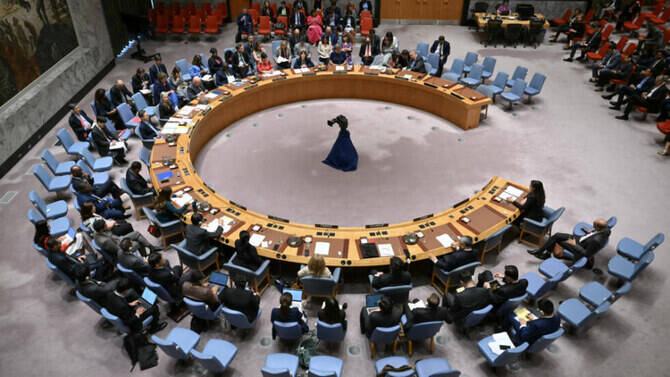
Looking at the UN, it is being embarrassed and diminished publicly by the members of its own Security Council, which no longer seem to even pretend to agree on first principles. Politically, the secretary-general will operate in an environment defined by deep mistrust among states, leading to greater fragmentation.
The UNSC is increasingly paralyzed by vetoes and geopolitical posturing that renders it ineffective. Rival blocs frame nearly every crisis through the lens of strategic competition, reducing space for compromise and making consensus-based action rare, which undermines multilateralism and the organization’s role in mediation. Powerful states are more willing to bypass multilateral processes when these constrain their freedom of action and are seen as against their interests, weakening the UN’s authority in the process. Spheres of influence have taken precedence over international law.
Managing these tensions will require the secretary-general to navigate with diplomatic agility to keep intact the relevance of and confidence in the UN’s system, principles and laws.
Although the cuts are supposed to reduce the bloated bureaucracy, they will impact how the UN operates its missions.
Maha Akeel
Financially, the UN faces chronic stress because many member states are late in paying assessed contributions, forcing it to rely on voluntary funding, especially for humanitarian and development work. But this funding is often earmarked and politically conditioned. This distorts priorities, undermines long-term planning and leaves essential operations vulnerable to sudden funding cuts, which has led to disastrous results, as seen in the World Food Programme’s ration cuts for Rohingya refugees in Bangladesh. This has contributed to sharp increases in child malnutrition, school dropouts, insecurity and gender-based violence.
Furthermore, donor countries have become more skeptical of international institutions, portraying multilateral spending as optional or wasteful, even as global crises multiply. The US’ recent withdrawal or cutting of funds from a host of international organizations is a prime example. This situation pressures the secretary-general to make difficult trade-offs, forcing them to choose which missions, agencies or programs can be sustained and which cannot, including the closure or downsizing of the missions and programs in Mali, Sudan, Afghanistan, Syria, Yemen and Palestine. The risk is that this will perpetuate a vicious cycle in which underfunded operations deliver uneven results, reinforcing narratives that the UN is inefficient or ineffective.
Moreover, the scale and frequency of humanitarian disasters have exposed the limits of coordination across the UN system and with external partners. Bureaucratic fragmentation slows responses while political constraints restrict access to affected populations, as witnessed in Gaza and Syria. The secretary-general must push for institutional reforms that improve speed and coherence, even as member states resist changes that might dilute their control.
Operationally, the UN is being asked to do more with less. After intense negotiations, the new budget was approved shortly before the new year with a 7 percent reduction from 2025, but a little more than the secretary-general’s proposal prepared under the UN80 reform initiative. It came with the abolishment of 2,900 positions as of Jan. 1. Although the cuts are supposed to reduce the bloated bureaucracy, they will impact how the UN operates its peacekeeping and humanitarian missions.
Peacekeeping missions operate in environments where there is little peace to keep, facing asymmetric threats, weak host-state consent and blurred lines between political mediation and stabilization. Humanitarian agencies often confront overlapping crises — conflict, climate shocks, pandemics and displacement — in the same country, as is the case in Somalia and Sudan. The reduced budget will weaken the UN’s overall ability to protect civilians, prevent conflict and respond to crises. The effects are operational, political and strategic.
With all these challenges and hurdles facing the UN, there are calls for a woman to be elected secretary-general. While electing a woman would not be a solution in itself, it would be a credible signal of seriousness about renewal and breaking with tradition. However, at a time when there is backlash against gender equality and female leadership, she would face an early battle. Furthermore, a woman secretary-general would have to operate with the same limited authority, political paralysis and financial stress as her predecessor and she would likely face harsher scrutiny and narrower margins for error. The criteria should not be based on gender but on character and merit.
Finally, the Arab League and the OIC are no better off than the UN. Their incoming secretaries-general will face similar challenges, as well as debilitated internal structures and resources. A more active, diplomatic and forceful role for the secretary-general could lead to positive outcomes.
- Maha Akeel is a Saudi expert in communications, social development and international relations. She is a member of the UN’s Senior Women Talent Pipeline. X: @MahaAkeel1