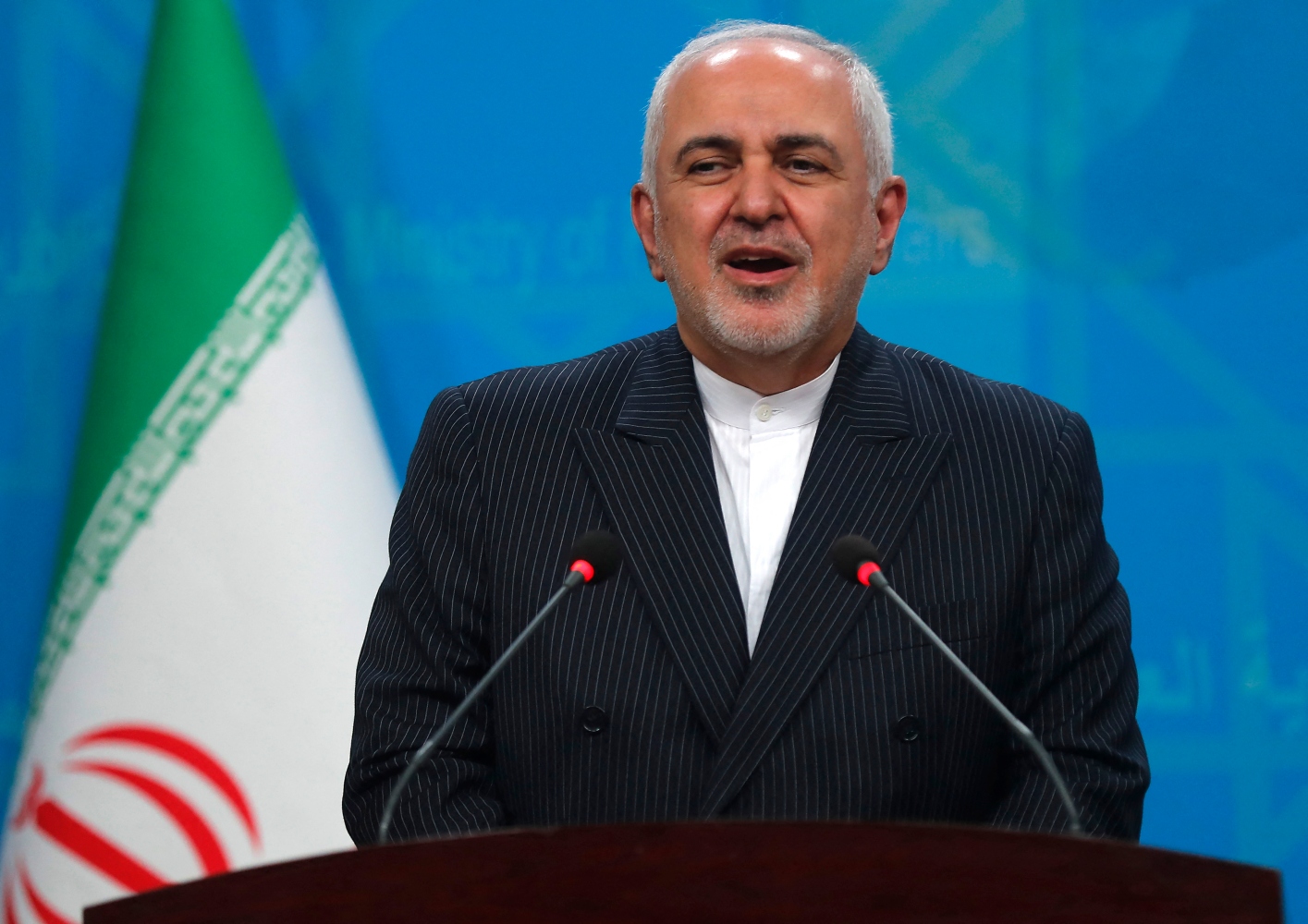

When former Iranian Foreign Minister Mohammad Javad Zarif took to the pages of the US-based Foreign Affairs magazine on April 3, he laid out a vision that resonates with a particular strand of Iranian diplomacy — one that sees the current war as an opportunity to pursue a grand bargain with Washington.
The terms, as Zarif envisions them, would have Tehran pledge never to pursue nuclear weapons and scale back uranium enrichment below the 3.67 percent threshold, while the US would dismantle all Security Council resolutions targeting Iran, roll back unilateral sanctions, and press its allies to do the same. Iran, he added, should be free to integrate into global supply chains without hindrance, provided its parliament ratifies the International Atomic Energy Agency’s Additional Protocol and accepts permanent international monitoring of all nuclear facilities.
Zarif is no stranger to this kind of dealmaking. As the chief architect of the 2015 nuclear agreement under President Barack Obama, he knows that Washington’s concerns extend well beyond centrifuges and enrichment levels. That is why, in the same article, he floated a broader framework — one built on mutual economic and technological cooperation, including an open invitation for American oil companies to help get Iranian crude back on the market.
Zarif strikes an oddly optimistic tone
Hassan Al-Mustafa
But none of this can get off the ground without a ceasefire, and any ceasefire will remain dangerously fragile unless the deeper, unresolved issues are confronted head-on.
On that front, Zarif strikes an oddly optimistic tone. He argues that halting the fighting, formally or informally, might seem like the easiest and cheapest option, requiring nothing more from Tehran, Washington, and their respective allies than putting down their weapons, without tackling the entrenched grievances that have defined their rivalry for decades.
This is wishful thinking, and it sidesteps a critical part of the equation: Iran’s own behavior.
Yes, it was an Israeli-American military campaign that set this war in motion, a scenario the Gulf Cooperation Council states had warned against from the outset, consistently pushing for diplomacy over force. Saudi Arabia, Qatar, and Oman worked actively to bring all sides to the negotiating table, drawing firm red lines against the use of their soil for any strikes on Iran. But within hours of the war’s outbreak, Tehran repaid its neighbors by unleashing a heavy barrage of ballistic missiles and drones against Arab Gulf states, trampling over previous agreements — not least the Beijing Accord between Riyadh and Tehran.
Zarif’s article says nothing about any of this, as if Gulf states should simply absorb Iranian aggression and move on without complaint.
The irony is that Zarif himself has long been a victim of the very forces driving this belligerence. During his time at the foreign ministry, the Revolutionary Guard Corps, and particularly Qassem Soleimani’s Quds Force, routinely undermined his diplomatic efforts. He later resigned from President Masoud Pezeshkian’s advisory team after relentless attacks from hard-liners. Even his Foreign Affairs piece triggered a campaign led by Iran’s Hezbollah-aligned faction accusing him of treason and calling for his prosecution.
Yet these are the same actors whose corrosive role Zarif chooses not to address. For decades, they have systematically poisoned Iran’s ties with its Arab neighbors, producing a schizophrenic foreign policy: one track that preaches good relations but holds no real power, and another that arms militias, plants sleeper cells, and controls the levers of the state.
Saudi Arabia is not a vassal state
Hassan Al-Mustafa
There is a deeper flaw in Zarif’s worldview. He operates from the assumption that Iran’s path to stability runs exclusively through Washington — that the concerns of neighboring states are secondary, and that once Tehran and the White House reach an understanding, regional capitals will naturally fall in line. This is a profound miscalculation.
Saudi Arabia is not a vassal state waiting for instructions. It is an economic force, the custodian of Islam’s two holiest cities, and a heavyweight in regional politics, security, and culture. The idea that Riyadh would accept terms dictated from abroad that ignore its interests is not just unrealistic — it is dismissive.
Had Zarif genuinely wanted to offer a workable blueprint, he would have placed the Arab Gulf states at the center of the solution rather than treating them as an afterthought. A credible proposal would include a binding regional non-aggression pact among the GCC, Iraq, and Iran, backed by clear and enforceable guarantees. It would demand strict adherence to sovereignty, a complete halt to the use of proxy forces and covert pressure against neighbors, and a permanent Gulf-Iranian mechanism for securing navigation through the Strait of Hormuz under international law. It would also establish confidence-building measures that go beyond the nuclear file to address the network of militias and cells operating under the Revolutionary Guard’s umbrella.
This is the only formula that could make any settlement last. Deals with Washington, however significant, are inherently transient — hostage to shifting administrations, electoral cycles, and evolving priorities. The geography of the Gulf, on the other hand, does not change. And neighborliness is not a choice; it is a permanent strategic reality that no agreement can afford to ignore.
- Hassan Al-Mustafa is a Saudi writer and researcher specializing in Islamist movements, the evolution of religious discourse, and relations between the Gulf states and Iran.
X: @Halmustafa