
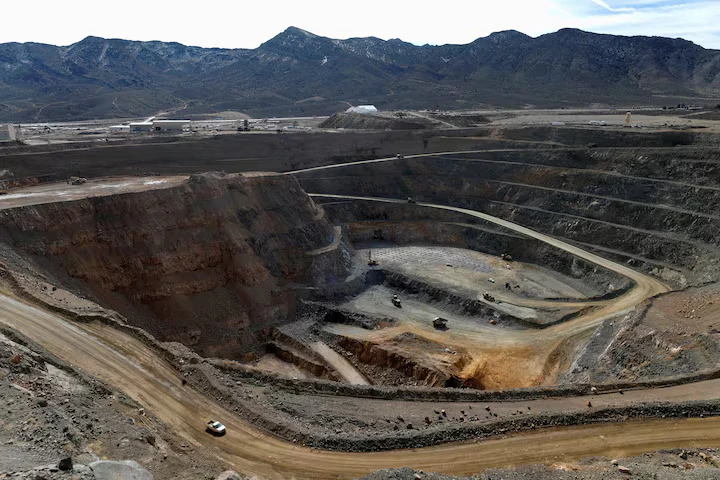

When it comes to modern economic and geopolitical landscapes, one significant development has been the ascending role of rare earth elements and other critical minerals. They have been transformed from simple geological commodities into vital instruments affecting several key areas, such as economic sovereignty, technological supremacy and military strength and power.
There are 17 chemically similar elements that possess unique properties that make them indispensable across an array of advanced technological applications. And as global demand surges amid digitalization, control over the extraction, processing and refinement of these elements has emerged as a central arena of strategic competition and even rivalry.
The geopolitical significance of rare earth elements is due to the multifaceted roles they play in several sectors. These include advanced technologies, clean energy systems, artificial intelligence, and the military and defense.
China holds about 44 million tonnes of rare earth element reserves, which is about 49 percent of the known global total. China also dominates the processing of these minerals. Other major reserve holders include Brazil (21 million tonnes), India (6.9 million), Australia (5.7 million), Russia (3.8 million) and Vietnam (3.5 million).
Control over the extraction, processing and refinement of these elements has emerged as a central arena of strategic competition
Dr. Majid Rafizadeh
Nevertheless, production remains far less diversified, as China accounts for the majority of mined output and refined products. This area provides an opportunity for other countries to step in.
Control over these supply chains is related to economic growth as well as strategic autonomy. For example, nations capable of securing reliable access can accelerate innovation.
Rare earth elements permeate virtually every facet of modern industrial and military capability. Elements such as neodymium, praseodymium and dysprosium are essential for hard disk drives, smartphones and flat-panel displays. Cerium and lanthanum are key in the sector of semiconductors.
The transition to net-zero emissions is also partially dependent on rare earth elements. Specifically, Neodymium magnets can be used in wind turbines, enhancing their efficiency and reducing maintenance requirements in offshore installations.
In electric vehicles, motors that are rare earth element-based deliver superior power and range compared to the alternatives. Solar technologies and energy storage systems also rely on rare earth elements for specialized components.
This is why projections indicate that demand for certain rare earth elements in the clean energy sector could grow exponentially by 2040.
Rare earth elements also play a critical role in AI and data infrastructure. The physical facets of AI, such as robotics, depend on these minerals for efficient motors, cooling systems and advanced electronics.
Another area is the defense and military industries. For example, each F-35 fighter jet incorporates more than 400 kg of rare earth elements, using them for tasks such as flight control. Rare earth elements are also used in night-vision devices, precision-guided munitions and satellite technologies.
These examples illustrate the importance of rare earth elements. Their integration has provided concrete and tangible benefits in the technology, clean energy and defense industries.
Their integration has provided concrete and tangible benefits in the technology, clean energy and defense industries
Dr. Majid Rafizadeh
Several Middle Eastern states have astutely pivoted toward critical minerals, recognizing their alignment with their economic diversification plans. Saudi Arabia exemplifies proactive stewardship. Possessing substantial reserves in the Arabian Shield, the Kingdom has integrated mining into its Vision 2030.
Maaden, its national champion, has forged partnerships with Ivanhoe Electric for exploration and with MP Materials and US entities for a major rare-earth refinery. A US-Saudi strategic framework, backed by Department of Defense financing, aims to develop full value-chain capabilities.
Alongside the Kingdom, the UAE, Bahrain, Oman, Qatar and Jordan also participated in February’s US-led Critical Minerals Ministerial, signaling diplomatic alignment and investment interest.
These developments position the region advantageously. Other Middle Eastern nations ought to identify opportunities through various paths. For example, governments can prioritize allocating capital to exploration, refining capacity and magnet production.
To accelerate this process, partnerships with global powers can be helpful. Creating incentives for private investment and providing environmental standards that attract the required capital is another option.
There could also be a broader Middle Eastern collaboration on shared infrastructure, such as processing hubs, to cut costs and achieve larger objectives. States should invest in specialized education to produce local expertise.
These steps will help diversify regional states’ revenues and elevate their geopolitical relevance. In this regard, Saudi Arabia’s trajectory — transforming mineral endowments into refined strategic assets — provides a compelling model for other countries in the region.
In a nutshell, one cannot deny the increasingly powerful and pervasive role of rare earth elements and other critical minerals across a multitude of strategic sectors. Their unique role has made them indispensable to economic competitiveness and national security.
Several Middle Eastern countries have already taken commendable and forward-looking steps in this direction — most notably Saudi Arabia, which has integrated critical minerals development into its Vision 2030 framework. It is important for others to follow suit by prioritizing sustained investments and the cultivation of domestic expertise in this area. This will not only contribute to long term economic growth but also enhance their geopolitical significance.
- Dr. Majid Rafizadeh is a Harvard-educated Iranian-American political scientist. X: @Dr_Rafizadeh


