

Earlier this month, the Bruno Kreisky Forum for International Dialogue and the Gulf Research Center organized a meeting in Vienna for officials from Austria and Gulf Cooperation Council countries, together with think-tank representatives, to discuss Gulf security. The track 1.5 meeting was part of Austria’s efforts to regain its historical role as a neutral and effective international mediator.
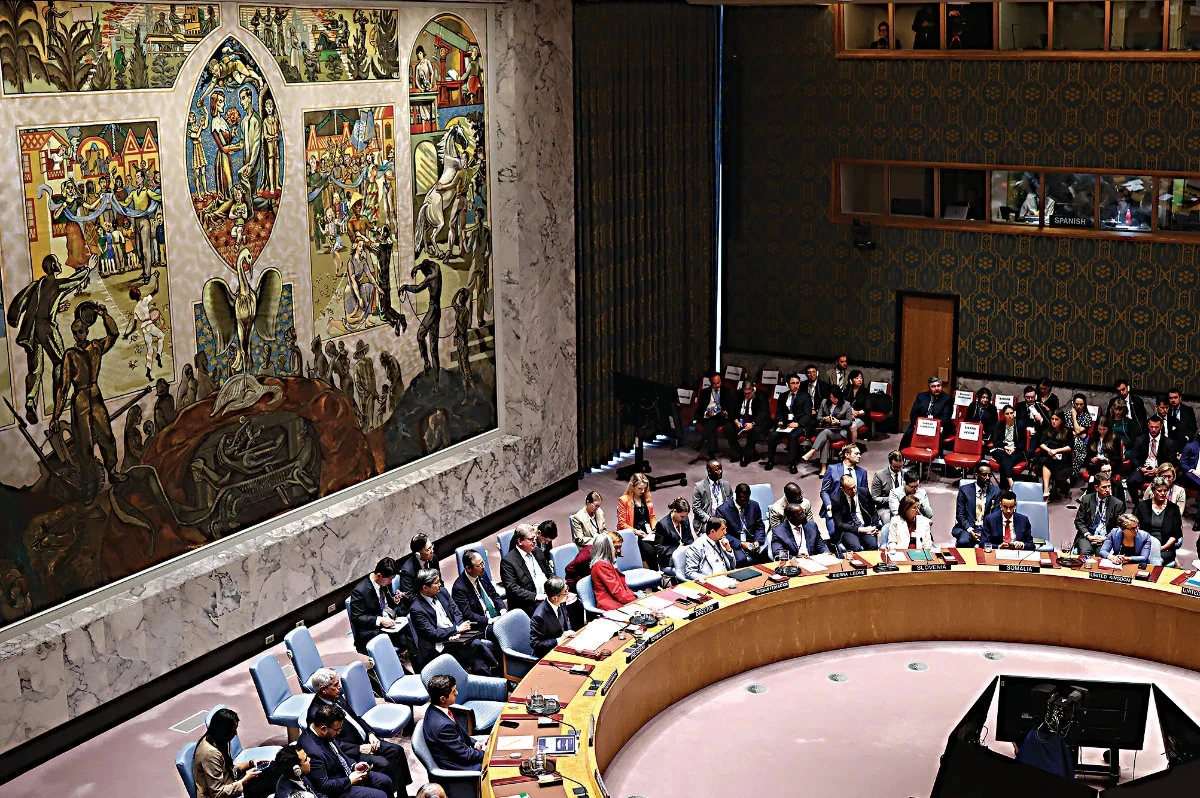
Ahead of beginning its 2027-2028 term as a nonpermanent member of the UN Security Council in January, Austria has advocated peace mediation and diplomatic dialogue as central pillars of its foreign policy during its council membership.
The country frames itself as an “honest broker” and venue for dialogue aimed at bridging divides in the currently highly polarized geopolitical environment.
The Bruno Kreisky Forum is named after the famed statesman who put modern Austria on the map as a neutral but effective international player, first as foreign minister (1959-1966) and then as the country’s longest-serving chancellor (1970-1983). He successfully pursued a policy of “active neutrality” during the height of the Cold War, working with both Western and Soviet bloc countries while seeking cooperation with other nonaligned nations.
In the Middle East, he was known for his strong support for Palestinian statehood and for cultivating a good relationship with Palestinian and other Arab leaders, as well as with the Palestine Liberation Organization, igniting a rancorous backlash from Israeli leaders, whom he did not hesitate to criticize when the need arose. He once referred to Menachem Begin, Israel’s prime minister at the time, as a terrorist.
The country frames itself as an ‘honest broker’ and venue for dialogue aimed at bridging divides
Dr. Abdel Aziz Aluwaisheg
In rebutting Israeli leaders’ criticisms, Kreisky said he was “the only politician in Europe Golda Meir can’t blackmail,” recalling that he himself was Jewish and was persecuted by the Nazis. In addition, during his term as chancellor, Austria served as the primary transit country for hundreds of thousands of Soviet Jews emigrating to Israel and the West.
Besides its history of active neutrality, Austria has, since March 2025, been led by a trilateral partnership between center-right, center-left and centrist-liberal parties. This requires carefully balancing the foreign policy priorities of the three parties and their constituents. Some of those priorities, such as their approach to immigration, do not seem consistent with Kreisky’s legacy.
Despite changing priorities for the country, mediation remains a core pillar of Austria’s foreign policy and it is still recognized as a trusted actor and venue for dialogue. Through its mediation facility and track II diplomacy, it supports discreet engagement in a range of regional conflicts, while supporting broader UN mediation and conflict-prevention efforts. It has been involved in peacebuilding, seeking to strengthen the UN Peacebuilding Commission, while creating regional partnerships with an emphasis on conflict prevention and mediation.
Austria’s membership in the UNSC come January will give it an opportunity to exercise these approaches more effectively and on a global scale. During discussions at the UN, Vienna has stressed that international peace and security are rooted in partnerships, dialogue and trust. As a small and militarily neutral country, it said it can contribute as a “bridge-builder” and honest broker working with “all countries on the basis of mutual respect.”
These historical and current credentials make Austria a good candidate to support mediation efforts in the Middle East and Gulf conflicts.
Vienna has stressed that international peace and security are rooted in partnerships, dialogue and trust
Dr. Abdel Aziz Aluwaisheg
In the Gulf, there is an urgent need for mediation, as US-Iran talks have reached an impasse and the threat of renewed war is looming. Austria could partner with local actors to get the talks back on track and add more structure to what has been a chaotic exchange between the two main antagonists, with insufficient regard for regional and international interests and the UN’s role.
There are at least seven areas in the Gulf conflict in which Austria’s mediation could help. First, at the UNSC, where Austria will soon have a seat, the GCC, led by Bahrain, another UNSC member, was able to rally support to pass Resolution 2817 in March, setting the principles governing the conflict, including protection of civilians and freedom of navigation. China and Russia abstained, allowing the resolution to pass, but have vetoed subsequent GCC efforts to make that resolution more operational. Their vetoes have made collective action under the UN umbrella more difficult. With the help of Austria at the council, perhaps agreement could be reached.
Second, Austria could support the regional mediation efforts led by Qatar, the Makkah Joint Defense Alliance countries and others.
Third, Vienna hosts the International Atomic Energy Agency and could thus play a greater role in empowering the agency’s role in dealing with Iran’s nuclear program.
Fourth, on restoring freedom of navigation in the Strait of Hormuz, Oman has been working to secure an interim deal to reopen the waterway. But there is a deadlock, as Iran has insisted on linking this issue to its wider conflict with the US. The “Hormuz Coalition” of some 50 nations has also tried its hand but without success so far.
Fifth, since the war started, Saudi Arabia has worked to improve the resilience of international energy supply chains, in partnership with other regional players. The closure of the Strait of Hormuz and attacks on ships in the Gulf and the Red Sea have increased efforts to enhance connectivity within the region and intraregionally.
Sixth, there is an urgent need to deal with the global economic slowdown, which has resulted in part from the Gulf war, in particular to help developing countries deal with the slowdown’s repercussions.
Seventh, the GCC has advocated diplomatic approaches to the Iran crisis, promoting potential shared regional prosperity as a better alternative to conflict. Work toward this goal had started before the war broke out on Feb. 28 but Iran’s attacks on GCC countries have erased the trust that was building between the two sides. Rebuilding confidence could be more difficult but remains necessary.
So, these are seven potential areas for Austria’s mediation in the Gulf crisis alone. Yemen, Palestine, Syria and Lebanon provide ample other opportunities for Austria to work on during its UNSC membership.
Dr. Abdel Aziz Aluwaisheg is the GCC assistant secretary-general for political affairs and negotiation. The views expressed here are personal and do not necessarily represent those of the GCC.
X: @abuhamad1


