
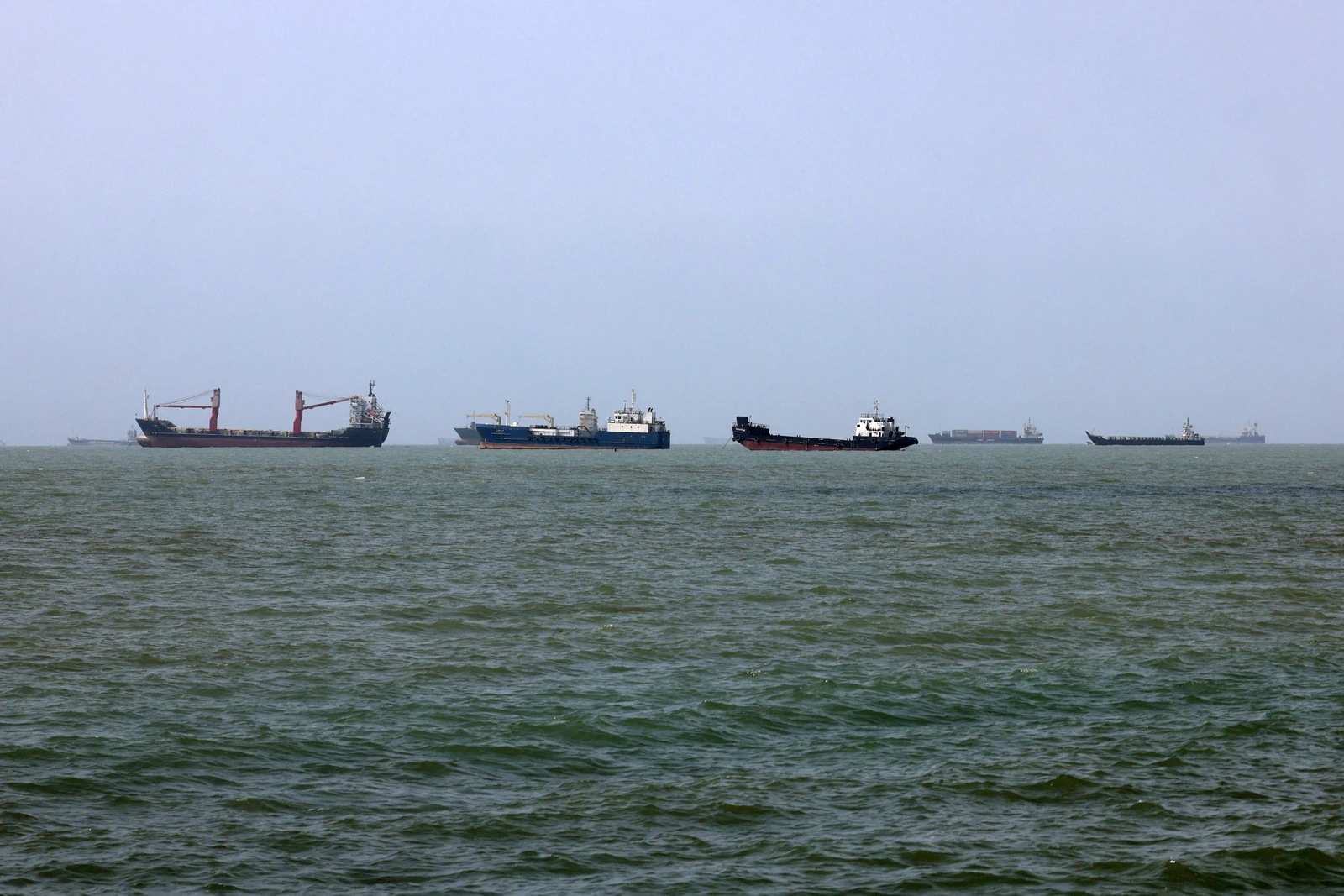

International shipping routes have increasingly become instruments of political leverage, coercion and disruption. A single state or nonstate actor should not be able to threaten or obstruct vital maritime routes, disrupt global energy supplies, undermine international commerce and impose economic consequences on countries and populations around the world.
These routes are essential arteries of the global economy and their security should not be subject to the political calculations, military ambitions or ideological objectives of individual governments or militias. Their protection must be recognized as a shared international responsibility.
State actors and armed groups have been increasing their use of these chokepoints as tools of pressure. When governments or militias interfere with freedom of navigation, the consequences cascade far beyond the immediate waters.
First, they threaten the world economy. About 80 percent of global trade by volume moves by sea. Critical passages such as the Strait of Hormuz, Bab Al-Mandab and the approaches to the Suez Canal carry outsized shares of oil, liquefied natural gas, containers and bulk commodities.
The human cost is distributed globally even when the kinetic violence remains concentrated in a few straits
Dr. Majid Rafizadeh
Disruption forces longer voyages around the Cape of Good Hope, multiplies fuel consumption, drives insurance premiums sharply higher and raises freight rates. These costs feed into higher energy prices, delayed deliveries, strained supply chains and inflationary pressure that reach households and businesses on every continent. The economic damage is systemic, not local.
Second, such interference creates and fuels conflicts. Attacks on commercial shipping invite military responses, coalition operations and cycles of retaliation. What begins as targeted pressure on vessels quickly expands into broader hostilities involving coastal states, great powers and regional rivals. The security of crews and ships becomes intertwined with wider strategic contests, raising the risk of miscalculation and escalation.
Third, ordinary people far from the conflict zones pay the price. Higher shipping costs translate into more expensive food, fuel and consumer goods. Developing economies dependent on imported energy or agricultural inputs suffer disproportionate hardship. Seafarers face direct physical danger — missile and drone attacks, mines and armed approaches — while their families live with uncertainty.
Port workers, truckers, factory employees and consumers worldwide absorb the secondary effects through job losses, higher living costs and reduced economic opportunity. The human cost is distributed globally even when the kinetic violence remains concentrated in a few straits.
Recent events illustrate the pattern clearly. In the Red Sea and Bab Al-Mandab, Houthi forces have repeatedly targeted commercial shipping, particularly vessels linked to certain states. These actions have forced many carriers to reroute, reduced traffic volumes, elevated war-risk insurance and triggered coalition responses.
The resulting friction has prolonged regional instability and kept global logistics under strain. Simultaneously, the Strait of Hormuz has experienced severe restrictions amid the broader conflict involving Iran. Attacks on tankers, the reported use of mines, sharply reduced transit volumes and the deaths and injuries of seafarers have demonstrated how control or disruption of this single waterway can constrain a large share of the world’s oil and gas trade.
Parallel risks appear elsewhere when actors treat maritime passages as bargaining chips. These cases show that the problem is a recurring feature of contemporary geopolitics.
The security of the routes themselves — of the ships, the cargoes and, above all, the people who crew them — must therefore rank among the foremost challenges facing the international community.
Freedom of navigation is not merely a commercial convenience, it is a foundational element of collective security and economic stability. Treating it as a secondary concern allows small numbers of actors to impose large costs on everyone else and to convert geographic position into coercive power.
Any party that attempts to close or systematically harass international routes should face predictable consequences
Dr. Majid Rafizadeh
For these reasons, the UN and the broader international community should place the protection of critical shipping routes at the top of the agenda. One practical step could be the creation of a permanent international maritime security body with a clear mandate to monitor, deter and respond to threats in international waters.
Because these waters lie beyond any single state’s exclusive control, the body should be constituted as a coalition of willing nations operating under a UN framework or equivalent multilateral authorization. It would require naval and security assets sufficient to patrol key passages, escort vessels when necessary and neutralize immediate threats.
It should also possess economic instruments — sanctions authority coordinated through the UN — to impose costs on governments or groups that systematically interfere with navigation. Membership and funding should be broad so that the institution does not become the instrument of any one power’s foreign policy.
Every coastal and trading state should be encouraged to become a signatory, thereby affirming that freedom of navigation is a shared obligation rather than a privilege granted or withheld at will.
Complementing this global mechanism, regional coalitions focused on specific corridors are essential.
Saudi Arabia has demonstrated the value of coordinated action against threats emanating from Yemen. Similar standing arrangements should be expanded and institutionalized around the Red Sea, the Gulf and other high-risk zones. These regional groupings should maintain military capacity, share intelligence and coordinate with the international body.
Any government or militia that attempts to close or systematically harass international routes should face predictable consequences — both economic and, if necessary, military — enforced by the combined weight of regional and global mechanisms.
Protecting these arteries is a practical investment in the daily welfare of people everywhere. Secure routes mean more stable energy prices, more reliable supply chains, lower costs for food and goods, safer working conditions for seafarers, and reduced incentives for conflict.
Ordinary citizens in Asia, Africa, Europe and the Americas benefit when commerce moves freely and predictably. When routes are held hostage, those same citizens pay the price through higher bills and greater uncertainty.
The alternative is continued vulnerability. As long as individual actors can treat the world’s most important waterways as instruments of leverage, the global economy and international peace will remain exposed to disruption by design.
Establishing credible, permanent and multilaterally governed protection for international shipping routes is therefore one of the central security and economic tasks of our time. The international community has both the capacity and the responsibility to meet it.
Dr. Majid Rafizadeh is a Harvard-educated Iranian-American political scientist. X: @Dr_Rafizadeh


