
Israel’s decision to ban humanitarian organizations that fail to comply with newly imposed registration requirements is not a bureaucratic tweak, it is a political act with devastating human consequences. By demanding that aid groups operating in the Occupied Territories submit “detailed information about their staff, funding and operations,” and by pledging to enforce these rules starting March 1, Israel is effectively placing a chokehold on the system that keeps millions of Palestinians alive.
In theory, governments have the right to regulate organizations operating within their jurisdictions. In practice, this move is something else entirely. In the context of a prolonged military occupation and an ongoing humanitarian catastrophe, especially in Gaza, such requirements become tools of control, intimidation and exclusion. They transform humanitarian access into a privilege granted by the occupying power, rather than a right protected under international law.
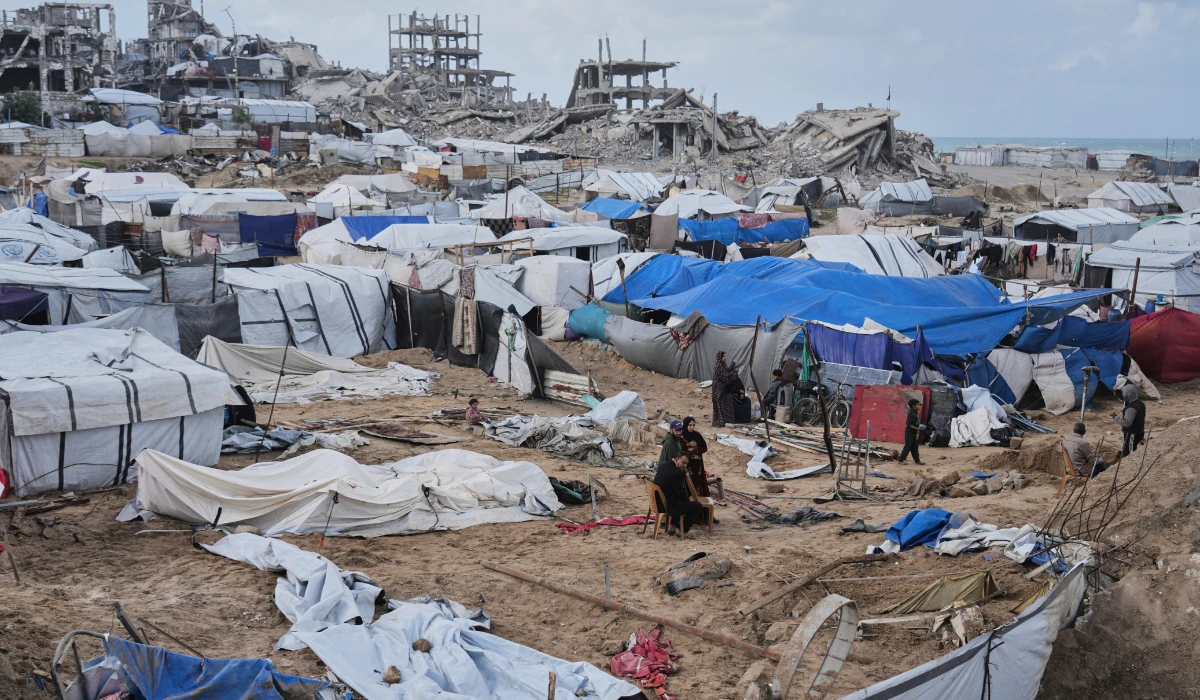
Gaza is already on life support. After months of bombardment, displacement and systematic destruction of civilian infrastructure, its population depends almost entirely on international aid for food, water, medical care and shelter. Hospitals operate on the brink of collapse. Children are malnourished. Entire neighborhoods lie in ruins. Into this reality, Israel is now injecting a new layer of obstruction, forcing aid organizations to either submit to invasive scrutiny or face expulsion.
Israel is injecting a new layer of obstruction, forcing aid organizations to either submit to invasive scrutiny or face expulsion
Hani Hazaimeh
The implications are immediate and severe. Many humanitarian organizations, especially local and regional nongovernmental organizations, simply cannot comply with these requirements without jeopardizing the safety of their staff or the integrity of their operations. Providing detailed information about personnel in a conflict zone risks exposing aid workers to targeting, arrest or worse. Disclosing funding sources and operational networks gives an occupying power a map of how humanitarian lifelines function, making them easier to disrupt.
This is not about transparency, it is about control. By forcing aid agencies into a rigid and politicized registration regime, Israel is asserting the power to decide which organizations are “acceptable” and which are not. Those that document abuses, work closely with Palestinian communities or challenge Israeli policies will be the first to be squeezed out. What remains will be a hollowed-out humanitarian sector, stripped of independence and forced to operate under the shadow of political approval.
The impact will not be confined to Gaza. Across the West Bank and East Jerusalem, humanitarian groups provide essential services in areas where the Palestinian Authority has limited reach and where Israeli restrictions have crippled local economies. They support clinics, schools, legal aid programs and protection services for communities facing demolitions, displacement and settler violence. Banning or paralyzing these organizations will leave entire communities without a safety net.
It does not have the right to starve the population into submission by suffocating those who try to help
Hani Hazaimeh
This move also sets a dangerous precedent. If an occupying power can dictate who is allowed to provide humanitarian assistance and on what terms, then the core principle of humanitarian neutrality collapses. Aid becomes another instrument of occupation rather than a shield for civilians. International humanitarian law is clear: the occupying power has an obligation to ensure the welfare of the population under its control. It does not have the right to starve that population into submission by suffocating those who try to help.
Israel’s defenders may argue that the measures are necessary for security. But security cannot be a blank check to dismantle humanitarian space. The world has seen this tactic before: when access is restricted, suffering deepens, information dries up and abuses multiply in the dark. Gaza, already one of the most heavily monitored and controlled territories on Earth, is now being pushed toward even greater isolation.
There is also a broader political calculation at work. By weakening independent humanitarian organizations, Israel reduces the flow of credible reporting from the ground. Fewer doctors, fewer aid workers and fewer protection officers mean fewer witnesses. In a war defined by competing narratives, controlling who is present to see, document and speak becomes as important as controlling territory.
The international community must not treat this as a technical regulatory issue. It is a moral and legal test. Governments that claim to support humanitarian principles, from Washington to Brussels, must make it clear that they will not accept the criminalization or exclusion of aid organizations.
Ultimately, the victims of this policy will not be NGOs, it will be the sick who cannot reach a clinic, the families who cannot find food, the displaced who cannot get shelter and the children who will pay the price for a war they did not choose. Turning paperwork into a weapon against humanitarianism is one more step in the slow, deliberate suffocation of Palestinian life.
• Hani Hazaimeh is a senior editor based in Amman. X: @hanihazaimeh