

The second phase of the Gaza agreement represents far more than a diplomatic step forward. It is a defining test of whether the international community is finally willing to move beyond crisis containment toward justice, accountability and sustainable peace. For this phase to succeed, it must rest on three pillars: protecting Palestinian rights, curbing Israeli violations that have historically sabotaged ceasefires, and ensuring that Palestinians themselves govern their land and decide their future. Without these foundations, reconstruction will become yet another prelude to renewed destruction.
For years, Gaza has been treated primarily as a humanitarian problem rather than a political one — a territory to be fed, managed and periodically rebuilt after devastation, but never truly freed. This approach has failed catastrophically. No amount of aid can substitute for freedom and no reconstruction effort can endure under siege. The current moment offers a rare opportunity to break this cycle. But only if Palestinian rights are placed at the center of the process — as enforceable realities rather than rhetorical commitments.
The most urgent requirement is to protect Palestinians from continued Israeli military incursions and violations that hollow out ceasefires before they take hold. Past truces in Gaza did not collapse because Palestinians rejected calm but because airstrikes, raids, closures and movement restrictions continued under different pretexts. A ceasefire without enforcement is not peace — it is merely an interval between wars. If international actors are serious about stability, they must move beyond statements of concern toward mechanisms that deter violations, impose accountability and protect civilians as a matter of law rather than discretion.
Equally vital is the permanent lifting of the siege. No society can recover while imprisoned. No economy can function without access to borders, trade, energy, water and movement. No political system can govern while sealed off from the world. The blockade of Gaza has not enhanced security; it has institutionalized despair, radicalized generations and transformed humanitarian aid into a substitute for rights. Ending it is not a concession — it is the foundation of any credible peace.
Gaza does not merely need roads and hospitals — it needs sovereignty, accountability and freedom from structural violence
Hani Hazaimeh
Yet even the end of military aggression and blockade will not suffice if Palestinians are excluded from shaping their political destiny. One of the gravest failures of past postwar arrangements has been the sidelining of Palestinian agency — replacing self-rule with externally managed governance models designed to prioritize “stability” over legitimacy. These approaches have consistently collapsed. Stability without representation breeds resistance; security without rights produces instability. Palestinians must not be governed on behalf of others — they must govern themselves.
This means restoring genuine Palestinian political authority in Gaza through inclusive national frameworks, institutional rebuilding and democratic legitimacy. It means rejecting models that outsource governance to foreign administrators, security contractors or interim bodies lacking a public mandate. And it means reconnecting Gaza politically and administratively with the West Bank and East Jerusalem as part of a unified Palestinian polity — not entrenching fragmentation, which has long undermined prospects for statehood.
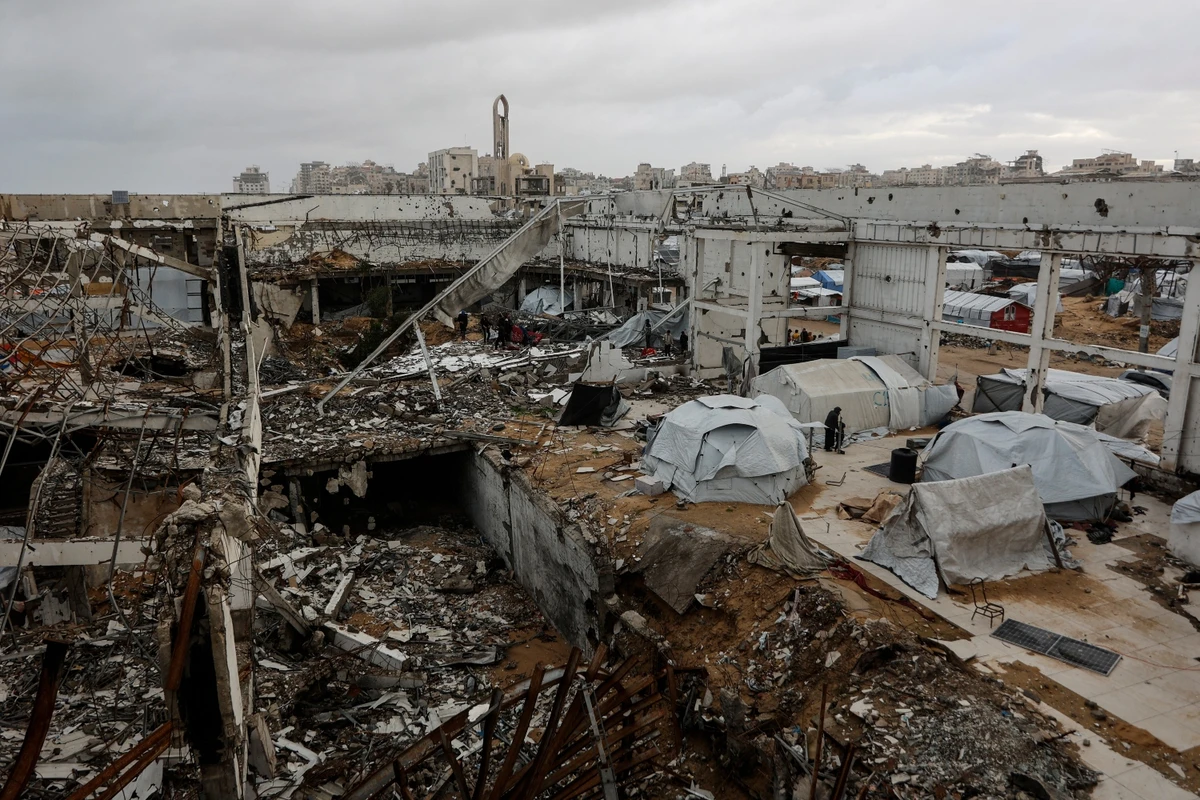
Reconstruction, therefore, must be political as well as material. Gaza does not merely need roads and hospitals — it needs sovereignty, accountability and freedom from structural violence. International funding must strengthen Palestinian institutions, not bypass them. Aid must empower local governance, not replace it. And rebuilding must be shielded from political conditionality that transforms basic rights into bargaining chips. Palestinians should not have to earn access to water, electricity, housing or medical care through compliance with externally imposed agendas. These are not rewards — they are rights.
At the same time, international legitimacy resolutions — including the right of return and the right to self-determination — must be reaffirmed rather than postponed indefinitely in the name of “pragmatism.” Every attempt to defer these questions has only deepened injustice and instability. Sustainable peace cannot rest on unresolved dispossession. Nor can Gaza’s future be separated from the broader Palestinian national question. A ceasefire that ignores these foundations is not a solution — it is an intermission.
Crucially, the second phase must include mechanisms to prevent Israeli violations, which have historically undermined every ceasefire arrangement. This requires international monitoring with real authority, not symbolic observation. It requires consequences for breaches, not diplomatic silence. And it requires a clear legal framework that treats civilian protection, freedom of movement and humanitarian access as binding obligations rather than discretionary gestures. Agreements that lack enforcement invite collapse.
Moreover, Israeli incursions, settlement expansion, arrests and military raids across the Occupied Territories have systematically eroded trust in diplomacy. No political process can survive when one side experiences daily dispossession while the other enjoys impunity. If this phase is to succeed, it must not freeze violence in Gaza while allowing structural violence elsewhere to continue unchecked. Palestinian security cannot be localized while Palestinian oppression remains systemic.
This is precisely why Palestinian leadership must be central — not symbolic — in all political, security and reconstruction arrangements. Palestinians are not a population to be administered, they are a people with national rights. Their exclusion from governance has been one of the most consistent drivers of instability in Gaza. Inclusion, by contrast, offers the only viable pathway toward legitimacy, accountability and durable peace. No foreign architecture, however well-funded, can substitute for political consent rooted in representation.
No foreign architecture, however well-funded, can substitute for political consent rooted in representation
Hani Hazaimeh
This moment also demands clarity from Arab states and the international community alike. Stabilization efforts that prioritize calm over justice will fail. Economic packages detached from political rights will fail. Reconstruction projects divorced from sovereignty will fail. What must replace them is a rights-based framework that recognizes Palestinians as subjects of law, not objects of management.
Such a framework must rest on five pillars: an enforceable permanent ceasefire; the complete lifting of the siege; the protection of civilians through international accountability mechanisms; the restoration of unified Palestinian self-rule; and the implementation of international legitimacy resolutions, including refugee rights and self-determination. These are not maximalist demands — they are the minimum conditions for any peace that claims to be sustainable rather than cosmetic.
Critics will argue that this approach is unrealistic. Yet realism divorced from justice has produced nothing but devastation. The truly unrealistic position is to believe that Gaza can be pacified while Palestinians remain dispossessed; that security can be achieved through domination; or that reconstruction can succeed while occupation persists.
The second phase of the Gaza agreement must therefore not be treated as another technical exercise in conflict management. It must be framed as a rights-restoration project — political, legal and moral. It must signal an end not only to bombing but to structural violence. It must transform Gaza from a containment zone into a political community with agency, dignity and a future.
Above all, Palestinians must be the authors of their recovery — not its recipients. They must shape governance, control institutions, determine reconstruction priorities and define their national trajectory. Anything less reproduces dependency rather than sovereignty. Peace imposed is not peace sustained.
The second phase must not fail — not because failure would embarrass diplomats but because it would condemn millions to continued dispossession, insecurity and despair. Gaza does not need another ceasefire that collapses under violations. It does not need reconstruction without rights. And it does not need governance without representation.
It needs freedom, accountability and self-rule — now, not later.
- Hani Hazaimeh is a senior editor based in Amman. X: @hanihazaimeh


