

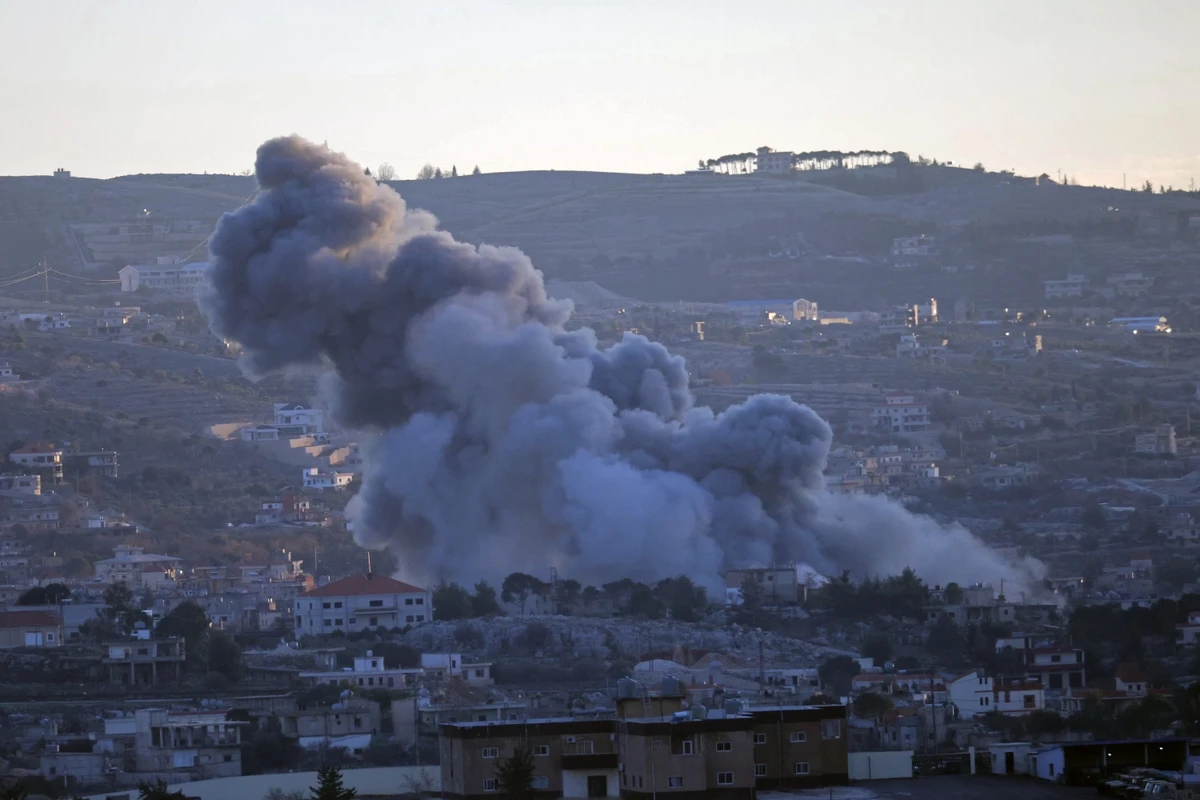

Following the November 2024 ceasefire that supposedly ended Israel’s aggression on Lebanon, a “mechanism” was put in place to ensure the execution of the agreement. While Lebanon has kept its side of the bargain and not fired a single shot at Israel, Tel Aviv has not stopped bombing Lebanon. Beirut has been catering to all of Israel’s whims. But this has not been enough. A meeting of the mechanism committee scheduled for Jan. 14 was canceled without a valid reason. The Lebanese are stressing. Are Israel and the US trying to force them into an even more compromising agreement?
The mechanism that is supposed to monitor the ceasefire has five members: France, the US, Israel, Lebanon and the UN Interim Force in Lebanon. Lebanese President Joseph Aoun recently added former ambassador to Washington Simon Karam to the Lebanese team, despite Hezbollah’s objection to a civilian discussing security issues. The group considered Karam’s inclusion an “additional blunder” and an indicator that the talks might extend beyond the planned security arrangements.
This increased Hezbollah’s insecurity. Is the Lebanese state scheming with Israel for normalization or to sideline it? From their perspective, the presence of a civilian on the committee means that the political aspect could be discussed. Otherwise, if it was only security issues on the agenda, a military negotiator could do the job. The inclusion of a civilian who has anti-Hezbollah views has increased the tension and the mistrust between the government and the group.
The Lebanese are worried about the potential for an all-out war on Lebanon if the ceasefire mechanism falls apart
Dr. Dania Koleilat Khatib
Lebanon is worried about any freezing of the mechanism because it is currently the only method to limit Israeli strikes on Lebanon. The Lebanese are worried about the potential for an all-out war on Lebanon if the mechanism falls apart. The committee faced another hurdle when the US representative was reportedly put on administrative leave as a result of her intimate relationship with a Lebanese banker, which potentially created a conflict of interest. A new tentative date of Feb. 25 has been set for the next committee meeting.
Lebanon is nervous. What are Tel Aviv and Washington scheming for the country? Karam has admitted that Israel has put forward “extremely harsh conditions.”
Israel is insisting on two conditions that are unrealistic. One of them is the total disarmament of Hezbollah. Disarmament by force might lead to a civil war. This is too big a risk for the Lebanese government to take and the Americans and the Israelis know that. So far, the Lebanese army has successfully removed the group’s weapons from the area south of the Litani River, in accordance with UN Security Council Resolution 1701. Hence, there is no threat to Israel. In November, Hezbollah Secretary-General Naim Qassem even gave a televised speech in which he assured Israel there would be no threat to the settlements in Galilee.
The other problematic condition is the proposed economic zone in the south, which will reportedly be called the “Trump Economic Zone.” What does it involve? US President Donald Trump has promoted trade deals and economic integration as a way to solve disputes around the world. From the American perspective, as soon as the south of the Litani is demilitarized, it can be turned into an economic zone, with factories and office blocks replacing missile launchers.
This is a way to make sure Hezbollah does not rebuild its military infrastructure, as it did after the 2006 ceasefire agreement. Given that regular house inspections would face objections from the locals, it would be easier to remove the houses altogether and replace them with factories.
From the US perspective, as soon as the south of the Litani is demilitarized, it can be turned into an economic zone
Dr. Dania Koleilat Khatib
However, what would that mean for the southerners? Would their homes be demolished to make way for factories? Would they only be able to visit their land as laborers? Would a resident-free economic zone mean a population transfer? Probably.
There is another catch. In December, there were talks regarding “small joint projects” between Israel and Lebanon. The word “joint” is very suspicious for the Shiite faction, the population of the south and Hezbollah. Does that mean Israel will have a foothold in the south of Lebanon? Will this be legalized under the guise of economic projects? This is definitely not what the Lebanese want. They want a withdrawal of Israeli forces and reconstruction of the south so that people can go back to their homes.
However, Lebanon is only one piece of the regional puzzle. To understand the American-Israeli plan, one should have a broader perspective, including the Abraham Accords. Since Oct. 7, 2023, and the genocide on Gaza that followed, there has been pushback against the Abraham Accords project. While the US was counting on Syria to normalize, the Syrians have rejected this several times. They insist that normalization will not happen unless Israel returns the Golan Heights, which Tel Aviv will not do. Syria has gained leverage due to the support it has received from Saudi Arabia and Turkiye.
However, Trump likes to be a winner. Or at least he likes the optics of winning. If you want to secure a win, you choose a weak adversary — like Lebanon.
Given that Lebanon has no leverage at all, it is the easiest target for expanding the Abraham Accords. There has been talk that the US and Israel want to replace the mechanism committee with direct discussions at a higher political level between Lebanon and Israel under American patronage, similar to the ongoing talks between Israel and Syria. However, unlike Syria, which has strong regional backing, Lebanon has no support at all. It would be crushed in the negotiations. It would have to accept Israel’s “extremely harsh conditions.” The Lebanese are nervous. They are right to be.
In the meantime, the Lebanese state has not shown any decisiveness or strategy to face this looming scenario. Nevertheless, the answer could be easier than one might think: Lebanon, like Syria, could ask for help from within the region.
- Dr. Dania Koleilat Khatib is a specialist in US-Arab relations with a focus on lobbying. She is co-founder of the Research Center for Cooperation and Peace Building, a Lebanese nongovernmental organization focused on Track II.


