

It will still be many months before we see the back of the coronavirus disease (COVID-19) but, as various vaccines start to come on stream, there is light at the end of the tunnel. Yet, even as the beginning of the end of the pandemic looms, research from around the world is beginning to pose unsettling questions about where and when it all began — and, in the process, offering clues as to how the world might better defend itself against the next micro-killer.
The SARS-CoV-2 virus first emerged in Wuhan, central China, in the dying days of 2019 — or so it is widely thought. On Jan. 11, 2020, the day China reported its first death, Beijing made the genetic sequence of the novel coronavirus available. Two days later, the first case cropped up abroad, in Thailand. By Jan. 21, the virus had reached America and, on Jan. 29, the UAE reported the first case in the World Health Organization’s (WHO) Eastern Mediterranean Region.
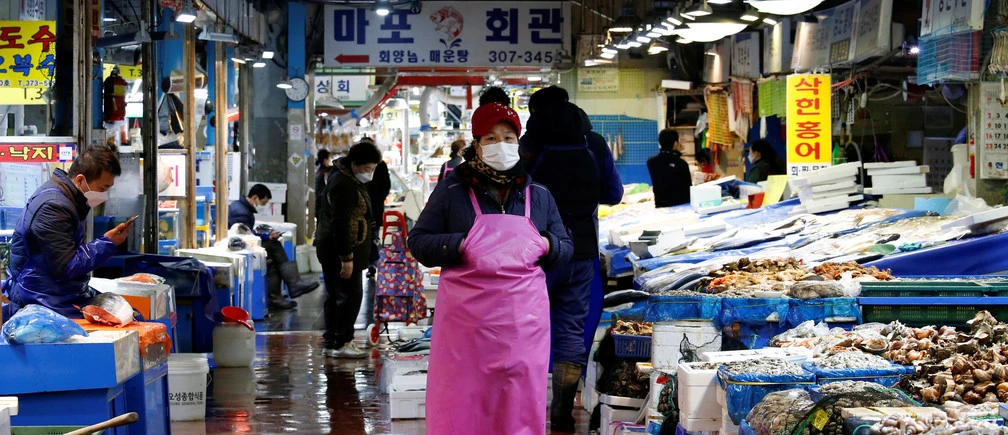
It was thought that the SARS-CoV-2 virus, as it was named on Feb. 11, made the jump from a live animal to a human host in a market in Wuhan, but even that “fact” now looks increasingly uncertain. Following the closure of the market on Jan. 1, 336 samples were taken from frozen animal carcasses — and not one was positive for SARS-CoV-2. However, out of 842 environmental samples taken from various sites at the market, including sewage pipes, 61 proved positive.
“It remains unclear,” says the WHO, “whether the market was a contamination source, or acted as an amplifier for human-to-human transmission, or a combination of those factors.” But the bigger question is whether the coronavirus really originated in China at all, or whether China, armed with detection know-how refined during its battle in 2003 with Severe Acute Respiratory Syndrome, was simply the first country to recognize the new virus.
In November, the WHO quietly began an investigation to determine exactly where the virus originated and how it spread — complex but vital detective work for the future. Most intriguingly, the team will be reviewing CT scans, disease surveillance trends, and stored blood samples taken in Wuhan hospitals dating back to before December 2019, looking for evidence that the coronavirus was around before its official discovery. But the most explosive conclusion to emerge from the investigation might prove to be that China wasn’t to “blame” after all.
The work to understand where COVID-19 originated is not going to be limited to China, as the WHO made clear in its terms of reference, published on Nov. 5. “Where an epidemic is first detected does not necessarily reflect where it started,” states the document. “An outbreak of pneumonia of unknown etiology was identified through surveillance in Wuhan. However, the possibility that the virus may have silently circulated elsewhere cannot be ruled out.”
The most explosive conclusion to emerge from the WHO investigation might prove to be that China wasn’t to ‘blame’ after all.
Jonathan Gornall
Some countries, it added, had identified cases of COVID-19 retrospectively as occurring weeks before the first case was officially notified, “and unpublished reports of positive sewage samples could suggest that the virus may have circulated undetected for some time.” This was a reference to an explosive study published in June on medRxiv, an online archive and distribution server for complete but as yet unpublished medical research manuscripts. Spanish researchers reported finding SARS-CoV-2 genomes in archived frozen sewage samples taken in Barcelona on Jan. 15, 41 days before Spain’s first official case. But the most remarkable finding was the discovery of genomes in samples taken from another treatment plant on March 12, 2019, more than nine months before the Wuhan outbreak.
Similar dramatic findings have been springing up around the world. In May, French scientists concluded that the first COVID-19 patient in France had been infected as early as Dec. 27, 2019, a month before the country’s first official case was identified. The first case in Italy was recorded on Feb. 21, but a search for coronavirus antibodies in blood samples taken from 959 healthy volunteers in a lung cancer screening trial revealed the virus was already circulating in the country in September 2019.
In the US, evidence of a ghostly pre-echo of the disaster that was shortly to overtake the country emerged in a study published on Dec. 1 by the government’s Centers for Disease Control and Prevention. The first case in the US was recorded on Jan. 19, but researchers looked for SARS-CoV-2 antibodies in 7,389 preserved samples taken from blood donors in several states and found antibodies in 106 specimens. Some were taken as early as Dec. 13, 2019.
Public health authorities around the world have much to learn from such findings, and from the torrent of similar studies that are certain to follow.
The WHO’s long-term investigation may be able to pin down how, when and where the virus originated, giving epidemiologists invaluable insights into how such viruses spread and how best to contain them. But the real gift from these imaginative studies from Spain, Italy and the US is that within them can be found the blueprints for early-warning systems capable of registering the presence of future novel microbial killers before they have a chance to colonize entire populations.
Before 2020, few would have considered it cost-effective to maintain regular monitoring of water treatment works, or samples taken from hospital patients or blood donors, on the off-chance of detecting a novel pathogen. After 2020 and the global trauma of an outbreak that has so far infected more than 73 million people and claimed 1.6 million lives, however, a failure to put such defenses in place would amount to criminal negligence.
• Jonathan Gornall is a British journalist, formerly with The Times, who has lived and worked in the Middle East and is now based in the UK.
Copyright: Syndication Bureau


