

World Environment Day, observed annually on June 5, should be considered one of the most important international platforms when it comes to raising awareness about the environment and mobilizing collective action.
Azerbaijan will host Friday’s global commemoration of World Environment Day in Baku on the theme “Inspired by Nature. For Climate. For Our Future.” This theme highlights the need to confront the climate crisis while charting a sustainable path for humanity on this planet.
World Environment Day 2026 falls amid urgent signals coming from the Earth, which include rising seas, raging wildfires, heat waves and melting glaciers. This needs firm action and millions worldwide will this week participate in events, campaigns, educational initiatives, tree-planting drives, policy forums and community-led projects under the banner “#NowForClimate.”
The scientific consensus, anchored in reports from the World Meteorological Organization, NASA, the Copernicus Climate Change Service and other authoritative bodies, paints an image of accelerating climate disruption.
The years 2015 to 2025 were the 11 warmest on record. Global mean near-surface temperatures in 2025 stood at about 1.43 degrees Celsius above the pre-industrial baseline, ranking it as the second or third warmest year since records began.
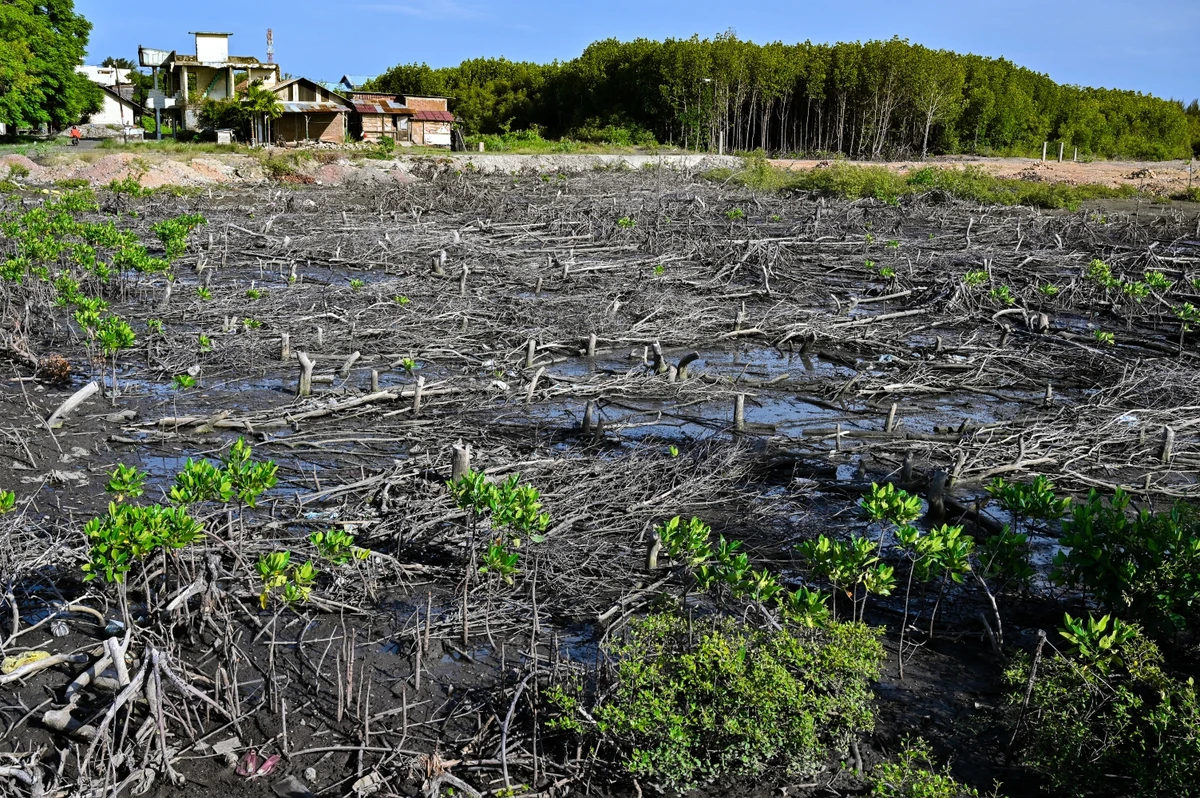
The urgent signals coming from the Earth include rising seas, raging wildfires, heat waves and melting glaciers
Dr. Majid Rafizadeh
Projections indicate that the period 2026 to 2030 will see annual global temperatures ranging between 1.3 C and 1.9 C above pre-industrial levels, with a high probability of temporarily exceeding the 1.5 C Paris Agreement threshold in at least one year. Long-term warming trends, compounded by potential El Nino influences, mean that 2026 will likely rank among the warmest years, potentially challenging recent records.
Sea-level rise also continues unabated. The global average sea level has risen between 21 cm and 24 cm since 1880, with acceleration driven by thermal expansion and loss from glaciers and ice sheets. In 2025, levels remained close to the record highs observed in 2024. Low-lying coastal regions and small islands, in particular, face existential threats.
Meanwhile, glacial melt and Arctic amplification are proceeding rapidly. There have been profound changes, with record-low Arctic sea ice in early 2026 and accelerated Greenland and Antarctic ice loss contributing to sea-level dynamics.
Extreme weather events have also intensified. The frequency, severity and duration of heat waves, droughts, wildfires, floods and tropical cyclones have increased markedly.
Climate impacts manifest across regions, disproportionately burdening populations with limited adaptive capacity.
Europe is warming at twice the global average rate. The 2025 European heat waves caused thousands of excess deaths, with estimates ranging from 4,700 to more than 16,000. Wildfires ravaged parts of the Iberian Peninsula, with more than 670,000 hectares burned across Portugal and Spain last year.
North America endured catastrophic events as well. The 2025 Los Angeles wildfires were the costliest on record, destroying thousands of structures, displacing more than 50,000 people and causing damage exceeding $135 billion. Subsequent events include deadly Texas flash floods and widespread severe storms.
In Asia, the 2025 Pakistan floods claimed more than 1,000 lives, while India and East Asia faced extreme heat waves and cyclones. China experienced significant flooding that caused substantial economic losses. Southern and Eastern Asia continue to grapple with the compound risks of monsoonal variability, heat stress and glacial lake outburst flood threats in the Himalayas.
Africa and Latin America witnessed severe droughts interspersed with floods. And Southern Africa and parts of the Amazon faced drought conditions that exacerbated the wildfire threat, while the likes of Nigeria and Mozambique suffered devastating floods. The Amazon basin saw extensive burning throughout 2025, threatening biodiversity hotspots and carbon sinks.
Australia and the Pacific endured heat waves and wildfires in early 2026, alongside ongoing threats to coral reefs from marine heat waves and ocean acidification.
Climate impacts manifest across regions, disproportionately burdening populations with limited adaptive capacity
Dr. Majid Rafizadeh
These examples are not isolated anomalies, they highlight systematic shifts.
Amid these challenges, one bit of good news is that a profound energy transition is unfolding. In 2025, renewables (solar, wind, hydro and others) surpassed coal in global electricity generation for the first time in the modern era, achieving 33.8 percent of the mix compared to coal’s 33.0 percent. Solar alone met 75 percent of global electricity demand growth.
By the end of 2025, renewables accounted for nearly 49 percent of global installed power capacity. Global energy transition investment reached a record $2.3 trillion in 2025, up 8 percent from the year before and outpacing fossil fuel investments.
Countries like China and India lead in deployment scale, while policy frameworks in the EU and commitments under the Paris Agreement are accelerating the transition. Nevertheless, this progress remains insufficient to align with 1.5 C pathways.
Climate change necessitates a multilateral approach and governance. The principle of common but differentiated responsibilities, enshrined in the UN Framework Convention on Climate Change and the Paris Agreement, recognizes that wealthier, historically high-emitting nations bear greater obligations. These countries must provide financial, technological and capacity-building support to the vulnerable nations that are least responsible for the crisis yet are most severely impacted.
In other words, wealthier economies, having accrued prosperity through carbon-intensive development, possess both the moral imperative and material capacity to lead. Support for small island states, agriculture in sub-Saharan Africa and forest conservation in the tropics is critical and could even be viewed as in their own best interest because we have a shared planetary system.
In a nutshell, the Earth’s warnings amid the climate crisis keep growing louder. As we mark World Environment Day, we should remember one key truth: that we share and inhabit one planet. We need cooperative climate action — #NowForClimate.
- Dr. Majid Rafizadeh is a Harvard-educated Iranian-American political scientist. X: @Dr_Rafizadeh


